When you watch a Saturday afternoon college football game, the visual aesthetic is often defined by a certain level of individual flair.
You might see players with their socks scrunched down to their ankles, bare calves glistening under the stadium lights, and a variety of personalized accessories that lean into a youthful, almost rebellious energy.
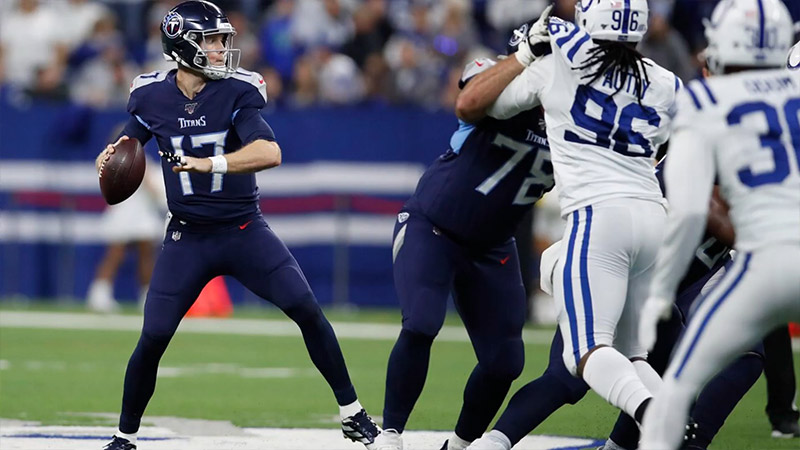
However, when the clock strikes Sunday and the professional ranks take the field, that visual landscape shifts dramatically. Every player on an NFL roster appears remarkably uniform from the helmet down to the cleats. One of the most striking differences is the mandatory requirement for long, high socks that leave zero skin exposed.
This is not a stylistic coincidence or a simple team preference. It is one of the most strictly enforced regulations in professional sports.
If you have ever wondered why a world-class athlete would face thousands of dollars in financial penalties simply for showing a few inches of skin on their lower leg, the answer lies in a blend of 1940s tradition, corporate branding, and a relentless pursuit of a “professional” image.
The 1945 Decree: The Man Who Hated “Unsightly” Legs
To understand the current state of NFL hosiery, we have to travel back nearly eight decades. The rule was not born out of a modern marketing meeting but rather from the personal aesthetic preferences of a single man: Commissioner Elmer Layden. In 1945, Layden looked at the state of the league and decided that the sight of bare legs on the football field was, quite simply, “unsightly”.
At the time, professional football was still fighting for the same level of respect and cultural dominance held by Major League Baseball and the college football ranks.
Layden believed that for the NFL to be taken seriously as a premier professional entity, its players needed to look the part of elite employees. He decreed that all players must wear long stockings to ensure a uniform, polished appearance across the league.
While Layden’s tenure eventually ended, his “Smooth Legs” legacy remained. The regulation was never scrubbed from the books; instead, it was reinforced and codified into the Official NFL Rulebook, where it remains a cornerstone of the league’s dress code today.
Decoding the Official Uniform Rule
The NFL does not just suggest that players wear socks; it provides a highly specific blueprint for how those socks must be worn. The “Uniform Rule” regarding leg coverage is absolute.
According to the regulations, players are required to cover the entire area of their lower leg, stretching from the top of the shoe to the bottom of the pants.
This mandate is built on three primary pillars:
- Total Coverage: There is a “No Bare Skin” policy. Socks or stockings must extend all the way up to the knee so that no exposed skin is visible between the bottom of the jersey-style pants and the top of the cleats.
- Color Coordination: The socks are not a place for personal expression. They must match the approved team colors and follow specific design patterns sanctioned by the league.
- Consistency: Every player on the team must adhere to the same visual standard, creating a cohesive “unit” look that is essential for the league’s television product.
For decades, this rule even required a specific “double-layered” look, where players had to wear white socks underneath their team-colored stockings.
It wasn’t until 2019 that the league finally revised this specific detail, no longer mandating the white under-layer, though the requirement for full leg coverage remains as firm as ever.
The Business of Branding: Why “Looking Professional” Matters
From a distance, the obsession with sock height might seem trivial. However, from the perspective of a multi-billion-dollar conglomerate, the uniform is a vital piece of intellectual property.
NFL players are not just athletes; they are the primary visual representation of their respective clubs and the league as a whole.
In many ways, the NFL operates like any other major corporation with a strict dress code. When an employee represents a Fortune 500 company, they are expected to adhere to standards that reflect the brand’s values.
For the NFL, that value is “Elite Professionalism.” The league views the “unfinished” look of college football—where socks are optional or worn at varying heights—as inconsistent with the premium brand they want to project.
By mandating high socks, the NFL ensures that every frame of game-day footage looks polished and “finished”. This level of uniformity is essential for licensing, video games, and global marketing.
When a fan buys an action figure or plays a game like Madden, the “look” of the player is iconic and standardized, largely thanks to these rigid uniform rules.
The College Contrast: Saturday vs. Sunday
One of the most frequent questions from fans is why college players are allowed to show their calves while NFL players are not. The answer is rooted in the different structures of the two organizations.
In the NCAA, the rules regarding uniform aesthetics are significantly more “laid back”. While college players are technically required to wear socks, the enforcement regarding the exact height of those socks is much less stringent.
This is why you often see college players wearing ankle socks or “scrunching” their socks down, giving them a look that some fans describe as “goofy” or akin to “bike shorts”.
Furthermore, the mechanism for enforcement is entirely different. You cannot fine a college athlete for a dress code violation in the same way you can a professional.
In the NFL, players are employees of clubs that belong to a massive non-profit organization (the NFL league office).
This employer-employee relationship allows the league to implement a “Fashion Police” system that would be impossible at the collegiate level.
The “Fashion Police”: Enforcement and the Cost of Non-Compliance
To ensure these rules are followed, the NFL employs uniform inspectors who monitor players closely during pre-game warmups and throughout the duration of the game.
These inspectors are not just looking for major violations; they are checking for minor details, such as a sock that has slipped down a few inches or a jersey that isn’t tucked in properly.
The consequences for failing to meet these standards are financial and immediate. If a player is found in violation of the uniform code, they are subject to league-mandated fines.
These aren’t just slaps on the wrist; for repeat offenders, the fines can escalate into the tens of thousands of dollars.
If a player pulls down their socks during a game for comfort or style, they are typically told by an official or an inspector to fix the issue before the next play. If they fail to do so, or if they are caught again in a subsequent game, the financial penalties grow.
This strict enforcement ensures that players prioritize the league’s visual standards over their personal style preferences.
Function Over Fashion: The Practical Side of the Sock
While the reason for the rule is aesthetic, there are functional reasons why a player would want to wear long socks regardless of the mandate. Football is a high-impact sport played on surfaces ranging from natural grass to various types of turf.
Long socks provide a layer of protection against “turf burn,” which occurs when skin scrapes across artificial grass. They also help keep leg muscles warm and provide a surface for tape, which many players use to support their ankles.
Interestingly, many players—both in the NFL and college—actually choose to “double-sock.” They wear a thinner, moisture-wicking sock against their skin and a thicker team-branded sock over it.
This provides added cushion and is a common tactic to prevent blisters during the high-torque movements required on the field. While the NFL mandates the look of the long sock, many players embrace the function of the layered approach to protect their most valuable assets: their feet.
The Evolution of the Look: The 2019 Revision
For a long time, the NFL had a very specific “look” that involved a colored stocking worn over a white sock, often resulting in a white “window” at the ankle or a specific striped pattern. However, as athletic apparel technology evolved, players began to find this requirement cumbersome.
In 2019, the league finally listened to player feedback and revised the rule. They removed the mandatory requirement to wear white socks in addition to the team-colored ones.
This allowed for a more streamlined look and gave players a bit more flexibility in terms of the actual construction of their legwear, provided that the result still met the “full coverage” and “team color” requirements.
This change was welcomed by many who felt the previous “middle of the calf” white sock look was dated or “dorky”.
Why the Rule Won’t Change
Despite some critics calling the rule “ridiculous” or “asinine,” there is very little evidence to suggest the NFL will ever move toward a more relaxed, college-style dress code. The league thrives on its image as the “Elite” version of the sport.
The high sock has become a symbol of the transition from the amateur ranks to the professional ones.
It represents the moment a player stops playing for a school and starts working for a global brand. For the fans, the high socks contribute to the “gladiator” aesthetic of the NFL—a look that is uniform, intimidating, and unmistakably professional.
As long as the NFL continues to prioritize its brand identity and television presentation, the “Fashion Police” will continue to roam the sidelines, and players will continue to reach for their long stockings before heading out of the tunnel.
The Bottom Line
The NFL’s “Long Sock Rule” is a fascinating example of how history and corporate branding can dictate the smallest details of a professional athlete’s life.
What began as a personal preference of a 1940s commissioner has evolved into a multi-million-dollar standard of professionalism.
While it may seem like a minor detail, it is a key part of what makes the NFL look and feel like the premier sports league in the world.
Next time you see a player getting a quick equipment adjustment on the sidelines, remember: they aren’t just fixing their socks; they are protecting their paycheck and upholding a 75-year-old tradition of the “professional look.”