In the world of professional athletics, every stitch, seam, and fabric choice is the result of rigorous testing and intentional engineering.
To the casual observer, an American football jersey is simply a piece of branded apparel designed for identification and team spirit.
However, for the elite athlete, the jersey is a critical component of their performance kit—a piece of high-tech armor that must balance protection, durability, and extreme range of motion.
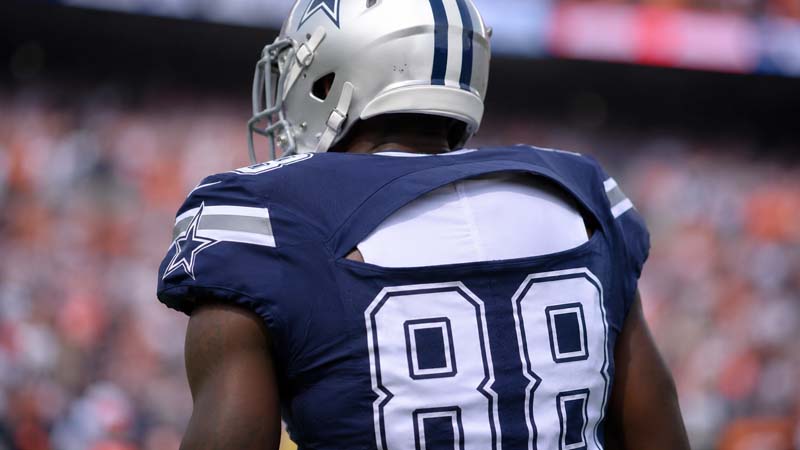
One of the most distinctive yet misunderstood features of the modern football jersey is the small cut or slit found in the back tail.
Often referred to in technical manufacturing as a “crotch cut,” this design element is far from a stylistic choice.
It is a functional necessity born from the unique physical demands of the sport. Understanding the purpose of this slit provides a window into the complex relationship between garment construction and human biomechanics.
The Geometry of Performance: Why the Tail is Split
The fundamental reason for the existence of this cut is the intentional asymmetry of the jersey’s construction. In a professional-grade football jersey, the back panel is engineered to be significantly longer than the front panel.
This design serves a primary purpose: ensuring the jersey remains securely tucked into the player’s pants during the explosive, high-impact movements typical of a game.
However, this extra length creates a secondary challenge. When a long piece of heavy, high-tensile fabric is tucked into tight-fitting athletic pants, it naturally seeks to follow the contours of the body.
Without a relief point, a solid back panel would create a “tenting” effect or substantial bulk around the lower torso and groin.
The split tail—the “crotch cut”—solves this by allowing the tucked-in fabric to bifurcate. This allows the material to fit smoothly down each leg independently, rather than forming a single, restrictive mass of fabric.
By dividing the tail, the jersey can move in harmony with the player’s legs, providing a streamlined fit that minimizes distractions and maximizes comfort.
Preventing the “Bunching” Effect
One of the most significant frustrations for an athlete is “bunching”—the phenomenon where excess fabric folds over itself, creating thick ridges that can cause chafing or restrict movement.
In a sport where a fraction of a second or an inch of reach can determine the outcome of a play, these minor physical hindrances are unacceptable.
The slit in the back tail is the primary defense against this issue. Because the fabric is split, it does not fold over itself or get caught awkwardly between the legs during rapid transitions from a crouch to a sprint.
In the absence of this cut, the heavy fabric used in jerseys would likely migrate toward the groin area, creating a tight, uncomfortable sensation that could compromise a player’s focus and agility.
By facilitating a smooth transition from the torso to the legs, the cut ensures that the jersey acts as a second skin.
This is particularly important for linemen, who spend much of the game in a deep squat or three-point stance, and for skill position players who must execute lateral cuts and high-speed lunges.
Biomechanics and Freedom of Movement
Football is a game of extreme ranges of motion. Players must be able to stretch their arms fully overhead to catch a pass, drop into a deep defensive stance, or hit the turf and pop back up instantaneously. The split-tail design is a vital contributor to this necessary mobility.
When a player runs or stretches, the lower half of the body moves through a wide arc. A solid, tucked-in jersey would create a “pulling” sensation, as the fabric would be stretched to its limit across the hips and lower back.
The “crotch cut” alleviates this tension. It provides a degree of mechanical “give,” allowing the uniform to expand and contract without pulling tight or restricting the athlete’s natural stride.
This freedom of movement is not just about comfort; it is about performance optimization. When an athlete does not have to fight against their own clothing, they can exert more force and maintain better form.
The engineering of the slit allows for a full range of hip extension and flexion, which is the engine of athletic power on the field.
The Evolution of the Professional Uniform
To appreciate the “crotch cut,” one must look at how football uniforms have evolved over the last century. In the early days of the sport, jerseys were often made of heavy wool or thick cotton knits.
These materials were bulky, absorbed sweat, and offered very little in the way of flexibility. As the game became faster and more specialized, the need for a more streamlined silhouette became apparent.
The move toward synthetic, moisture-wicking materials changed the landscape of uniform design. Modern jerseys are often composed of multiple types of fabric—stretch mesh for breathability, heavy-duty “cordura” style nylon for durability on the shoulders, and high-elasticity side panels.
Despite these advances in material science, the structural problem of the “long back panel” remained. The split tail emerged as the most elegant solution to integrate a long, secure tuck with the high-mobility requirements of the modern game.
It is a classic example of how traditional tailoring techniques—such as the vents found in the back of a formal suit jacket—have been adapted for the world of elite sport.
Security and Safety: The Importance of the “Tuck”
In the National Football League (NFL) and many collegiate divisions, uniform regulations regarding “tucking” are strictly enforced. Beyond the aesthetic of a professional appearance, there is a safety component to keeping a jersey tucked in.
A loose, flapping jersey provides an easy “handle” for an opposing player to grab, which can lead to illegal horse-collar tackles or jersey-pulling that can cause a player to lose their balance and sustain an injury.
The extra length in the back panel is what makes a secure tuck possible. It ensures that even when a player is bent over in a huddle or diving for a touchdown, the jersey stays firmly anchored within the waistband of the pants.
The “crotch cut” is the “secret sauce” that allows this extra-long tail to exist without becoming a hindrance to the player’s groin and upper legs.
The Intersection of Form and Function
When we analyze the split-tail jersey, we see a perfect intersection of form and function. The design isn’t meant to be seen; in fact, when the jersey is worn correctly, the cut is completely hidden from view. Its success is measured by the absence of a problem: the absence of bunching, the absence of pulling, and the absence of discomfort.
For the equipment managers and apparel designers who support the world’s most valuable sports franchises, these small details are everything. A jersey that fits perfectly allows a player to forget they are wearing it, enabling them to reach a state of “flow” where their physical talent can be fully realized.
Conclusion
The next time you watch a game, take a moment to consider the immense amount of engineering that goes into the equipment on the field.
The small slit in the back of a jersey is a testament to the fact that in professional sports, there are no accidents.
Every feature has been refined over decades to solve a specific problem, allowing athletes to push the boundaries of what is humanly possible.
The split-tail jersey is more than just clothing; it is a tool of the trade. It represents a commitment to excellence that extends from the players on the field to the designers in the lab.
By prioritizing fit, mobility, and comfort, this subtle design choice ensures that the only thing a player has to worry about is the person lining up across from them.