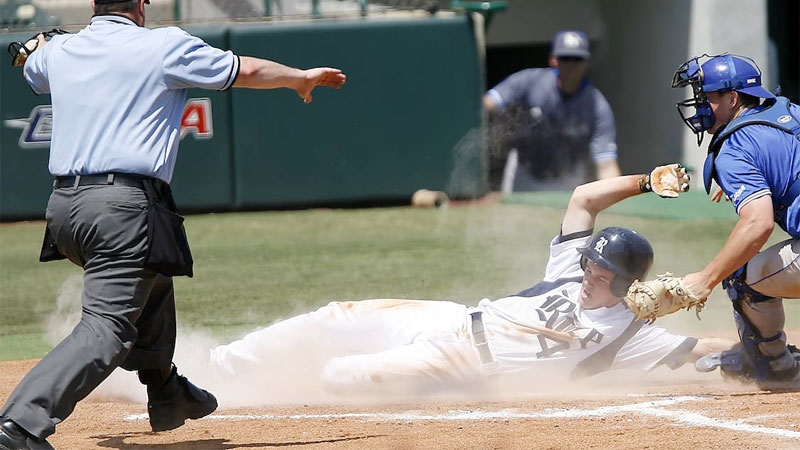
You’re watching a game. A batter rips a single, jogs to first, unstraps his batting gloves, and pulls a puffy, oversized glove out of his back pocket. It looks like something you’d use to take cookies out of the oven.
If you’ve ever thought, “Why is he wearing a mitten?”, you’re in good company. It’s one of the most-asked questions from casual fans and parents of young players.
The short answer: that “mitten” is a sliding mitt, a piece of protective gear that shields a runner’s hand, fingers, and wrist during headfirst slides. It exists because sliding into a base hands-first can break thumbs, dislocate fingers, and end seasons.
Below, we’ll cover what the sliding mitt is, why it works, where it came from, what the rules say, and whether you or your child should use one.
What Is That “Mitten” Actually Called?
Sliding Mitt vs. “Oven Mitt” vs. Running Glove
The official name is a sliding mitt, though you’ll also hear it called a sliding glove, a running glove, or, most often among fans, an “oven mitt.” Broadcasters joke about it, but players take it seriously.
Unlike a batting glove, which has five separate fingers for grip and feel, a sliding mitt encloses the fingers together in a single padded pocket. That design is intentional, as you’ll see below.
What It’s Made Of
A typical sliding mitt includes:
- A rigid or semi-rigid plate (usually plastic) running along the back of the hand and fingers
- Padded lining to absorb impact
- An elastic or compression body that keeps the hand snug
- A hook-and-loop wrist strap to lock it in place
Higher-end models add leather palms and neoprene shells for a better feel on the bag. The stiff plate is the star of the show: it stops fingers from bending backward when they hit something solid.
The Main Reason: Protecting the Hand on Headfirst Slides
How a Headfirst Slide Hurts the Hand
Picture a runner sprinting full speed toward second base and diving forward. The very first thing to make contact with the base, the dirt, or the fielder is the lead hand.
That creates three big dangers:
- The base edge. Bases sit a few inches off the ground. If extended fingers catch the edge, they can snap backward.
- The fielder’s cleats. A shortstop or second baseman covering the bag may step down right where the runner’s hand lands. Metal or molded spikes on bare fingers is a nasty combination.
- The tag itself. A hard tag applied with a glove and ball can jam a wrist or thumb on impact.
Common Injuries the Mitt Helps Prevent
Without protection, a runner risks:
- Broken or sprained thumbs (including torn thumb ligaments)
- Dislocated or jammed fingers
- Sprained wrists
- Bone bruises
- Cuts and gashes from spikes
These aren’t rare, freak accidents. They’re a well-known hazard of aggressive baserunning. A notable example came in 2014, when star outfielder Bryce Harper tore a ligament in his thumb on a headfirst slide into third base and missed roughly two months of the season.
Why Teams Care So Much
For a professional club, a fast runner with a broken hand isn’t just an injured player. It’s lost stolen bases, lost runs, and a hole in the lineup. A piece of gear that costs less than a team dinner and lowers that risk is an easy decision.
The Hidden Benefits Most Fans Don’t Notice
Protection is the headline, but players point to a few other perks.
More Confidence, More Aggressive Running
When a runner isn’t worried about his fingers, he slides harder and commits fully to taking the extra base. Hesitation on the basepaths costs fractions of a second, and in baseball, fractions of a second decide close plays.
A Built-In Safe Hand Position
Coaches have long taught players to keep their hands closed or flat when sliding headfirst, because open, spread fingers are the ones that get hurt. The sliding mitt essentially forces that safe position automatically.
Built for the Modern, Faster Game
With MLB’s pitch clock and larger bases introduced in 2023, stolen base attempts have climbed. More steals mean more slides, and more slides mean more chances for hand injuries. The mitt has become even more useful in this faster era.
Where the Sliding Mitt Came From: A Little Baseball History
Before the Mitt: Old-School Tricks
Long before the sliding mitt existed, savvy base runners found their own solutions. Many clenched their batting gloves inside their fists while running, giving them something to grip so their fingers stayed curled and out of harm’s way. Others simply avoided headfirst slides altogether and stuck to feet-first technique.
For generations, a jammed thumb was considered part of the price of playing hard.
The Pioneer: Scott Podsednik
The modern sliding mitt is widely credited to Scott Podsednik, the speedy outfielder best known for his years with the Chicago White Sox, including their 2005 World Series title.
After dealing with repeated hand injuries from sliding, he worked with a hand therapist to create a protective device he described as a kind of “removable cast.”
From Oddity to Everyday Gear
For years the idea stayed niche. Gradually, other professional players adopted it, equipment companies began producing commercial versions, and by the late 2010s it had become a common sight across Major League Baseball.
Today you’ll see it at every level, from MLB to college, high school, travel ball, and youth leagues, in both baseball and softball.
When and How Runners Use the Mitt
Why It Comes Out Only After Reaching Base
You’ll never see a batter wear a sliding mitt at the plate, since you can’t grip a bat with your fingers bundled together. Instead, players keep it tucked in a back pocket and slip it on once they reach base. When the inning ends, it goes back into the pocket.
Which Hand Do Players Wear It On?
Most runners wear one mitt on their lead hand, the hand they reach toward the base with during a headfirst slide. This often matches their dominant hand, but there’s no fixed rule. A handful of cautious players wear mitts on both hands.
Technique Still Matters
The mitt reduces risk, but it doesn’t replace good fundamentals. Coaches still teach runners to:
- Keep the chin up and eyes on the base
- Reach with the protected hand
- Avoid sliding headfirst into home plate, where catchers block the plate in heavy gear
- Never slide headfirst into first base, where it rarely saves time
Is the Sliding Mitt Legal? What the Rules Say
Major League Baseball
There is no MLB rule that requires a runner to wear a sliding mitt, and there’s also no rule against it. Runners currently have broad freedom in the style and design they choose. Some observers have wondered whether size limits could come in the future, but for now, it’s permitted.
High School, College, and Youth Leagues
Most amateur organizations allow sliding mitts, but equipment rules vary by league, region, and country. Some youth programs have restrictions on color, logos, or size. Before buying one for a young player, check with your league or coach.
Base Runners vs. Base Coaches: Clearing Up the Confusion
Some fans search “why do base coaches wear a mitten,” but base coaches don’t wear sliding mitts because they never slide.
What you may notice on first- and third-base coaches is a protective helmet, which became mandatory in MLB after a minor-league coach was tragically killed by a foul ball in 2007. The mitten belongs strictly to the runner.
Should You (or Your Child) Wear a Sliding Mitt?
Who Benefits Most
- Aggressive base stealers who slide often
- Players who prefer headfirst slides
- Youth players still learning safe sliding technique
- Softball players, who face the same hand risks
Pros and Cons at a Glance
| Pros | Cons |
|---|---|
| Lowers risk of finger, thumb, and wrist injuries | Slightly less feel for the bag |
| Boosts confidence on the basepaths | One more item to carry |
| Affordable compared with other gear | Poor fit can hurt performance |
| Allowed in most leagues | Doesn’t replace proper technique |
What to Look For When Buying
- Correct size. Youth and adult sizes differ. An oversized mitt can slip or drag along the dirt.
- Snug, secure fit. The wrist strap should lock in place without cutting off circulation.
- A sturdy protective plate. This is the part that does the real work.
- Durable materials. It will be scraped against dirt and bases repeatedly.
- Comfort. If a player hates wearing it, it’ll stay in their pocket.
Care tip: Wipe it with a damp cloth after games and let it air-dry away from direct heat to extend its life.
The Bottom Line
That puzzling “mitten” isn’t a fashion statement or a gimmick. It’s smart, purpose-built safety gear that grew out of real injuries on the basepaths.
It continues a long baseball tradition of players finding clever ways to protect their hands, from clutching batting gloves in their fists to today’s padded, plated sliding mitts.
As the game gets faster and runners get bolder, expect to see that “oven mitt” even more often.