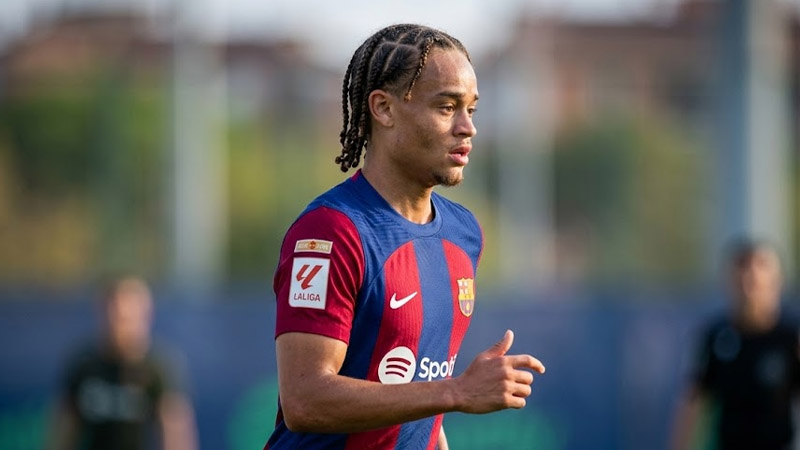
The departure of Xavi Simons from Barcelona in July 2019 sent shockwaves through the footballing world, marking a rare moment where a crown jewel of La Masia chose to walk away before reaching the first team.
For nearly a decade, Simons was the face of the club’s youth academy, characterized by his iconic blonde curls and a precocious talent that drew global attention.
However, the relationship fractured over diverging views on career progression and financial valuation. Understanding why he left requires a deep dive into the tension between modern player branding and traditional club philosophy.
The Cultural Impact of the Xavi Simons Phenomenon
The exit of Xavi Simons was not just a typical transfer; it was the conclusion of what coaches described as an unprecedented “phenomenon” within the youth ranks.
Throughout his time at the academy, Simons operated under a level of scrutiny and pressure that few teenagers could withstand, yet he often thrived on the big stage.
Managing the Weight of Unprecedented Expectations
Coaches at the academy, including Carles Martínez, noted that Simons was a player who constantly had “all eyes on him”.
Whether playing in local tournaments or international showcases in Sweden, he was treated like a superstar, with fans constantly seeking photos and autographs.
This environment created a unique psychological profile; Simons became a daring player who was comfortable taking responsibility, such as stepping up for crucial penalties under immense pressure.
This high visibility, however, also created a divide within the club regarding whether his fame matched his actual footballing ceiling.
The Sporting Blueprint: A Clash of Timelines
At the heart of the disagreement was a fundamental disconnect regarding Simons’ sporting pathway.
His representatives were looking for a concrete roadmap that ensured his transition to professional football, while Barcelona maintained a policy of meritocracy that avoided early guarantees.
The 18-Year-Old Debut Guarantee
One of the primary sporting hurdles was the demand for a guaranteed first-team debut. Simons’ camp sought a contractual assurance that he would feature for the senior squad before he turned 18.
Barcelona’s leadership refused to provide such a guarantee, adhering to their tradition that a player must earn their place through performance rather than through legal clauses.
This refusal led his entourage to believe that the club was not fully committed to his long-term development or that he had already reached a “ceiling” within their specific system.
The Dispute Over Squad Promotion
The technical logistics of his final offer from Barcelona also played a significant role in his dissatisfaction.
The club proposed a plan where Simons would join the Under-19 team for the pre-season, but he would be required to rotate back to the Under-17 squad once the regular season commenced.
His representatives viewed this as a stagnation of his progress, arguing that he had already outgrown those age categories.
In contrast, Paris Saint-Germain (PSG) presented a project that offered immediate integration into higher-level youth squads and a faster projected route to training with world-class professionals.
Analyzing the Financial Disconnect
While some stakeholders argue that the move was primarily about football, the financial gap between the two offers was substantial. Barcelona’s commitment to internal wage structures clashed with the market reality of a player with Simons’ global profile.
| Feature | Barcelona Offer | PSG Counter-Offer |
|---|---|---|
| Annual Salary | Approximately €100,000 | Reported up to €1,000,000 |
| Wage Philosophy | Financial parity among academy players | Market-value based on global branding |
| Contract Type | Standard renewal | Lucrative professional package |
| Agent Influence | Resisted agent demands | Aligned with agent’s valuation |
The club’s refusal to “go crazy” with the wage was a strategic decision to prevent ego clashes and maintain the traditional hierarchy of the academy.
For many fans and club members, the choice to accept PSG’s significantly higher offer labeled Simons as a “money merchant,” a sentiment echoed across social media following his departure.
The Influence of the Late Mino Raiola
The involvement of high-profile agent Mino Raiola is often cited as the turning point in Simons’ relationship with Barcelona. The club’s administration was known for its reluctance to “bend” to Raiola’s aggressive negotiating tactics.
September 2017: The Point of No Return
Barcelona officials began to fear a departure as early as September 3, 2017. This was the day Raiola was spotted watching a Cadet B match alongside Simons’ father, Regillio, and subsequently leaving with the young player in his car.
This moment signaled that Simons’ career was no longer being managed solely through the lens of the academy, but as a global professional asset.
The presence of Raiola often complicated negotiations, as the club preferred dealing with families directly rather than agents who prioritized high-value transfers.
The Marketing Paradox: Talent vs. Branding
A major point of internal debate at Barcelona was whether Simons’ value was driven by his footballing ability or his massive social media presence. By the age of 16, he was already a digital powerhouse with verified accounts and a personal logo.
Internal Club Assessments and Meritocracy
Youth coaches at La Masia were notably divided on Simons’ ultimate potential. While some viewed him as a future first-team anchor, others argued that there were players within the academy who possessed similar or superior footballing capabilities but received far less media attention.
- The “Instagram Star” Label: Critics within the fan base felt that his personal branding—including a “Xavi Simons” logo-stamp on his official departure statement—was excessive for a player who had not yet graduated from youth football.
- The Tradition of Patience: Traditionalists often compared his exit to the patience shown by club legends like Xavi Hernandez and Andres Iniesta, who waited years to solidify their spots in the first team without demanding special treatment or inflated salaries.
- The Hype Factor: Some observers felt that his fame was partially tied to his name and hair rather than a clear dominance on the pitch, leading to the belief that the club was right not to break their structure for him.
La Masia’s Cultural Stand
Barcelona’s decision to let Simons walk away was a statement of intent regarding the club’s values. They chose to uphold a policy of equality over making an exception for a single prospect, regardless of his marketing value.
Preserving the Academy Ecosystem
The administration believed that giving Simons a salary significantly higher than his teammates would have set a dangerous precedent, potentially causing unrest among other talented youngsters.
By sticking to the €100,000 threshold, the club aimed to prioritize the collective over the individual.
While this resulted in the loss of a highly-rated talent, many supporters respected the club for not being “held to ransom” by agents or the allure of social media stardom.
Frequently Asked Questions
Was money the only reason Xavi Simons left?
No. While the financial package at PSG was significantly larger, his entourage emphasized that the lack of a clear sporting pathway and the refusal of a first-team debut guarantee before age 18 were the primary factors.
Who was Xavi Simons’ agent during the transfer?
He was represented by the late Mino Raiola, whose involvement was a major point of contention for Barcelona’s board.
What was Barcelona’s final offer to Simons?
The club offered approximately €100,000 per year and a sporting plan that involved rotating between the Under-19 and Under-17 teams.
How did the fans react to his departure?
The reaction was largely negative, with many fans accusing him of choosing money over the “love of the shirt” and criticizing his extensive personal branding at such a young age.
Conclusion
The story of why Xavi Simons left Barcelona is a complex interplay of modern football economics and traditional sporting values. For Simons, the move to PSG represented a faster track to professional football and a valuation that matched his global brand.
For Barcelona, losing Simons was a calculated risk taken to preserve the integrity of La Masia’s wage structure and merit-based promotion system.
As we look at his career today, the departure remains a defining case study in youth development. It challenges clubs to consider how they manage “phenomenon” players who bring as much value off the pitch as they do on it.
Whether you view his exit as a loss of generational talent or a victory for club culture, it is clear that the “Xavi Simons phenomenon” changed the way we look at academy football forever.