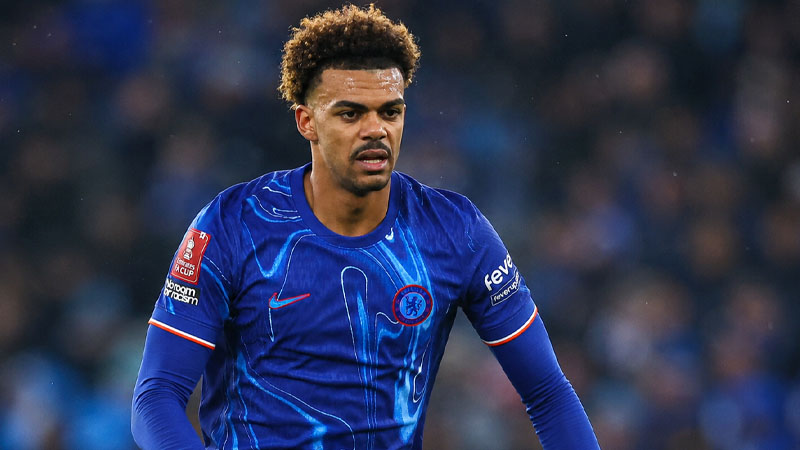
The rapid departure of Renato Veiga from Chelsea just six months after his arrival remains one of the most intriguing transfer stories of the season.
Despite making 18 appearances and earning his first senior Portugal call-up while at Stamford Bridge, the versatile youngster sought a new path away from West London.
His exit was not a result of poor performance but rather a deep-seated disagreement regarding his tactical role and positional identity.
This friction ultimately led to a record-breaking permanent move to Villarreal, highlighting the uncompromising nature of modern elite football management and financial strategy.
The Core Conflict: Positional Identity vs. Tactical Utility
The primary catalyst for Renato Veiga’s exit was a fundamental disagreement over where he should operate on the pitch.
While Chelsea viewed him as a multi-functional tool for a complex system, the player possessed a singular vision for his long-term career development as a specialist in the defensive line.
The Inverted Fullback Dilemma
Under manager Enzo Maresca, Veiga was primarily deployed as an inverted left-back.
In this sophisticated role, he was required to move from the defensive flank into the midfield during possession phases to provide extra passing lanes and defensive stability against counter-attacks.
While this tactical innovation allowed him to showcase his technical proficiency and contributed to his senior international recognition with Portugal, Veiga found the role frustrating.
He felt that playing out wide hampered his ability to develop the specific instincts required for his preferred role, leading to a growing sense of professional misalignment with the manager’s blueprint.
The Quest for Center-Back Dominance
The heart of the issue was Veiga’s firm desire to be recognized and utilized as a center-back.
He believed that securing a long-term future with the Portugal national team required him to play strictly in the heart of the defense rather than as a utility player or a midfield hybrid.
Despite his vocal preference, he featured as a center-back for Chelsea only twice, both instances occurring in the Europa Conference League against Shamrock Rovers and Panathinaikos.
With a crowded pecking order including Levi Colwill, Wesley Fofana, and Benoit Badiashile, Veiga realized that his pathway to a regular starting spot in his favored position was effectively blocked at Stamford Bridge.
The Maresca Mandate: Versatility as a Prerequisite
Enzo Maresca’s management style is defined by a strict adherence to tactical flexibility.
For the Italian coach, a player’s value is intrinsically linked to their ability to adapt to various roles within his system, a philosophy that clashed directly with Veiga’s specialized ambitions.
Adaptability or Struggle
Maresca was transparent in his public and private assessments of the situation, stating that players who refuse to learn multiple positions would naturally “struggle” in his squad.
He argued that playing in different roles was actually beneficial for Veiga, noting that it was this very versatility that caught the eye of the Portugal national team selectors.
During their discussions, Maresca reaffirmed that the chance to join the national team was created by the specific role he played at Chelsea, which generated significant market interest.
However, the manager also emphasized that the team’s needs surpassed any individual’s positional preference, making it clear that the player would have to adapt to stay.
Squad Reduction and Tactical Alignment
Beyond the philosophical debate, Veiga’s exit was also part of a broader strategy to trim a bloated first-team squad. Reports indicated that Maresca sought to part ways with approximately 15 players to create a more manageable and cohesive training group.
Because Veiga’s defensive profile and slower pace did not perfectly match the requirements for the inverted fullback system as envisioned by the coaching staff, he was deemed surplus to requirements.
When a player’s personal goals and the manager’s tactical requirements diverge so sharply, a separation often becomes the only logical conclusion for both parties.
The Financial Logic: Turning Utility into Profit
While the tactical friction was the driving force for the player, Chelsea’s decision to sanction the move was heavily influenced by the opportunity to realize a significant return on investment.
The club’s approach to the transfer market increasingly emphasizes identifying undervalued talent and flipping them for profit.
| Financial Metric | Detail | References |
|---|---|---|
| Original Purchase Price | £12 million (from FC Basel) | |
| Loan Revenue | €5 million (Paid loan to Juventus) | |
| Final Sale Fee | Rising to £26 million (to Villarreal) | |
| Total Profit | Approximately £14 million + Loan Fees | |
| Accounting Impact | Significant PSR (Profit and Sustainability) Benefit |
By selling Veiga for a fee rising to £26 million, Chelsea more than doubled their initial investment in less than a year.
This windfall provided essential breathing room regarding the Premier League’s Profit and Sustainability Rules (PSR), allowing the club to continue its aggressive recruitment strategy while staying within financial regulations.
Furthermore, the deal represented a record-breaking acquisition for Villarreal, signifying Veiga’s high market value despite his limited minutes in the Premier League.
The Transfer Saga: From Dortmund to Turin and Beyond
The road to Veiga’s eventual permanent exit was paved with interest from several of Europe’s elite clubs. His profile as a young, versatile international player made him a highly sought-after commodity during the winter window.
The Dortmund Disagreement
Borussia Dortmund was one of the earliest and most serious suitors for the Portuguese defender.
Negotiations progressed to the point where personal terms were largely agreed upon, and reports suggested that the German giants intended to deploy him in his preferred center-back role.
However, the deal eventually collapsed due to disagreements between Chelsea and Dortmund over the transfer modalities and the loan fee.
Chelsea’s insistence on specific financial terms meant that the Bundesliga side eventually pulled out of the race, opening the door for other interested parties.
The Juventus Interim
Following the breakdown of the Dortmund talks, Italian powerhouse Juventus emerged as the preferred destination for a temporary solution. In January 2025, Chelsea and Juventus finalized a “dry loan” agreement—a move valued at €5 million without an option to buy.
For Veiga, the move to Turin offered a chance to escape the tactical constraints at Chelsea and gain valuable experience in a different league.
While he performed well enough to attract further interest, Juventus ultimately decided not to pursue a permanent transfer, citing the high costs associated with his valuation and their own future squad plans.
Final Destination: Villarreal
Upon his return to Chelsea in the summer of 2025, it became clear that his situation had not changed. The club was actively looking for new central defenders, further diminishing his pathway to the first team.
This led to the permanent agreement with Villarreal, a club known for nurturing technical defensive talent.
The move satisfied all parties: Veiga received the guarantee of playing time in a major league, Villarreal secured a top-tier prospect, and Chelsea netted a massive financial gain from a player they had signed just a year prior.
Strategic Implications of the Veiga Departure
The story of Renato Veiga is more than just a simple transfer; it is a case study in the modern football ecosystem where data-driven scouting, tactical rigidity, and financial maneuvering intersect.
- Player Power and International Ambition: Veiga’s willingness to walk away from a prestigious club like Chelsea to protect his national team prospects demonstrates the increasing importance players place on their international careers.
- The Manager’s Veto: Enzo Maresca’s refusal to compromise on his system shows that tactical alignment is now a non-negotiable factor in squad building at elite clubs.
- Asset Management: Chelsea’s ability to turn a £12 million utility player into a £26 million asset in twelve months highlights a ruthless but effective financial model that prioritizes capital gains.
- The Market for Versatility: Despite Veiga’s personal frustrations, the sheer volume of clubs interested in him—including Marseille, Wolves, Bournemouth, and Napoli—proves that versatile profiles remain the most liquid assets in the transfer market.
Frequently Asked Questions
Why did Renato Veiga leave Chelsea so quickly?
He left primarily because he wanted to play as a center-back, whereas manager Enzo Maresca insisted on using him as an inverted left-back.
How much profit did Chelsea make on Renato Veiga?
Chelsea purchased him for roughly £12 million and sold him to Villarreal for a fee rising to £26 million, generating a profit of approximately £14 million plus a €5 million loan fee from Juventus.
Did Renato Veiga play well for Chelsea?
Yes, he was considered a reliable squad player, making 18 appearances and earning his first senior call-up to the Portugal national team during his brief tenure.
Why didn’t Chelsea just play him at center-back?
The club had a deep roster of established center-backs, including Levi Colwill, Wesley Fofana, Tosin Adarabioyo, and Benoit Badiashile, placing Veiga at the bottom of the pecking order for that specific position.
What was Enzo Maresca’s stance on the transfer?
Maresca maintained that players must be versatile to succeed in his system and that if a player insists on only playing one position, they will naturally struggle to find minutes.
Conclusion
Renato Veiga’s exit from Chelsea serves as a stark reminder that talent alone is often insufficient in the modern game; tactical harmony and financial timing are equally critical.
While Chelsea fans may wonder what might have been had he stayed, the move allowed the club to balance its books while providing the player with the positional specialist role he craved.
As he begins his new chapter at Villarreal, the football world will be watching to see if his gamble on positional purity pays off with continued success for the Portugal national team.
For Chelsea, the focus remains on the next evolution of Maresca’s tactical project and the continued refinement of their high-turnover squad strategy.