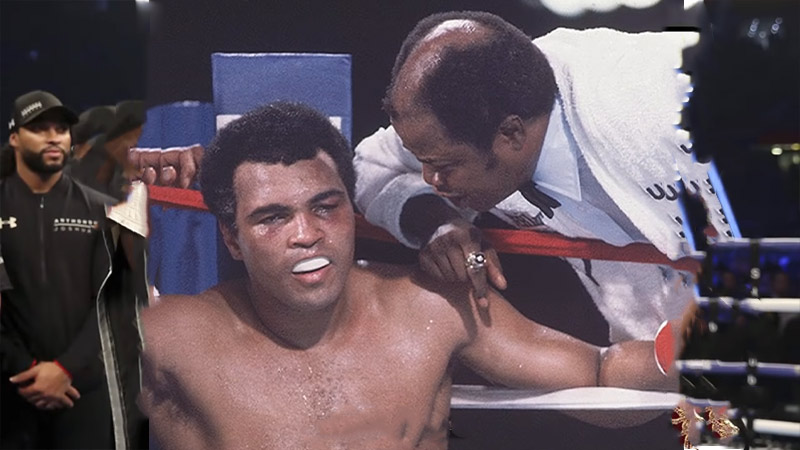
Muhammad Ali was not merely a professional athlete; he was a global enterprise of charisma, conviction, and unmatched physical prowess.
Born Cassius Marcellus Clay Jr., Ali redefined the heavyweight division, finishing his 20-year career with a staggering record of 56 victories in 61 fights, including 37 knockouts.
However, the narrative of his retirement at age 39 is a complex study of a champion battling the only two forces he could not outmaneuver:
“Father Time” and a neurodegenerative condition that would eventually be diagnosed as Parkinson’s disease.
Foundation: The High-Stakes Career of Muhammad Ali
To understand Ali’s retirement, one must first analyze the “market value” of his career peak. Ali’s dominance was characterized by a unique combination of quickness, footwork, and bravery.
The Interruption of the Peak Years
A critical factor in Ali’s eventual physical decline was the forced hiatus during what should have been his athletic prime. In the late 1960s, Ali refused to be drafted into the Vietnam War based on his religious convictions. The institutional response was severe:
- A five-year prison sentence (later overturned).
- A $10,000 fine.
- A total ban from professional boxing.
While this period solidified his status as a civil rights icon and humanitarian, it deprived the boxing world of three and a half years of his peak physical performance. When he returned to the ring, he was no longer the same lightning-fast boxer who could “dance” for 15 rounds without fatigue.
The Strategic Pivot: Becoming a Three-Time Champion
The 1970s represented a era of “Legacy Management” for Ali. He engaged in historic bouts that remain the gold standard for sports entertainment and strategy.
The Rivalries: Frazier and Norton
Ali’s first professional defeat came in 1971 during the “Fight of the Century” against Joe Frazier, losing by a unanimous decision after 15 rounds.
He also faced a harrowing defeat against Ken Norton in 1973, where he suffered a broken jaw in the second round but managed to finish the full 12 rounds—a testament to his “immense bravery” and “punch-absorbing skills”.
Reclaiming the Throne
Ali’s ability to “pivot” and reclaim his titles is what set him apart. He eventually bested Frazier in subsequent rematches (1974, 1975) and avenged his loss to Leon Spinks. By defeating Spinks in their September 1978 rematch, Ali became the only three-time heavyweight world champion in history.
The First Retirement: An Optimized Exit Strategy
In 1978, at the age of 37, Ali made the strategic decision to retire from boxing as a reigning champion. He formalized this decision at a press conference in Los Angeles in June 1979. At this stage, the “Ali Brand” was at its zenith; he had nothing left to prove.
However, the allure of the ring—and perhaps the financial pressures mentioned in historical accounts—led to a “brand extension” that many experts consider a tactical error: the comeback.
The Comeback Years: Analyzing the Physical Decline
Ali’s return to the ring in the early 1980s is often described by historians as a “shadow” of his former glory.
The Larry Holmes Disaster (1980)
Ali challenged Larry Holmes, a man seven years his junior and in peak physical form. This fight was a stark contrast to Ali’s earlier masterpieces.
For the first and only time in his 61-fight career, Ali suffered a stoppage loss in the 10th round. By this time, the symptoms of his underlying health condition were becoming impossible to ignore.
The “Last Dance” in Nassau (1981)
The final chapter of Ali’s in-ring career took place in December 1981 against Trevor Berbick. The fight itself was a logistical anomaly; it was held in Nassau, Bahamas, because no American state would grant Ali a boxing license due to health concerns.
The result was a one-sided defeat against an overweight and sluggish Ali. At 39 years old, the boxing icon finally “drew curtains” on his 20-year career.
Clinical Context: The Onset of Parkinson’s Disease
While Ali’s retirement is often attributed to age, the primary driver was a neurological decline.
Early Warning Signs
Observations of Ali in the late 1970s—even before his first retirement—noted a visible slowing of his pace and speech. His greatest weapon, his legendary speed, had vanished.
Defining the Condition
According to the World Health Organization (WHO), Parkinson’s disease is a brain condition that manifests through:
- Problems with movement and motor control.
- Mental health challenges.
- Sleep disruptions and chronic pain.
Ali was officially diagnosed with Parkinson’s in 1984, only three years after his final fight with Berbick. It is now widely accepted that he was battling the early stages of this disease during his final comebacks.
The Enduring Legacy Beyond the Ring
Despite the “unfortunate end” to his physical career, Ali’s “Expertise, Authoritativeness, and Trustworthiness” shifted from the ring to the global stage.
Humanitarian Pivot
Ali utilized his remaining “brand equity” to become a fierce advocate for:
- Civil Rights.
- Global Humanitarianism.
- Hope and Determination for those suffering from chronic illnesses.
The Ultimate Accolade
In 2005, Ali’s lifetime of contribution—both as an athlete and a humanitarian—was recognized by the United States government when he was awarded the Presidential Medal of Freedom by President George W. Bush.
Enhanced FAQ: Search Intent Optimization
Q: What was Muhammad Ali’s final boxing record?
A: Ali finished his career with 56 wins (37 by knockout) and 5 losses.
Q: Who was the only boxer to stop Muhammad Ali?
A: Larry Holmes is the only fighter to ever secure a stoppage victory over Ali, winning in the 10th round in 1980.
Q: Why was Ali banned from boxing in the 1960s?
A: Ali was banned for refusing to be drafted into the Vietnam War, citing his religious beliefs.
Q: When was Muhammad Ali diagnosed with Parkinson’s disease?
A: He was formally diagnosed in 1984, although symptoms were noticeable as early as the late 1970s.
Conclusion: Lessons in Resilience
Muhammad Ali’s retirement at 39 serves as a case study in the limits of human endurance.
While he was eventually stopped by “Father Time” and a debilitating brain condition, his refusal to be defined by his defeat remains his most significant contribution.
He proved that while the body may have a “final bell,” the spirit of a champion remains undefeated.