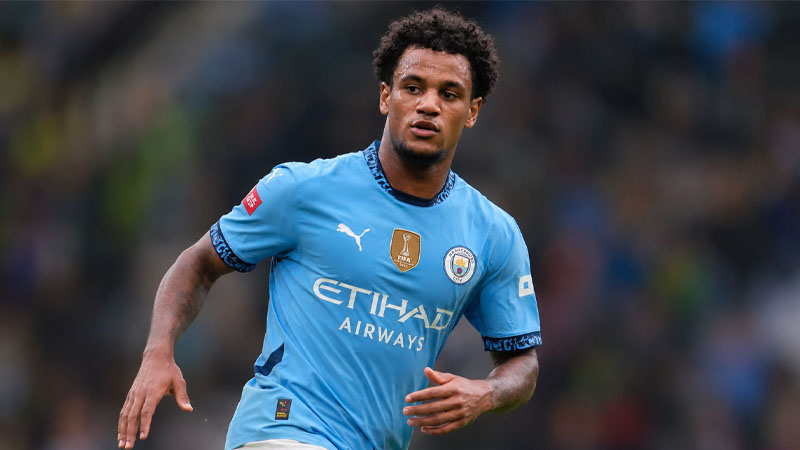
The winter transfer of Oscar Bobb from Manchester City to Fulham for a fee of €31.2 million (£27 million) represents a pivotal moment in modern squad management.
Once regarded as the natural heir to the creative throne at the Etihad, Bobb’s permanent exit in January 2026 left many supporters questioning the logic behind selling such a gifted academy graduate.
This move was not a reflection of a lack of technical ability, but rather a complex intersection of ill-timed physical setbacks, an overcrowded attacking frontline, and the cold realities of modern financial sustainability regulations.
The Strategic Shift: Decoding the Oscar Bobb Transfer
Manchester City’s decision to sanction a permanent move for a 22-year-old Norwegian international follows a pattern of high-value academy divestment that has become a hallmark of their recent success.
While the transfer initially shocked those who remembered his late winner against Newcastle in 2024, the internal logic within the club had been shifting for months due to tactical and economic pressures.
From Academy Jewel to Fulham Focal Point
Oscar Bobb was arguably the most refined technical talent to emerge from the City Football Academy in recent years, with former Director of Football Txiki Begiristain describing him as “by far” the best player in the academy.
Despite this pedigree, the path to the first team became increasingly blocked as the club prioritized immediate results over long-term developmental patience.
The move to Fulham, where he signed a contract until 2031, allows him to transition from a fringe squad player to a marquee playmaker under Marco Silva.
The Immediate Catalyst: Antoine Semenyo’s Arrival
The defining moment that signaled the end of Bobb’s Etihad career was the substantial £64 million (€72 million) winter acquisition of Antoine Semenyo from Bournemouth.
Semenyo provided a physical power and direct transition threat that Pep Guardiola felt the squad lacked for high-stakes European fixtures.
Once Semenyo arrived, Bobb was viewed as surplus to requirements, with his minutes likely to be decimated by the new signing’s immediate integration into the rotation.
The Tactical Bottleneck at the Etihad Stadium
City operates with a ruthless squad-building philosophy where elite depth acts as both a competitive weapon and a barrier for youth progression.
By early 2026, the attacking third had reached a state of overcongestion that made it impossible to guarantee the minutes a player of Bobb’s age and potential required.
| Player | Position | Market Context |
|---|---|---|
| Antoine Semenyo | Right Winger | £64m New Signing |
| Phil Foden | Creative Mid/Wing | Established Star |
| Jeremy Doku | Winger | Transition Threat |
| Savinho | Winger | Tactical Flexibility |
| Rayan Cherki | Attacking Mid | Versatile Depth |
As shown in the table above, the competition was immense. Man City currently has eight first-team players capable of playing on either wing, with a total combined market value of approximately €422 million.
When players like Semenyo and Omar Marmoush are brought in for high fees and placed on significant wages, there is an organizational expectation that they will receive the lion’s share of available minutes.
For Bobb, this meant falling to the bottom of the hierarchy despite his technical excellence.
A Timeline of Physical Setbacks and Stalled Progress
Injuries played a devastating role in Bobb’s inability to secure his place in Pep Guardiola’s starting eleven.
Just as he was reaching a “breakout” moment following a sensational 2024 pre-season and Community Shield performance, the physical demands of elite football took a toll on his durability.
| Injury Type | Timeline | Impact on City Career |
|---|---|---|
| Fractured Leg | August 2024 | Missed 48 games for club and country |
| Hamstring Strain | Autumn 2025 | Interrupted early-season momentum |
| Thigh Injury | Winter 2025/26 | Prevented him from proving fitness before Jan window |
Availability is often cited as the most critical ability in a Guardiola system. The fractured leg suffered on the eve of the 2024/25 campaign was particularly damaging, as it sidelined him for the majority of the season and prevented him from integrating into crucial tactical windows.
Even after returning, he suffered a further 16 missed matches due to smaller fitness issues, which hindered his ability to find the rhythm necessary for Premier League football.
The Financial Logic: Navigating PSR and “Pure Profit”
In the modern landscape, transfers are dictated as much by balance sheets as they are by tactical needs.
For Manchester City, selling academy products like Bobb represents an incredibly efficient way to navigate Profit and Sustainability Rules (PSR) while continuing to spend on world-class talent.
The Academy Monetization Strategy
Because Oscar Bobb joined the club’s youth ranks and had no remaining transfer amortization on the books, his entire £27 million fee is recognized as 100% pure accounting profit. This financial cushion is vital for offsetting heavy expenditures, such as the winter purchase of Semenyo.
From a business perspective, converting a bench player into a fee that covers the cost of a top-tier defender like Marc Guéhi is considered elite-level asset management.
Protecting Long-Term Value with Matching Rights
Although the sale is permanent, City’s sporting director Txiki Begiristain ensured the club maintained a level of control over Bobb’s future. The agreement with Fulham includes a 20% sell-on clause and explicit matching rights.
These clauses ensure that if Bobb fulfills his potential and becomes an international star, City will either receive a significant financial windfall from his next move or have the first opportunity to bring him back to the Etihad by matching any future bids.
Why Fulham? The Player’s Pursuit of Stability
For the player, the decision to leave was driven by a desire for career autonomy and consistent playing time. While Manchester City might have preferred a loan, Bobb and his representatives pushed for a permanent transition to a club where he could be a central figure.
Marco Silva’s Tactical Appeal
Fulham emerged as the ideal destination because of manager Marco Silva’s possession-oriented and fluid attacking system.
This environment closely mirrors the technical education Bobb received at City, making the transition easier than it might have been at a more defensive-minded club.
Bobb himself noted that conversations with Silva and his friend Sander Berge convinced him that the system at Craven Cottage was the right fit for his creative strengths.
Permanent Security vs. The Loan Carousel
A young player’s development often suffers from the uncertainty of temporary loan spells, which can lack club commitment and long-term tactical stability.
By securing a 5.5-year contract at Fulham, Bobb gained the career security needed to mature without the constant pressure of proving himself to a parent club every six months.
He chose to follow the blueprint set by former academy graduates like Cole Palmer, moving to a club where he could escape a talent bottleneck and become a Premier League regular.
Comprehensive FAQ: Understanding the Bobb Sale
Did Manchester City include a buy-back clause for Oscar Bobb?
No, a traditional fixed-fee buy-back clause was not included in the agreement. Instead, the club secured “matching rights,” which allow them to match any future accepted bids for the player, alongside a 20% sell-on fee.
Why did Bobb choose a permanent move instead of a loan?
Bobb prioritized long-term career stability and a guaranteed role in a tactical system that suits his playstyle. He wanted to be part of a long-term project at Fulham rather than entering the “loan carousel” common for elite youth.
How does this sale help City with financial regulations?
As an academy graduate, the £27 million fee counts as 100% pure profit on City’s financial accounts. This helps balance the club’s books following large transfer outlays on players like Antoine Semenyo.
What was the main reason he didn’t succeed at Man City?
A combination of a severe leg injury in 2024 and intense competition from eight other first-team wingers meant his pathway to consistent minutes was effectively blocked.
Who is Bobb’s replacement in the squad?
He was effectively replaced by Antoine Semenyo, who joined from Bournemouth for £64 million in the same transfer window.
Conclusion: A Calculated Move for All Parties
The departure of Oscar Bobb is a stark reminder of the uncompromising nature of elite football. While fans may feel a sense of loss seeing a homegrown “wizard” depart, the deal represents a rare “win-win-win” scenario in the modern market.
Manchester City streamlined a congested squad and generated significant profit; Fulham acquired a technically gifted playmaker with a high ceiling; and Oscar Bobb secured the platform he needs to fulfill his potential.
Ultimately, Bobb’s journey serves as a case study in modern player ambition. In an era where being a squad player at a mega-club is no longer enough for the world’s best young talents, Bobb has chosen to take control of his own destiny.
Whether he becomes the “next Cole Palmer” remains to be seen, but the foundations for his success are firmly in place at Craven Cottage.