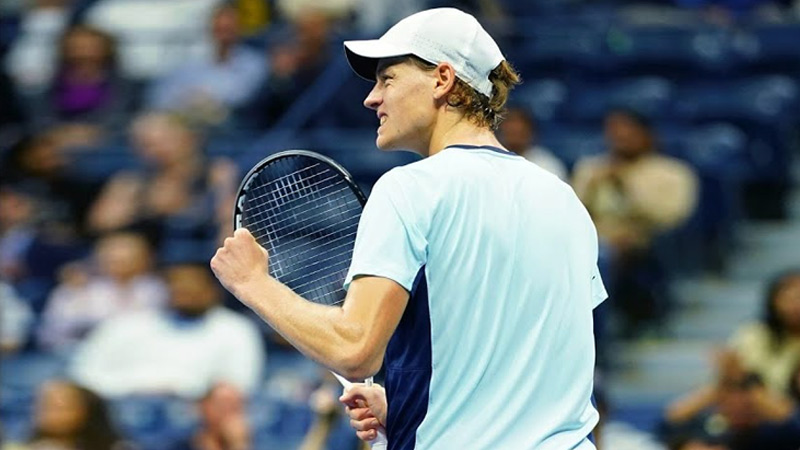
The professional tennis circuit is a relentless cycle of high-intensity performance and logistical endurance.
For an elite athlete like Jannik Sinner, the 2023 season represented a pivotal transition from a rising star to a dominant force in the top tier of the ATP rankings.
However, this ascent was not without its tactical pauses. One of the most discussed moments of that season was his decision to withdraw from the Barcelona Open Banc Sabadell.
This analysis explores the multi-faceted reasons behind that choice, the physiological demands of the modern tour, and the strategic foresight required to maintain a career at the highest level of sport.
The Context of the Barcelona Open
In April 2023, the tennis world turned its attention to the historic clay courts of Barcelona. Jannik Sinner arrived at the tournament with significant momentum, having performed exceptionally well in the early months of the year.
The anticipation for his quarterfinal match was at an all-time high, as he was scheduled to face fellow countryman Lorenzo Musetti in a highly anticipated Italian derby.
However, the match never took place. Shortly before the scheduled start, Sinner announced his withdrawal, sending Musetti directly into the semifinals via a walkover.
To understand why a competitor of Sinner’s caliber would step away from such a significant opportunity, one must look at the intersection of physical health and professional risk management.
The Immediate Catalyst: Illness and Physical Decline
The primary driver for the withdrawal was a combination of sickness and the worsening of his physical condition. According to official statements, Sinner had been feeling unwell for several days leading up to the quarterfinal. Despite his attempts to push through the initial symptoms, his health deteriorated significantly on the morning of the match.
In professional tennis, even a minor illness is magnified by the extreme physical requirements of the sport.
Playing on clay involves long rallies, heavy sliding, and intense cardiovascular output. When an athlete’s immune system is compromised, the body’s ability to regulate temperature and maintain energy levels is diminished.
Sinner noted that his condition left him “unable to play” at a level that would be both competitive and safe.
The Cumulative Toll of the ATP Tour
Beyond the immediate illness, Sinner cited fatigue as a major contributing factor. The 2023 season had already been a grueling one for the Italian.
Leading up to Barcelona, Sinner had enjoyed “deep runs in previous tournaments,” which meant he had played a high volume of matches with very little time for recovery.
The modern tennis calendar is often criticized for its lack of a true off-season. Players moving from the hard courts of the “Sunshine Double” (Indian Wells and Miami) directly into the European clay-court swing face a jarring transition in terms of movement and muscle engagement.
For Sinner, the “demanding stretch of matches” had reached a breaking point. His previous victory in Barcelona was described as a “roller coaster win,” a performance that was plagued by visible doubts regarding his fitness and stamina.
Strategic Longevity: A Precautionary Masterstroke
One of the most important aspects of Sinner’s decision-making process was his focus on the “long game.” In his statement, he emphasized that the withdrawal was a “precaution” intended to avoid a “serious injury”.
In elite athletics, the line between peak performance and a season-ending injury is razor-thin. For a player with Sinner’s aspirations, the risk of pushing a fatigued and ill body through a high-stakes match on a demanding surface like clay far outweighed the potential reward of a single tournament win. By choosing to withdraw, he prioritized:
- Asset Protection: His body is his primary professional asset; risking a tear or chronic strain would have been a catastrophic business decision.
- Season Periodization: With the French Open and Wimbledon on the horizon, Sinner needed to ensure he was at 100% for the Grand Slams.
- Mental Sustainability: Constant physical struggle can lead to mental burnout. Stepping back allowed him to reset psychologically.
The Physiological Demands of Clay Court Tennis
To appreciate the necessity of Sinner’s rest, one must understand the unique strain clay puts on the human body. Unlike hard courts, which provide a predictable and stable base, clay is an unstable surface that requires constant micro-adjustments in balance.
- Eccentric Loading: Sliding into shots requires immense strength in the adductors and core. When a player is fatigued, these muscles are the first to fail, leading to potential groin or lower back injuries.
- Extended Rally Length: Points on clay last significantly longer than on other surfaces. This places a premium on aerobic capacity—something that is severely limited when a player is suffering from illness.
- The Recovery Deficit: When a player is “unwell for a few days,” the body’s ability to clear lactic acid and repair muscle fibers is slowed. Continuing to play in this state creates a deficit that can take weeks, rather than days, to recover from.
The Impact on the Tournament and the Sport
The withdrawal had immediate ramifications for the Barcelona Open. Lorenzo Musetti, who was denied the chance to compete against his rival, advanced to the semifinals with a rested body.
While fans were disappointed to miss the “Italian Derby,” the incident sparked a broader conversation about player welfare and the necessity of strategic withdrawals.
For the ATP, these moments highlight the tension between commercial interests—which demand the presence of top stars—and the biological limits of the athletes.
Sinner’s transparency about his illness and fatigue served as a reminder that even the most elite athletes are susceptible to the limits of human physiology.
Conclusion: The Evolution of a Champion
Jannik Sinner’s withdrawal from the 2023 Barcelona Open was not a sign of weakness, but rather a sophisticated display of career management.
By acknowledging the limits imposed by sickness and the exhaustion of a demanding schedule, he protected his future.
In the high-stakes world of professional tennis, knowing when not to play is as important as knowing how to hit a cross-court forehand.
Sinner’s decision in Barcelona remains a case study in how modern athletes navigate the pressures of a global tour while maintaining the physical integrity required to eventually reach the pinnacle of the sport.
His rise to the top of the rankings in the months following this incident serves as a testament to the wisdom of that choice—proving that sometimes, the best way to move forward is to take a step back.