In modern professional sports, every detail of a player’s uniform is meticulously engineered, branded, and protected. From the exact placement of sponsor logos to the precise fonts used for player names, athletic wear is a multi-million-dollar industry where mistakes are rare.
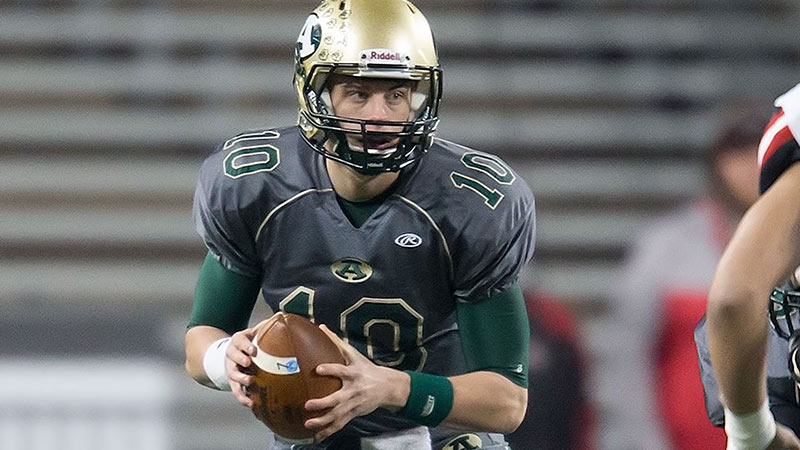
Yet, one of the most memorable images of quarterback Joe Burrow features him dropping back to pass with a completely blank jersey back—no last name, no nameplate, just the solitary number 9 on a field of white and black stripes.
For fans tuning in midway through the game, it sparked an immediate rush of digital queries. Was this a silent protest? A manufacturing blunder? Or a calculated branding move by one of the league’s most charismatic stars?
To understand why Joe Burrow played without his name on his back, we have to look at two entirely different chapters of his career.
One story is a tale of raw, physical survival in the trenches of the NFL; the other is a story of deep-rooted college football tradition, culture, and a legendary exception that rewrote the playbook on player identity.
Executive Summary: Key Takeaways
- The NFL Incident: During a high-stakes matchup with the Cincinnati Bengals, Joe Burrow’s nameplate was physically ripped off his jersey due to relentless defensive pressure and turf friction.
- The College Protocol: In his college career at Louisiana State University (LSU), Burrow did not wear his name on his jersey because of traditional collegiate protocols that prioritize team identity over individual names on the back of uniforms.
- The Custom Legend: LSU broke its rigid “no-names” policy for a single, legendary Senior Night, allowing Burrow to take the field in a custom-designed “Burreaux” jersey as a tribute to Louisiana’s French-Cajun heritage.
The NFL Mystery — Ripped Away in the Heat of Battle
For professional athletes, the name on the back of their jersey represents their legacy, their family, and their personal brand.
But during a legendary regular-season game, Bengals fans and neutral observers alike were stunned to see Joe Burrow playing with a completely nameless jersey.
This was not a pre-planned fashion statement or a locker room oversight. The truth was far more physical, rugged, and symbolic of the early stages of Burrow’s professional career.
The Breakdown in Protection
To understand why the nameplate disappeared, one must look at the defensive pressure Burrow faced during that campaign.
The Cincinnati offensive line was struggling to establish a secure pocket, leaving their franchise quarterback highly exposed. Throughout that single season, Burrow was sacked a brutal 50 times, enduring more pressures and hits than almost any other quarterback in the league.
During the game in question, Burrow was repeatedly knocked to the turf by opposing defenders. The extreme physical contact and friction of the field took a literal toll on his equipment:
- Initial Damage: During a particularly violent tackle, the stitching on the left side of Burrow’s nameplate began to fail.
- On-Field Friction: As he was repeatedly brought down, the nameplate became partially detached, rubbing against the turf and pulling apart.
- The Executive Decision: Rather than letting a loose piece of fabric flap around—which poses a holding hazard and a distraction—Burrow or the equipment staff simply ripped the remaining portion of the nameplate off entirely, leaving the jersey back blank.
A Badge of Honor
What began as an equipment malfunction quickly transformed into a visual representation of Burrow’s resilience.
Commentators and fans on platforms like Reddit immediately began dissecting the look, with many noting that the nameless jersey actually enhanced Burrow’s aura.
Despite playing behind a line that allowed constant penetration, Burrow put up elite, jaw-dropping numbers, executing a near-perfect game plan under duress. For many analysts, the torn-off nameplate became a badge of honor.
It proved that while opponents could tear away his name, they could not stop his production. He was, as fans and peers noted, an absolute “savage” on the gridiron.
The Engineering Behind the Tear — How Modern Jerseys Fail
To the average viewer, an NFL jersey seems indestructible. Made of high-tensile ripstop nylon and polyester stretch-mesh, these uniforms are designed to withstand hundreds of pounds of pulling force. So how does a player’s name simply fall off?
The Anatomy of an NFL Jersey
Modern professional football uniforms are constructed with a focus on weight reduction, moisture-wicking, and a skin-tight fit to prevent defenders from grabbing excess fabric.
- The Nameplate System: Unlike high school or low-level college jerseys where letters are heat-pressed directly onto the fabric, NFL jerseys utilize a “nameplate.” The individual letters of the player’s name are stitched onto a separate piece of matching team fabric. That nameplate is then stitched onto the back of the jersey.
- The Failure Point: This two-step sewing process means the nameplate acts as a separate panel. If a defender grabs the upper collar or if a player slides backward across abrasive turf, the stitching holding the nameplate to the mesh can act as a perforation line. Once a single corner seam pops, the wind resistance and subsequent tackles will unzip the remaining thread rapidly.
In Burrow’s case, the constant physical pounding caused the nameplate to separate. Rather than visiting the locker room for a mid-game jersey swap, Burrow continued playing with a nameless uniform, prioritizing game flow and momentum over administrative aesthetics.
The College Protocol — Why LSU Backs Remain Blank
While the missing nameplate in Cincinnati was an accident, Burrow spent his historic college career at LSU playing without his name on his back by design. For casual fans transitioning from NFL viewing to college football, this often confuses.
The Collegiate Team-First Ethos
In college football, tradition is king. At Louisiana State University, as well as several other historic football programs, player names are traditionally omitted from the back of the jersey. Only the player’s number is displayed on the back of the uniform.
This protocol is rooted in a clear philosophy: the team is greater than the individual. By removing personal names from the jersey, the school emphasizes that every player on the field represents the entire university, the community, and the legacy of the program, rather than their personal brand.
This strict protocol remains intact today. Even when high-profile superstars and Heisman winners like Jayden Daniels dominated the college landscape, they wore nameless jerseys, adhering to the long-standing LSU standards.
The Transfer Journey
This tradition contrasted sharply with Burrow’s early collegiate years. Before his legendary run at LSU, Burrow was a member of the Ohio State Buckeyes. Having graduated from Ohio State, he still proudly considers himself a Buckeye.
But it was his transfer to the bayou of Louisiana that allowed him to cement his place in college football history—wearing a nameless number 9 that would soon become legendary across the nation.
The “Burreaux” Exception — Breaking Tradition for a Cultural Tribute
Though LSU is highly protective of its uniform protocols, there was one singular, historic night where the university permitted an extraordinary exception for Joe Burrow.
This moment became one of the most culturally significant uniform variations in the history of college sports.
The Context of Senior Night
It was Senior Night at Tiger Stadium. Joe Burrow was already the runaway Heisman Trophy front-runner, having led the Tigers through an undefeated, historic season.
He had captured the hearts of the LSU fanbase, not just with his pinpoint accuracy and toughness, but with his authentic embrace of the local culture.
To show his mutual love and appreciation for the people of Louisiana, Burrow worked with the equipment staff to pull off a surprise that would bypass standard college protocols.
The Birth of “Burreaux”
When Burrow emerged from the locker room for pre-game ceremonies, the crowd roared. On his back, where a blank space usually sat, was a custom-sewn nameplate spelling out: “BURREAUX”.
This phonetic, French-Cajun spelling of his last name was a direct tribute to the deep cultural heritage of Louisiana. It was a gesture that transcended sports:
- Cultural Integration: By adopting the Cajun “-eaux” suffix, Burrow signaled that he wasn’t just a quarterback passing through; he was one of their own.
- The Loophole: Because it was Senior Night and pre-game introductions, LSU was able to accommodate the custom jersey, breaking their historic naming ban for a few unforgettable moments.
- The Legacy: The “Burreaux” jersey instantly became a viral sensation. Replica jerseys became highly sought-after collector’s items, with fans scouring the internet to find authentic versions with the correct conference patches.
Player Identity and the Power of the Uniform
The contrasting stories of Joe Burrow’s nameless NFL jersey and his custom “Burreaux” collegiate jersey highlight a fascinating dynamic in modern sports: how physical gear tells the story of the athlete.
| Uniform Context | Nameplate Status | Underlying Narrative |
|---|---|---|
| Cincinnati Bengals (NFL) | Missing / Torn Off | Symbol of physical grit, surviving heavy defensive pressure, and playing a perfect game despite a struggling offensive line. |
| LSU Tigers (NCAA – Standard) | Blank by Protocol | Traditional college football ethos prioritizing team identity over the individual. |
| LSU Tigers (Senior Night) | Custom “Burreaux” | A historic exception honoring local French-Cajun culture and cementing a permanent bond with the fanbase. |
In both cases, the state of Burrow’s jersey reflected his environment. In college, he respected the team-first rules but found a creative, heartfelt way to connect with his community. In the pros, his torn jersey showed the sheer physical reality of playing behind a developing offensive line, highlighting his willingness to take hits and keep delivering championship-level play.
Conclusion: The Nameless Maverick
Whether playing with a blank back due to strict collegiate protocols, wearing a custom French-Cajun tribute, or battling through an NFL game with his nameplate physically torn away by defenders, Joe Burrow’s jerseys have always told a deeper story.
They tell the story of a player who respects the traditions of the game, loves the communities he represents, and possesses the physical toughness to keep playing when the armor begins to break.
Ultimately, Burrow proved that you don’t need a name on your back for the world to know exactly who you are.