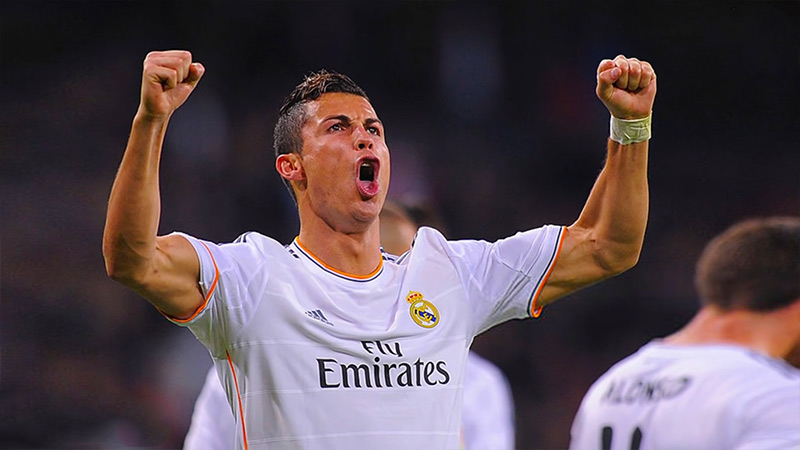
The football world stood still in July 2018 when the unthinkable happened: Cristiano Ronaldo, the man who had become synonymous with Real Madrid’s modern era of dominance, announced he was leaving the Santiago Bernabéu.
After nine legendary seasons, 450 goals, and a trophy cabinet overflowing with silverware, the Portuguese superstar packed his bags for Turin.
But why would the world’s most successful player leave the world’s most successful club at the height of their power?
This wasn’t just a simple transfer; it was the result of a fractured relationship, financial tension, and a search for a new identity.
1. The Breakdown of the Pérez-Ronaldo Relationship
At the heart of the departure was a deteriorating relationship between Ronaldo and Real Madrid president Florentino Pérez.
While the early years of Ronaldo’s tenure were marked by a sense of mutual respect and shared ambition, that bond eventually reached a breaking point.
Ronaldo explicitly stated that he felt the club, and Pérez specifically, no longer looked at him with the same “indispensable” eyes as they did during his first few years in Spain.
After nearly a decade of service, the Portuguese forward began to feel that he was being treated more as a business asset than the central pillar of the sporting project.
This shift in the internal hierarchy made Ronaldo feel undervalued, creating a rift that even Champions League trophies could not bridge.
2. The Quest for Financial Parity: The Messi and Neymar Factor
While Ronaldo’s ego was bruised by a lack of emotional appreciation, significant financial tensions were brewing in the background.
In the high-stakes world of elite football, a player’s salary is often seen as a direct reflection of their status within the game.
Ronaldo reportedly felt that his contract should reflect his standing as one of the best players on the planet.
This became a major point of contention when his rivals, Lionel Messi at Barcelona and Neymar at Paris Saint-Germain, received massive pay raises that dwarfed Ronaldo’s earnings at the time.
Ronaldo believed he had been promised a salary increase that never materialized, leading to a sense of betrayal regarding his financial standing relative to his peers.
3. The €14.7 Million Tax Scandal and a Lack of Club Support
Perhaps the most significant external pressure on Ronaldo was his legal battle with the Spanish authorities. In 2017, he was accused of defrauding the Spanish tax office of €14.7 million.
For Ronaldo, the issue wasn’t just the legal battle itself, but how Real Madrid chose to handle it. He reportedly felt a distinct lack of public and financial backing from the club during this period.
To make matters worse, he compared his situation to how Barcelona had aggressively and publicly supported Lionel Messi during his own tax-related legal troubles.
The perceived silence from the Real Madrid board made Ronaldo feel isolated and further convinced him that his era in Madrid was coming to an end.
4. Seeking a “New Chapter” After Total Dominance
Beyond the internal politics and legal headaches, there was a sporting element to the decision. By the summer of 2018, Ronaldo had achieved everything possible at Real Madrid.
He had just finished a historic run where the club won four Champions League titles in just five years.
Ronaldo expressed a genuine desire for a “new chapter” in his career. He sought a fresh challenge that would allow him to test his mettle in a different league and prove that his success was not tied solely to the Real Madrid system.
After nine years of intense pressure in the Spanish capital, the idea of conquering a new frontier became increasingly attractive.
5. The Juventus Allure: Feeling Wanted Again
When it came time to choose a destination, Juventus emerged as the clear frontrunner for a specific reason: they made Ronaldo feel like a priority.
In a deal worth approximately €100 million, the Italian giants demonstrated a clear and vocal desire to sign him as the cornerstone of their project.
This proactive approach from Juventus contrasted sharply with the cooling relationship Ronaldo was experiencing at Real Madrid. For a player who felt he was no longer “indispensable” in Madrid, the chance to be the undisputed hero in Turin was too good to pass up.
Conclusion: The Legacy Left Behind
Cristiano Ronaldo’s exit from Real Madrid was not caused by a single event, but rather a perfect storm of diminished appreciation, financial disputes, and the search for a new legacy.
While his departure marked the end of the most prolific individual era in the club’s history, it also highlighted the complex dynamics of power, ego, and respect that exist at the highest levels of professional sports.