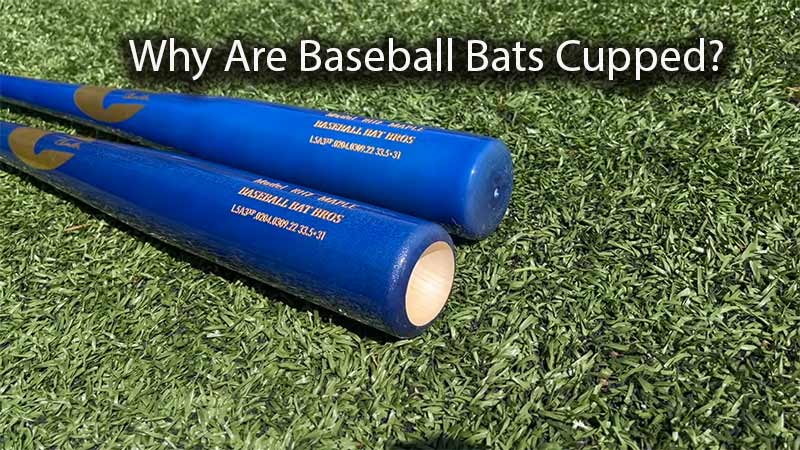
A wood baseball bat may have a small dip cut into the end of its barrel. This is called a cupped barrel. The cup is not just for looks. It helps make the bat feel lighter and easier to swing.
The cup takes some wood out of the end of the bat. This can change how the weight feels in the hands. It may help a player swing with more speed and control. It can also help bat makers use dense, strong wood while keeping the bat at the right weight.
To know why bats have cups, it helps to look at bat weight, wood type, and bat design. A small cut at the end of the barrel can make a big change in how a wood bat feels and swings.
Understanding the Cupped Wood Bat
What Is a Cup on a Wood Bat?
A cupped wood bat has a small hollow area at the top of the barrel. The cup looks like a round bowl cut into the end of the bat. It removes some wood from the tip.
The cup does not change the bat’s length. It also does not change the main size or shape of the barrel. An uncupped bat is different. Its barrel end stays solid. No wood is taken out of the tip. The end may be flat or slightly round.
Both types of wood bats can be used in many levels of baseball. The main difference is how they feel when a player swings them. A cup takes some weight away from the end of the bat. This can make the bat feel easier to move.
Solid Barrel Tip:   [========================|  ]  Solid Wood
Cupped Barrel Tip:  [========================| ) ]  Hollow Cup
The Story of Johnny Bench and the Cupped Bat
For many years, wood bats had solid barrel ends. That began to change in the 1970s.
Baseball star Johnny Bench helped make the cupped bat well known. He wanted a bat that felt easier to swing. At the same time, he did not want a smaller barrel.
Bench found that taking some wood from the end could help. It cut weight from the tip of the bat. This gave the bat a more balanced feel in his hands.
Bench later spoke about the idea and how he used it to change the feel of his bats. The cup gave him more control without the need to make the barrel much smaller.
The idea soon caught on. Bat makers began to use cups in their wood bats. Over time, the cupped barrel became a common design in baseball.
Swing Physics & Performance Benefits
Weight Balance and Center of Gravity
A cup helps change how a wood bat feels in the hands. The cup takes a small amount of wood from the end of the bat. It may remove about 0.7 to 1 ounce of wood.
That may not sound like much. But the wood comes from the very end of the bat. This part is far from the hitter’s hands. So, even a small loss of weight can change the bat’s balance.
The balance point moves closer to the handle. This can make the barrel feel less heavy during a swing.
It also lowers the bat’s swing weight. Two bats may both weigh 31 ounces. Yet a cupped bat may feel lighter when swung. This can help the hitter move the bat through the hitting zone with more ease and control.
Swing Speed and Exit Speed
Bat speed plays a big role in hitting. A bat that is easier to swing may help a hitter move the barrel faster.
More bat speed can also help the ball leave the bat at a higher speed. A faster swing can send more energy into the ball at contact. This may help the ball travel farther.
A cupped bat can give the hitter a lighter swing feel while keeping a full-size barrel. This can help with bat speed, control, and quick moves to the ball.
The Wood Density Advantage
Wood Choice and Bat Making
A balanced swing is one key benefit of a cupped bat. But cupping can also give bat makers more choice in the wood they use.
Wood bats start as round blocks of wood called billets. Each billet can have a different weight and density. This is true for maple, ash, birch, and other types of wood.
Dense wood has more wood fiber packed into the same space. It tends to be heavier and harder. It may also be stronger.
Bat makers still need to reach a set bat weight. For example, a 33-inch bat may need to weigh about 30 ounces.
Uncupped Bat:
Lighter Wood → Solid Bat → Target Weight

Cupped Bat:
Heavier Wood → Bat Is Shaped → Wood Is Removed From Tip → Target Weight
For an uncupped bat, the maker may need to use a lighter billet. No wood will be cut from the end later. If the billet is too heavy, the finished bat may also be too heavy.
A cupped bat gives the maker more room to work with a heavier billet. Near the end of the process, some wood is cut from the top of the barrel. This helps lower the final weight.
As a result, a bat maker may be able to use dense wood and still reach the target bat weight. The main part of the barrel can keep much of that dense wood.
Strength and Bat Performance
Dense wood may offer two useful benefits:
- Good Energy Transfer: Hard wood does not give as much when the ball hits it. This can help the bat feel firm at contact. Players often call this feel or response “pop.”
- Better Strength: Dense wood can also be strong. Good wood may hold up well through many hits. It may be less likely to bend or wear fast.
Cupping does not make every bat stronger on its own. Wood type, grain, quality, bat shape, and how the bat is used also affect its life. Still, cupping can help makers reach the right weight while using a dense piece of wood.
Debunking Myths & Common Misconceptions
Cupped bats are common in baseball. Still, some myths about them remain. Many of these myths deal with bat strength, speed, and feel.
Myth #1: Cupping Makes a Bat Weak
Some players think the hollow cup makes a wood bat weak. They may also think it will make the bat break more often.
The Reality: A cupped bat can be very strong. Bat makers can use dense, strong wood to make it. They also keep the walls near the end of the bat thick. This helps protect the barrel from chips and cracks. At the same time, the cup removes some weight from the end. This can make the bat feel easier to swing.
Myth #2: The Cup Sends Shockwaves Back to the Sweet Spot
Some people think the cup works like a dish. They believe it sends shockwaves back through the bat. They may also think this makes the ball leave the bat at a higher speed.
The Reality: The cup does not send shockwaves back to the sweet spot. Its main benefits come from weight and balance. It removes weight from the end of the bat. This can make the bat easier to swing. It can also let bat makers use dense, strong wood.
Myth #3: The Cup Is Made to Stop Hand Sting
Some players think the cup is there to reduce hand sting. Hand sting can happen when the ball hits away from the sweet spot.
The Reality: This is not the main reason for the cup. The cup may cause small changes in how the bat feels or sounds. But its main job is to control weight and balance. It also helps bat makers use dense wood without making the bat too heavy.
Comparative Analysis: Cupped vs. Uncupped Wood Bats
Selecting between a cupped and uncupped wood bat depends on hitting style, swing mechanics, and personal preference.
When to Choose a Cupped Bat
- Contact Hitters & Line-Drive Drivers: Players who rely on bat speed, precise barrel placement, and quick hands.
- Facing High Pitch Velocity: Hitters facing elite pitching who require a lighter swing weight to get the barrel through the zone quickly.
- Players Seeking Maximum Durability: Batter profiles that benefit from the highest possible timber density without adding heavy end-weight.
When to Choose an Uncupped Bat
- Power Hitters: Hitters with strong physical profiles who prefer an end-loaded feel to generate maximum momentum at impact.
- Traditional Swing Preference: Hitters accustomed to classic solid-timber turning models who prefer mass distributed evenly through the tip.
Strategic Recommendations & Conclusion
Cupped wood bats can help a hitter swing with more speed and control. The idea became well known through Johnny Bench. Today, the cup is a common part of many wood bats.
The cup takes some wood out of the end of the bat. This small change can make a big change in how the bat feels and moves.
Key Points for Players and Coaches
- Faster, Easier Swing: A cup can take up to 1 ounce of wood from the end of the bat. This moves more of the bat’s weight toward the hands. The bat may feel lighter and easier to swing.
- Hard, Dense Wood: Bat makers can start with dense wood since some weight will be cut from the end. Dense wood can be hard and strong. It may also help the bat last longer.
- Still Strong: A cupped bat is not weak just because wood is cut from the end. Good bats use strong wood and thick walls around the cup. This helps the bat hold up when it hits the ball.
A cupped wood bat can be a good choice for many hitters. It can help with bat speed, control, and a quick swing. For players who want a bat that feels easy to move, a cupped bat is worth a look.