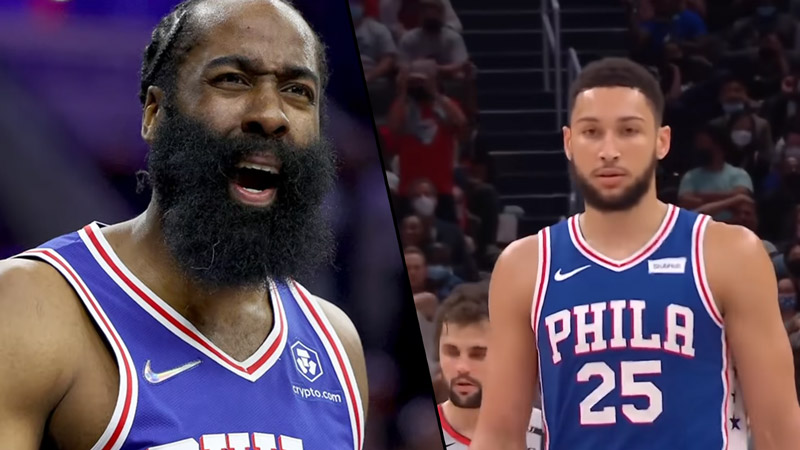
Philadelphia decisively won the blockbuster trade on February 10, 2022, primarily by transforming a toxic asset into elite flexibility.
While initially marketed as a “superstar swap” between James Harden and Ben Simmons, the long-term results favored the 76ers significantly.
Philadelphia utilized Harden’s All-Star production to bolster Joel Embiid’s MVP season before flipping him for draft capital and expiring contracts. This strategic maneuvering eventually allowed them to sign Paul George.
Conversely, Brooklyn’s return evaporated as Ben Simmons struggled with injuries and role players left in free agency, leading to a total franchise rebuild and the dissolution of their superstar core.
Analyzing the 2022 Blockbuster Trade Package
The trade finalized on February 10, 2022, was a seismic event in the NBA, involving multiple players and future draft considerations that altered the trajectory of two Atlantic Division rivals.
To understand the eventual winner, one must first look at the raw materials exchanged during that winter afternoon.
The Philadelphia 76ers’ Acquisition of James Harden
In the immediate exchange, the Philadelphia 76ers received ten-time All-Star James Harden and veteran big man Paul Millsap.
The goal for Philadelphia was clear: provide Joel Embiid with an elite pick-and-roll partner who could facilitate the offense and relieve the scoring burden during the postseason.
This move was a direct response to the stalemate involving Ben Simmons, who had requested a trade and ceased playing for the team.
The Brooklyn Nets’ Return for a Departing Superstar
Brooklyn received a comprehensive package consisting of Ben Simmons, Seth Curry, Andre Drummond, and two first-round draft picks.
On paper, this was viewed as a way for the Nets to surround Kevin Durant and Kyrie Irving with defensive versatility and elite shooting.
The 2022 first-round pick was deferred, while a protected 2027 first-round pick remained as a long-term insurance policy for the franchise’s future.
Why the Philadelphia 76ers Won the Long Game
Philadelphia’s victory in this deal is not merely about the players they received but how they managed those players as evolving assets.
While neither team has won a championship since the trade, Philadelphia maintained a championship-caliber roster through two separate restructuring phases.
James Harden’s On-Court Impact and MVP Facilitation
During his tenure in Philadelphia, James Harden appeared in 80 regular-season games and transformed his style of play to suit the team’s needs.
He successfully transitioned into a primary facilitator role, leading the NBA with 10.7 assists per game during the 2022–2023 season. His ability to organize the offense was instrumental in Joel Embiid winning the 2023 league MVP award.
Furthermore, Harden delivered two iconic 40-point performances in the 2023 playoffs against the Boston Celtics, proving he still possessed elite scoring capabilities.
The Masterful Pivot: From Harden to Paul George
The true brilliance of Philadelphia’s front office was evidenced when Harden grew disgruntled and demanded another trade.
Rather than allowing his value to reach zero, they flipped him to the LA Clippers for a package of expiring veteran contracts and draft picks. This “flipping value” was the catalyst for their next era.
By clearing the salary cap space generated from those expiring assets, the 76ers were able to sign 9-time All-Star Paul George in free agency, effectively replacing Harden with an elite two-way wing.
Strategic Salary Cap Management and Asset Recycling
The 76ers’ strategy focused on maintaining “perennial contender” status by refusing to be weighed down by diminishing returns.
By turning a non-playing Ben Simmons into James Harden, and eventually turning Harden’s remaining value into the financial flexibility to sign Paul George and potentially other elite talents, Philadelphia successfully recycled their assets.
They managed to keep their championship window open while their trade partner’s window slammed shut.
The Anatomy of a Brooklyn Nets Franchise Collapse
While Philadelphia was ascending through asset management, the Brooklyn Nets experienced a total systemic failure. What was meant to be a stabilization of their “Big Three” era instead accelerated the franchise’s descent into a difficult rebuilding phase.
The Downward Trajectory of Ben Simmons
The centerpiece of Brooklyn’s return, Ben Simmons, became one of the most difficult contracts in the league to manage. Plagued by persistent back injuries and significant mental health hurdles, Simmons played in only 90 games over the span of three seasons.
His production plummeted to a career-low 6.4 points per game, making him a liability on the floor relative to his maximum salary status.
Eventually, his presence was viewed as a hindrance, leading to discussions regarding contract buyouts and his future in the league.
The Short-Lived Contributions of Role Players
While Seth Curry and Andre Drummond initially provided the Nets with much-needed depth and shooting, their impact was fleeting. Both players were role-players who eventually departed the team through free agency shortly after their arrival.
This meant that the “immediate help” Brooklyn sought evaporated within a single season, leaving the team with nothing to show for two of the primary components of the Harden trade.
Losing the Core: Durant and Irving Departures
The failure of the Simmons trade to produce a cohesive, winning environment led directly to the dissatisfaction of the remaining superstars.
The inability to compete at a high level with the new roster configuration was a primary factor in the eventual trades of Kevin Durant and Kyrie Irving.
This ripple effect forced the franchise into a total rebuild, absorbing approximately $177 million in salary costs for a roster that failed to advance deep into the playoffs.
Trade Asset Outcome Comparison
The following table highlights the stark contrast in what each team effectively gained and lost from the initial transaction and its subsequent fallout.
| Category | Philadelphia 76ers | Brooklyn Nets |
|---|---|---|
| Primary Star Production | James Harden: 21.0 PPG, 10.6 APG, 2023 Assist Leader. | Ben Simmons: 6.4 PPG, 6.4 RPG, Missed more games than played. |
| Residual Asset Value | Assets flipped to sign Paul George and LeBron James. | 2027 pick remains; Royce O’Neale was traded away. |
| Franchise Status | Remained perennial contenders via restructuring. | Total franchise rebuild after “Big Three” era collapse. |
| Financial Impact | Efficiently cleared cap for elite free agents. | Absorbed $177M for minimal on-court production. |
| Role Player Status | Paul Millsap (Retired). | Seth Curry & Andre Drummond (Left in free agency). |
Macro Timeline: How the Trade Value Shifted
The perception of this trade has changed drastically from the moment the news broke in February 2022 to the current landscape of the NBA. Initially, many analysts viewed this as a balanced swap that addressed the specific needs of both disgruntled stars.
Immediate Post-Trade Reactions and Expectations
In the weeks following the trade, the Nets were praised for getting younger and adding defensive versatility. Many believed Ben Simmons would flourish as a secondary playmaker alongside Durant and Irving.
Philadelphia was viewed as taking a massive risk on an aging Harden whose scoring numbers had begun to dip. At the time, the deal was characterized as a “win-win” where both teams attempted to maximize their respective championship windows.
The Long-Term Residual Value Gap
As the years progressed, the gap in value became a chasm. Philadelphia’s ability to remain flexible allowed them to pivot when circumstances changed. Brooklyn, however, found themselves stuck with an “unmovable contract” in Simmons.
The draft capital Brooklyn received was largely mismanaged; for instance, the 2022 first-round pick was used to acquire Royce O’Neale, who was later traded away for a minimal return.
The only remaining asset for Brooklyn is a 2027 first-round pick, while Philadelphia has completely reshaped its roster into a new powerhouse.
Why Do Experts Consider This a Lopsided NBA Trade?
To qualify as a lopsided trade in the modern era, there must be a significant imbalance in both on-court production and future franchise health. This deal meets both criteria.
Comparing All-Star Production Levels
The disparity in player performance is staggering. James Harden provided All-Star level play and led the league in assists while in a 76ers uniform. He was an active contributor to winning basketball.
Ben Simmons, by contrast, struggled to stay on the floor and lacked the offensive aggression that once made him an All-NBA talent.
Kyrie Irving himself eventually remarked that it “wasn’t a fair trade” for Brooklyn because of the immense pressure and the setbacks Simmons faced.
Financial Implications and Salary Cap Dead Weight
In the NBA, cap space is often as valuable as players. Philadelphia used their trade assets to clear room for a superstar signing, which is the gold standard of front-office management.
Brooklyn, however, was forced to pay nearly $180 million for a player who provided almost zero positive long-term impact on the floor.
This financial burden prevented them from surrounding their other stars with necessary talent, ultimately leading to the “slamming shut” of their championship window.
Frequently Asked Questions about the Harden-Simmons Trade
Did Ben Simmons ever return to All-Star form?
No. Following the trade to Brooklyn, Ben Simmons struggled significantly with health and confidence. He averaged career lows in points, rebounds, and assists, and appeared in fewer than 100 games over three seasons.
How many games did James Harden play for the 76ers?
James Harden played 80 regular-season games for Philadelphia before being traded to the LA Clippers in late 2023. During this time, he was one of the most productive guards in the Eastern Conference.
What draft picks did the Nets keep from the trade?
The Nets originally received two first-round picks. One was used to acquire Royce O’Neale (who was later moved), and they still hold a protected 2027 first-round pick.
The Final Verdict on the Most Lopsided Modern NBA Trade
Ultimately, the Philadelphia 76ers won the trade because they successfully turned a “toxic, non-playing asset” into tangible production and future financial flexibility.
While neither team has achieved the ultimate goal of a championship, Philadelphia’s path forward is one of strength and elite roster configuration.
Brooklyn, meanwhile, has been forced into a painful rebuild after seeing their championship aspirations dismantled by the very trade meant to save them.
The deal serves as a cautionary tale: in the modern NBA, the winner is not just the team that gets the best player today, but the team that maintains the most options for tomorrow.