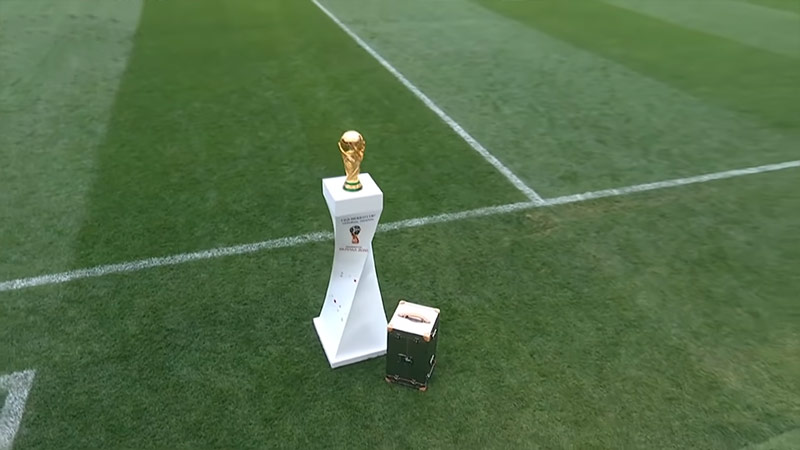
The pinnacle of international athletics is defined by the FIFA World Cup, a tournament that captures global attention and crowns the absolute elite of the sport.
Currently, the men’s football world is presided over by Argentina, who secured their third star in a historic 2022 final in Qatar. Simultaneously, the women’s game saw a monumental shift in 2023, as Spain rose to dominance to claim their first-ever title.
As the sporting landscape evolves with expanded formats and new host nations, understanding the legacy of these champions provides essential context for the future of the beautiful game.
The Reigning Kings: Argentina’s 2022 Triumph in Qatar
The 2022 FIFA World Cup final is widely regarded as one of the most compelling spectacles in sporting history. Held on 18 December 2022, the match saw Argentina face off against the defending champions, France.
The contest was a psychological and physical battle that ended in a 3–3 draw after extra time, leading to a high-stakes penalty shootout where Argentina emerged victorious with a 4–2 scoreline.
This victory was not merely a tactical success but a cultural milestone, as it marked the first World Cup title for captain Lionel Messi.
The Impact of Lionel Messi’s First Title
For over a decade, the primary narrative in global soccer centered on whether Lionel Messi could secure the one trophy that had eluded him. In Qatar, Messi finally achieved this dream in what many consider the greatest final ever played.
His leadership and performance throughout the tournament were pivotal in ending Argentina’s 36-year championship drought, their first win since the era of Diego Maradona in 1986.
Tactical Resilience and the Penalty Shootout
Argentina’s path to the trophy required immense resilience, particularly after France staged a late-game comeback to level the score at 3–3. The composure shown during the penalty shootout—winning 4–2—highlighted the team’s mental fortitude.
This victory cemented Argentina’s status as a global powerhouse, bringing their total championship count to three.
Spain’s Historic Ascent: The 2023 Women’s World Cup
In the women’s arena, the 2023 FIFA Women’s World Cup hosted by Australia and New Zealand marked a new era of parity and skill. Spain emerged as the reigning champions after a disciplined and technically superior performance throughout the tournament.
On 20 August 2023, in Sydney, Spain secured their first-ever title by defeating England with a 1–0 score in the final.
A New Era for Spanish Football
Spain’s victory is significant as it reflects the rapid professionalization and investment in women’s soccer within the country. By defeating a formidable England side, Spain demonstrated that they have become the gold standard for technical proficiency in the women’s game.
This win has set a high bar for the upcoming 2027 Women’s World Cup, which is scheduled to take place in Brazil.
A Century of Champions: The Full Winners List (1930–2022)
The history of the World Cup is a story of exclusive dominance. Since the inaugural tournament in 1930, only eight different nations have managed to lift the trophy.
This exclusivity highlights the immense difficulty of winning seven consecutive matches against the world’s best talent.
| Year | Host Nation | Winner | Runner-up | Final Score |
|---|---|---|---|---|
| 2022 | Qatar | Argentina | France | 3–3 (4–2 penalties) |
| 2018 | Russia | France | Croatia | 4–2 |
| 2014 | Brazil | Germany | Argentina | 1–0 (AET) |
| 2010 | South Africa | Spain | Netherlands | 1–0 (AET) |
| 2006 | Germany | Italy | France | 1–1 (5–3 penalties) |
| 2002 | Korea & Japan | Brazil | Germany | 2–0 |
| 1998 | France | France | Brazil | 3–0 |
| 1994 | USA | Brazil | Italy | 0–0 (3–2 penalties) |
| 1990 | Italy | Germany | Argentina | 1–0 |
| 1986 | Mexico | Argentina | West Germany | 3–2 |
| 1982 | Spain | Italy | West Germany | 3–1 |
| 1978 | Argentina | Argentina | Netherlands | 3–1 |
| 1974 | Germany | Germany | Netherlands | 2–1 |
| 1970 | Mexico | Brazil | Italy | 4–1 |
| 1966 | England | England | West Germany | 4–2 |
| 1962 | Chile | Brazil | Czechoslovakia | 3–1 |
| 1958 | Sweden | Brazil | Sweden | 5–2 |
| 1954 | Switzerland | Germany | Hungary | 3–2 |
| 1950 | Brazil | Uruguay | Brazil | 2–1 |
| 1938 | France | Italy | Hungary | 4–2 |
| 1934 | Italy | Italy | Czechoslovakia | 2–1 |
| 1930 | Uruguay | Uruguay | Argentina | 4–2 |
The Elite Eight: Analysis of Historical Dominance
While many nations compete, a select few have established dynasties within the sport. Brazil remains the most successful nation in the history of the competition, holding a record five titles (1958, 1962, 1970, 1994, 2002).
Their “five-star” status is a point of national pride and sets the benchmark for international success.
The European Powerhouses: Germany and Italy
Following Brazil, Germany and Italy are the most decorated nations, each with four championships. Italy holds the distinction of being one of only two nations to win back-to-back titles, achieving this feat in 1934 and 1938.
Germany’s consistency is equally impressive, having appeared in a total of eight finals. Their most recent victory in 2014 was marked by a clinical 1–0 win over Argentina in extra time.
South American Resilience: Argentina and Uruguay
Argentina’s 2022 win brought their total to three titles, placing them alone in fourth place on the all-time list. Uruguay, the winners of the first-ever World Cup in 1930, holds two titles, having also won in 1950 in a famous upset over Brazil. These nations ensure that South America remains a constant threat to European dominance.
The Heartbreak Gallery: The Best Teams Never to Win
In the pursuit of the trophy, several legendary teams have reached the final only to fall short. The Netherlands is widely considered the most successful nation never to win the World Cup.
Known for their revolutionary “Total Football” philosophy in the 1970s, the Dutch have reached three separate finals (1974, 1978, 2010) without ever capturing the title.
Legacy of the “Mighty Magyars” and Others
Other notable nations that have reached the final but missed the championship include Hungary (1938, 1954) and Czechoslovakia (1934, 1962).
Hungary’s team of the 1950s is still remembered as one of the greatest squads in history, despite their loss in the 1954 final to West Germany. More recently, Croatia (2018) and Sweden (1958) have also finished as runners-up.
Future Horizons: The 2026 Expansion and Beyond
The landscape of international football is set for a massive transformation. The 2026 FIFA World Cup will be the first of its kind, featuring an expanded format of 48 teams, up from the traditional 32.
This expansion is designed to reflect the global growth of the sport and provide more opportunities for nations from Africa, Asia, and North America to compete at the highest level.
North America 2026: A Tri-National Event
For the first time, the men’s tournament will be hosted across three nations: the United States, Canada, and Mexico. This geographical spread aims to engage a massive audience and utilize world-class infrastructure across the continent.
Mexico, in particular, will make history as the first country to host games in three different World Cup editions.
Women’s World Cup 2027 in Brazil
Following the success of the 2023 tournament, the women’s game moves to South America for the first time. Brazil will host the 2027 FIFA Women’s World Cup. This choice highlights the region’s deep passion for the sport and the increasing global investment in women’s athletics.
Strategic Insights: The “1-0” Factor and Modern Trends
Statistical analysis of past tournaments reveals fascinating trends that coaches and analysts study closely. Notably, 1–0 is the most common score in FIFA World Cup history.
This highlights the intense defensive pressure and the high stakes of knockout football, where a single goal often decides the fate of a nation. Recent finals in 2010 and 2014 were both decided by this narrow 1–0 margin in extra time.
The Challenge of Back-to-Back Titles
Winning consecutive World Cups is a feat that has only been achieved twice: by Italy (1934–1938) and Brazil (1958–1962). In the modern era, the physical demands and the depth of talent across many nations make defending a title nearly impossible.
France’s attempt to repeat in 2022 fell just short in the penalty shootout, illustrating how thin the margins are at this level.
FAQ: Essential World Cup Facts
Which country has the most World Cup wins?
Brazil holds the record with five championships (1958, 1962, 1970, 1994, 2002).
Who are the current defending champions?
Argentina is the men’s champion (2022), and Spain is the women’s champion (2023).
How many teams will play in the 2026 World Cup?
The tournament will expand to feature 48 teams for the first time.
Has an African nation ever won the World Cup?
No, an African nation has yet to win. However, there is growing optimism that improved management and merit-based selection could lead to a future breakthrough.
What is the most common score in the tournament’s history?
Statistically, 1–0 is the most frequent result in World Cup matches.
Conclusion: The Everlasting Appeal of the Global Game
The FIFA World Cup remains the ultimate test of athletic excellence and national identity. From Argentina’s emotional victory in Qatar to Spain’s groundbreaking win in Sydney, the “last winners” have set a high standard for the next generation of players.
As we look toward the 2026 expansion in North America and the 2027 Women’s World Cup in Brazil, the competition continues to grow, bridge cultures, and produce moments of history that transcend sport.
Whether it is the pursuit of a record-breaking sixth star by Brazil or the quest for a first title by the Netherlands, the world will be watching.