The story of Lionel Messi is often told as a tale of supernatural talent—a “chosen one” who arrived on the pitch with a ball already glued to his feet.
However, even the most legendary careers are built upon a foundation of influence, mentorship, and inspiration.
To understand the “Fleas” (La Pulga) journey to the pinnacle of football, one must look beyond the individual trophies and explore the figures who shaped his vision of the game.
From the streets of Rosario to the hallowed turf of Camp Nou, Messi’s greatness was nurtured by a select group of family members, idols, and mentors who provided the technical skills and emotional fortitude required to change the sport forever.
The Emotional North Star: Celia Olivera de Cuccittini
Long before the world knew his name, Lionel Messi’s most significant advocate was his grandmother, Celia.
While many parents might have been hesitant about a small child playing against older, larger boys, Celia saw something different. She was the primary catalyst in his early career, possessing an unwavering belief in his potential.
Celia did more than just offer words of encouragement; she was physically present for his development. She often accompanied him to his earliest training sessions, ensuring he had the support system needed to brave the competitive environment of youth football.
Her influence was so profound that even decades after her passing, Messi continues to honor her. Every time he points his fingers toward the sky after scoring a goal, he is dedicating that moment to the woman who first pushed him to take the pitch.
Building the Technical Foundation: Jorge Messi
While Celia provided the emotional spark, Messi’s father, Jorge Messi, provided the technical blueprint. Jorge was not merely a parental figure but served as Lionel’s first coach, teaching him the fundamental skills that would eventually be refined at Barcelona’s famous La Masia academy.
This early training at home in Argentina was crucial. Jorge’s guidance ensured that Messi’s natural agility was paired with a disciplined understanding of the ball.
By acting as his initial mentor, Jorge established the work ethic and technical base that allowed Lionel to survive and thrive when he eventually made the life-altering move to Spain.
The Childhood Idol: Why Pablo Aimar Was Messi’s Favorite
While many football fans assume that every Argentine youngster only looked toward Diego Maradona, Messi’s personal preference was more nuanced. Growing up, the player he “admired the most” was the elegant playmaker Pablo Aimar.
Aimar, known for his vision, quick feet, and ability to glide past defenders, represented the style of football that Messi aspired to play. For a young Messi, Aimar was the gold standard of what a creative midfielder should be.
This admiration was not a passing phase; Messi has explicitly noted that “apart from Maradona… Pablo Aimar was the player I admired the most” during his formative years.
The influence of Aimar’s grace and playmaking ability is clearly visible in the way Messi navigates tight spaces on the field today.
The Undisputed Legend: The Maradona Influence
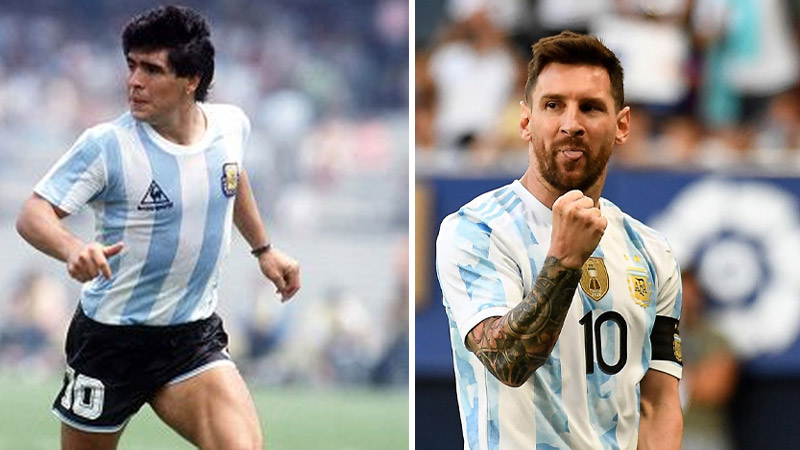
Despite his deep admiration for Aimar, the shadow of Diego Maradona looms largest over Messi’s professional identity. Messi has stated that if anyone inspired him when he was starting out in 1993, “it was undoubtedly him”.
The connection to Maradona was more than just a shared nationality; it was a spark of ambition. Seeing Maradona’s impact on the world stage gave Messi a target to aim for.
Maradona was the “biggest influence” on his career from a very young age, providing the blueprint for what an Argentine “Number 10” could achieve.
This inspiration fueled Messi’s drive to represent his country and eventually led him to lead Argentina to their own World Cup glory, mirroring the path of his idol.
The Professional Catalyst: Ronaldinho and the Barcelona Transition
The leap from a youth academy to a star-studded first team is often where many promising talents falter. For Messi, the transition at FC Barcelona was made possible by the mentorship of the Brazilian maestro, Ronaldinho.
When Messi first joined the Barcelona first team, he was a shy teenager entering a dressing room full of world-class veterans. Ronaldinho, who was the best player in the world at the time, took Messi under his wing.
He played a significant role in helping Messi adapt to the professional environment. More importantly, Ronaldinho’s presence helped Messi gain the confidence necessary to play his own game among superstars.
This mentorship ensured that Messi’s transition was seamless, allowing him to evolve from a “prodigy” into a leader in his own right.
Conclusion: A Legacy Built on Influence
Lionel Messi’s career is a masterclass in how talent is cultivated through the right influences. It began with the emotional support of his grandmother Celia and the technical coaching of his father Jorge.
It was shaped by the artistry of Pablo Aimar and the transcendent greatness of Diego Maradona. Finally, it was solidified by the mentorship of Ronaldinho, who provided the confidence for a young star to shine on the world’s biggest stage.
Understanding who Messi was inspired by reveals that even the greatest player in history did not reach the top alone. He is a mosaic of the people who believed in him, the idols he watched on television, and the teammates who welcomed him into the fold.