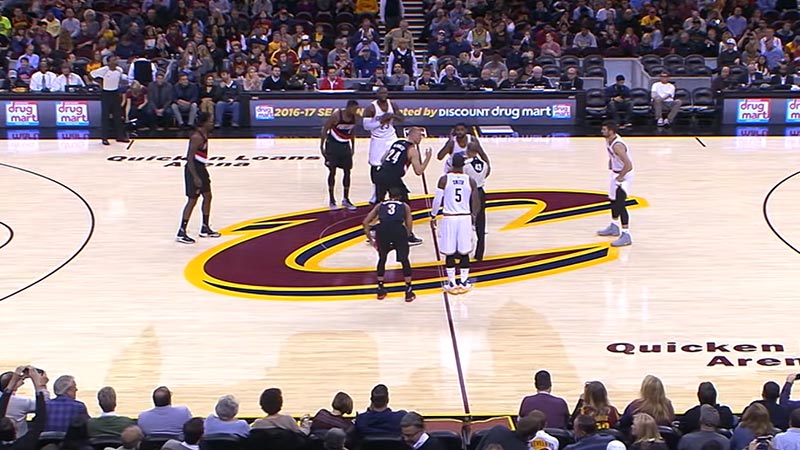
Basketball is fundamentally a game of possessions. While fans often focus on the precision of a three-point shot or the athleticism of a transition dunk, the underlying framework that dictates who holds the ball—and when—is what provides the sport its structural integrity.
Understanding the nuances of possession transitions between quarters is not merely for officials and coaches; it is essential for analysts, high-stakes enthusiasts, and dedicated followers of the game.
The regulations governing the start of each period vary significantly across the three major governing bodies: the National Basketball Association (NBA), the National Collegiate Athletic Association (NCAA), and the International Basketball Federation (FIBA). These differences influence everything from late-game strategy to the pacing of the contest.
The Professional Paradigm: National Basketball Association (NBA)
The NBA utilizes a fixed rotation system based on the outcome of the opening jump ball. This system is designed to provide a predictable structure for the game’s four twelve-minute periods.
The Opening Tip-Off
Every NBA game begins with a jump ball at center court. This initial contest does more than just determine the first possession; it sets the roadmap for the remainder of regulation time.
The Second and Third Quarters
In the professional ranks, the team that loses the initial jump ball is granted the ball to begin both the second and third quarters.
This rule serves as a built-in balancing mechanism, ensuring that the team disadvantaged at the start of the game receives two of the four scheduled period-opening possessions.
The Fourth Quarter
The team that wins the opening tip-off is rewarded with possession at the start of the fourth quarter. This creates a unique strategic cadence where the initial winner “books” the first and last quarters of regulation play.
Overtime Procedures
It is a common misconception that the quarterly rotation carries over into extra periods. In the NBA, regulation rules are suspended for the start of overtime.
Every overtime period begins with a fresh jump ball at center court to determine possession, regardless of who started the previous periods.
The Alternating Standard: NCAA and High School (NFHS)
In amateur basketball, including the NCAA and most American high school levels (NFHS), the logic of possession shifts from a fixed “winner/loser” rotation to a dynamic “alternating possession” system.
The Logic of the Arrow
Rather than rewarding the winner or loser of the opening tip with specific future quarters, college basketball utilizes an alternating possession arrow located at the scorer’s table.
- The Game Start: Like the NBA, the game begins with a jump ball.
- Setting the Arrow: The team that does not gain control of the ball after the initial jump ball has the arrow pointed in their direction.
- Subsequent Quarters: To start the second, third, and fourth quarters, the team currently favored by the arrow receives the ball. Once that throw-in is completed, the arrow is flipped to point toward the opposing team.
Technical Execution
This system ensures that throughout the game, any situation that would normally result in a jump ball (such as a “held ball” between two players) is resolved by awarding the ball to the team with the arrow.
This eliminates the need for repeated jump balls in the middle of a game, which can be seen as a way to maintain game flow and reduce the physical toll on players.
Overtime in the Amateur Ranks
If a game enters overtime, the alternating arrow is temporarily ignored for the start of the period. A new jump ball is conducted to begin the extra session.
Following that jump ball, the arrow is reset based on which team did not gain possession, and it governs any held balls or the start of subsequent overtime periods if necessary.
The Global Framework: FIBA Regulations
The International Basketball Federation (FIBA) governs Olympic and professional international play. Their ruleset serves as the global standard and aligns more closely with the NCAA than the NBA regarding possession.
Quarterly Transitions
FIBA play utilizes the alternating possession arrow for all periods following the first. The game begins with a jump ball, and the alternating arrow determines who receives the ball to start the second, third, and fourth quarters.
The Throw-In Mechanic
A distinct feature of the FIBA rulebook is the specific execution of the quarter start. Each subsequent quarter begins with a throw-in from the sideline by the team entitled to possession according to the arrow.
This sideline entry is a procedural standard that ensures a clean start to the period without the congestion often found at the baseline.
Strategic Implications of Possession Rules
The differences in these rules are not just procedural; they dictate tactical decisions made by coaching staffs at the highest levels of the sport.
The “Two-for-One” Strategy and Quarter Breaks
In the NBA, because coaches know exactly who will get the ball at the start of the second and third quarters, they can manage the clock at the end of the first and second quarters with more precision.
If a team knows they are starting the next period with the ball, they may be more aggressive in taking a “two-for-one” shot (taking a shot early in the shot clock to ensure they get the final possession of the quarter).
Managing the Arrow in the NCAA
In college basketball, the “possession arrow” is a resource. A team leading late in the game with the arrow in their favor effectively has an “extra life.” If a tie-up occurs, they retain possession.
Conversely, a team trailing may try to force a held ball specifically when the arrow is in their favor to regain possession without having to wait for a missed shot or a turnover.
The Psychological Impact of the Fourth Quarter
In the NBA, the team that wins the opening tip knows it will have the ball to start the most critical period: the fourth quarter. This can provide a psychological edge and a guaranteed opportunity to set the tone for the final twelve minutes of play.
Frequently Asked Questions (FAQ)
Q: Does the winner of the jump ball always get the ball in the 4th quarter in the NBA?
A: Yes. Under current NBA rules, the team that wins the initial jump ball at the start of the game is awarded the ball to begin the fourth quarter.
Q: What happens if there is a jump ball situation (held ball) in the NBA?
A: Unlike the NCAA or FIBA, the NBA does not use an arrow for mid-game tie-ups. If two players tie up the ball, a jump ball is conducted at the nearest circle (the free-throw circle or center court) between the two players involved.
Q: Why doesn’t the NBA use the alternating possession arrow?
A: The NBA prioritizes the jump ball as a competitive element of the game. The league’s philosophy suggests that contested possessions should be decided by a physical contest (the jump) rather than a mechanical rotation.
Q: If a game goes to double overtime, who gets the ball?
A: In all three major leagues (NBA, NCAA, FIBA), every overtime period begins with a brand-new jump ball. The rules for the start of regulation quarters do not apply to the start of extra periods.
Q: In the NCAA, if the game ends with the arrow pointing to Team A, who gets the ball to start Overtime?
A: No one “gets” the ball based on the arrow. Overtime starts with a jump ball. However, the arrow will be set following that jump ball to determine the next alternating possession.
Conclusion: The Foundation of Fair Play
The regulations governing quarterly possession are a testament to the sport’s evolution. While the NBA maintains a system that rewards the opening tip winner and balances the middle quarters, the NCAA and FIBA have opted for the “alternating arrow” to simplify game management and ensure an equitable distribution of possessions over time.
For the modern observer, recognizing these patterns enhances the viewing experience. It allows for a deeper anticipation of game flow and a better understanding of the strategic choices made by the world’s most elite athletes and coaches.
Whether it is the high-stakes jump ball of an NBA overtime or the tactical management of the possession arrow in a college tournament, these rules are the silent conductors of the game’s rhythm.