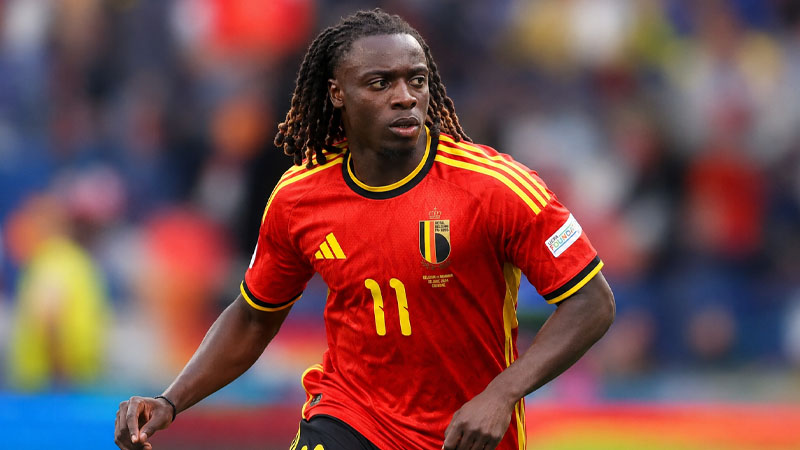
Jeremy Doku is one of world football’s most exciting talents, known for his explosive pace and technical brilliance on the wing.
While he is a mainstay in the Belgian national team and has made waves in the English Premier League, fans often ask: where is Jeremy Doku originally from?
His identity is a compelling blend of his European upbringing and deep African ancestry. Born in Belgium to Ghanaian parents, Doku serves as a bridge between two worlds.
This exploration delves into his family background, his life in Antwerp, and how his dual heritage shapes the elite athlete we see today.
Jeremy Doku’s Birthplace and Early Life in Belgium
To understand the player Jeremy Doku has become, one must first look at the streets where he first kicked a football. His journey began in the heart of Europe, in a city known for its rich history and competitive sporting culture.
While his DNA carries the legacy of West Africa, his formative years were spent navigating the Belgian football pyramid, which is renowned for producing world-class technical talent.
The Borgerhout Connection in Antwerp
Jeremy Doku was born on May 27, 2002, in the Borgerhout district of Antwerp, Belgium. Growing up in this specific part of Antwerp played a significant role in his psychological development as a competitor.
Borgerhout is a densely populated area with a diverse demographic, providing a melting pot of cultures that many professional athletes call home. Interestingly, his childhood home was located just minutes away from Royal Antwerp’s Bosuil Stadium.
Living in the literal shadow of a major professional stadium fueled his early passion for the game, as the cheers of the crowd were a constant backdrop to his daily life. This proximity to professional excellence made his dreams feel attainable from a very young age.
Professional Launch at RSC Anderlecht
Doku’s talent did not remain a neighborhood secret for long. He entered the professional football scene through the prestigious Belgian youth academies, which have a reputation for discipline and tactical excellence.
His most significant early development occurred at RSC Anderlecht, a club famous for its “Purple Talents” program.
Starting his senior career at such a historic institution allowed him to refine the raw speed he was born with into a specialized skillset that caught the attention of scouts across the continent.
His time at Anderlecht was the bridge between being a local prodigy in Antwerp and becoming a household name in European football.
The Ashanti Legacy: Doku’s Ghanaian Ancestry
While Belgium provided the training ground, Ghana provided the cultural and familial foundation. The question of where Jeremy Doku is originally from cannot be answered without looking at the Ashanti Region of Ghana.
This region is famous for its fierce history, golden traditions, and a deep-seated pride that is often reflected in the resilience of its people. For Doku, this heritage isn’t just a fact on a passport; it is the heartbeat of his household.
David and Belinda Doku: The Migration Story
The narrative of Jeremy Doku’s family is one of courage and new beginnings. His parents, David and Belinda Doku, made the life-altering decision to move from the Ashanti Region of Ghana to Belgium in 1993.
This migration took place nearly a decade before Jeremy was born, meaning they had established a stable life in Antwerp by the time he arrived. However, moving across continents did not mean leaving their identity behind.
David and Belinda ensured that their children remained connected to the land they left, instilling a sense of dual belonging that remains central to Jeremy’s public and private persona.
A Culturally Immersed Household
Despite living in a bustling European city, Jeremy Doku’s home was a sanctuary for Ghanaian culture. He was raised in a household that was deeply immersed in the traditions of his parents’ homeland.
One of the most significant aspects of this immersion was linguistic. Doku grew up speaking fluent Twi, a dialect of the Akan language widely spoken in southern and central Ghana.
Being multilingual—speaking Twi alongside French, Dutch, and English—gave him a unique ability to navigate different social circles and maintain a visceral connection to his elders in West Africa.
This cultural grounding provided a sense of stability as he rose through the ranks of the often-volatile world of professional sports.
Navigating Dual Citizenship and Identity
In the modern era of global sports, identity is rarely a simple, one-word answer. For elite athletes like Doku, citizenship and national representation are often points of discussion among fans and analysts.
Doku has managed this balance with a level of maturity that honors both his birthplace and his ancestral home, ensuring that neither part of his identity is overshadowed by the other.
Representing the Belgium National Team
On the international stage, Jeremy Doku wears the colors of the Belgium National Team. He is part of a generation of players who represent the modern face of Belgium—diverse, talented, and globally minded.
His decision to play for Belgium was a natural progression of his development within the Belgian football system, from youth levels to the senior squad.
However, representing the “Red Devils” has never meant a rejection of his roots. He continues to speak openly about his African heritage, proving that loyalty to a national team can coexist with a profound love for one’s ethnic origins.
Reconnecting with the Motherland: Ghana
The bond between Doku and Ghana was further solidified through formal recognition and personal effort. While he is a Belgian citizen by birth, he also holds dual citizenship. This is not merely a legal status for him; it is a personal commitment.
During a personal visit to Ghana, Doku officially received his Ghanaian passport, a gesture that resonated deeply with fans in West Africa.
This visit was more than just a vacation; it was a way for him to touch the soil of the Ashanti Region and reinforce the ties that his parents established decades ago.
Even as he competes at the highest levels of European football, he remains “closely connected” to his African roots.
Fast Facts: A Snapshot of Doku’s Background
The following table summarizes the essential details regarding Jeremy Doku’s origins and background, providing a quick reference for fans and researchers alike.
| Category | Details |
|---|---|
| Date of Birth | May 27, 2002 |
| Primary Birthplace | Antwerp, Belgium (Borgerhout District) |
| Ancestral Home | Ashanti Region, Ghana |
| Parents | David and Belinda Doku (Immigrated in 1993) |
| Languages Spoken | Twi, French, Dutch, English |
| International Team | Belgium National Team |
| Citizenship | Dual (Belgium and Ghana) |
| Youth Academy | RSC Anderlecht |
The Global Impact of His Multi-Cultural Identity
Doku’s story is representative of a larger trend in global football where players act as ambassadors for multiple cultures.
This multi-cultural background provides him with a broader perspective on the world, influencing how he communicates with teammates and how he carries himself under the global spotlight. His identity is not a conflict but a competitive advantage.
Linguistic Versatility and Communication
The fact that Doku is fluent in four languages is a testament to his upbringing and his cognitive adaptability.
In a locker room like Manchester City’s or the Belgian national team’s, where players come from every corner of the globe, his ability to switch between French, Dutch, English, and Twi is invaluable.
It allows him to build rapport with a wide range of individuals, from fellow African stars to European veterans. This linguistic range is a direct byproduct of his parents’ insistence on maintaining their Ghanaian heritage while integrating into Belgian society.
Inspiring the Next Generation of Diaspora Athletes
By successfully navigating his dual identity, Doku has become a role model for young athletes in the diaspora. He demonstrates that it is possible to be fully Belgian and fully Ghanaian at the same time.
Many young players in Europe face the pressure of choosing one identity over another, but Doku shows that embracing the full spectrum of one’s background is a path to personal and professional success.
His story encourages others to value their ancestral languages and traditions, even as they strive for excellence in their adopted countries.
Frequently Asked Questions
Is Jeremy Doku originally from Ghana?
While Jeremy Doku was born and raised in Antwerp, Belgium, his family origins are in Ghana. His parents immigrated to Belgium from the Ashanti Region in 1993.
What languages does Jeremy Doku speak?
He is remarkably versatile linguistically, speaking fluent Twi (a Ghanaian language), French, Dutch, and English.
Does Jeremy Doku have a Ghanaian passport?
Yes, Jeremy Doku holds dual citizenship and officially received his Ghanaian passport during a personal visit to the country.
Which national team does Doku play for?
He represents the Belgium National Team on the international stage, though he remains deeply connected to his African roots.
Conclusion: A Synthesis of Two Worlds
In summary, when asking “where is Jeremy Doku originally from,” the answer is a beautiful synthesis of two distinct locations. He is a son of Antwerp, a product of Belgian football excellence, and a proud representative of the Ashanti Region of Ghana.
His journey from the Borgerhout district to the elite stadiums of Europe is a testament to the hard work of his parents, David and Belinda, and his own commitment to honoring his multifaceted identity.
Doku’s ability to speak Twi as fluently as French or Dutch, and his decision to carry a Ghanaian passport while starring for Belgium, highlights a modern approach to heritage. He does not see his identity as divided, but rather as doubled.
As he continues to dominate on the pitch, he carries with him the hopes of two nations, proving that one’s origins are not just a point on a map, but a rich tapestry of history, language, and family.