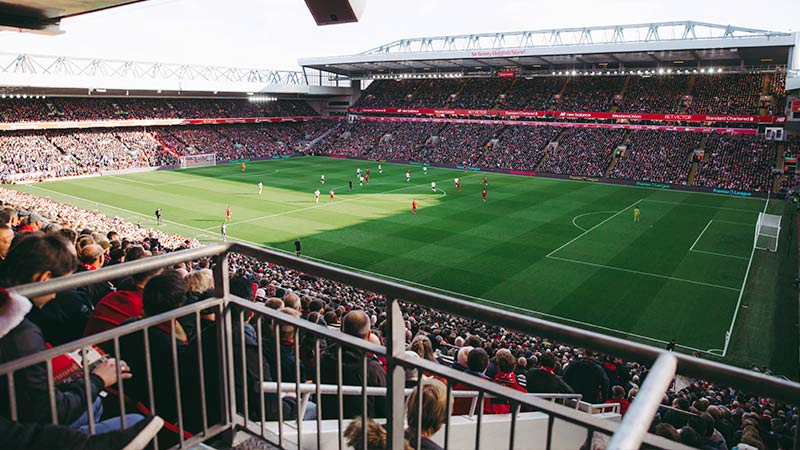
Soccer, often hailed as “The Beautiful Game,” currently commands a staggering audience of approximately 3.5 to 4 billion fans across the globe.
While its origins trace back to informal medieval ball games, the transition from a local pastime to a global industry was a meticulously staged evolution.
Understanding when soccer became popular requires looking beyond simple match dates to the socio-economic shifts of the 19th century.
From the smog-filled industrial towns of Victorian England to the sun-drenched stadiums of Uruguay, this exploration details the pivotal moments that transformed soccer into the most dominant sporting force on the planet.
The Birth of Order: Codification in the 1860s
The true popularization of soccer as a structured and recognizable sport began in the mid-to-late 19th century. Before this era, “football” was a chaotic affair with regional rules that often resembled a brawl more than a sport.
The primary catalyst for change was the need for standardization among elite English schools and clubs who wished to compete against one another without constant disputes over gameplay.
The Formation of the Football Association (1863)
The most significant milestone in the sport’s history occurred in 1863 with the founding of the Football Association (FA) in England.
This governing body provided the first unified set of rules, which crucially banned the handling of the ball and “hacking” (kicking an opponent’s shins).
By creating a “cleaner” and more standardized game, the FA made soccer more appealing to both participants and spectators.
This codification allowed the sport to move out of the chaotic fields of medieval tradition and into the organized sporting culture of the modern era.
The Rise of the Working Class and Professionalism
As the Industrial Revolution reshaped the English landscape, soccer found a new, massive audience among the working class in industrial towns. The sport’s popularity surged as factory workers sought leisure activities that were inexpensive and accessible.
In 1888, the formation of the first national Football League marked the official shift from an amateur hobby for the elite to a professional mass-spectator sport.
Professionalism allowed clubs to pay players, ensuring a higher level of talent and consistency that drew thousands of paying fans to newly constructed stadiums every Saturday.
The Global Export: How Soccer Crossed Oceans
While soccer was born and refined in England, its popularity did not remain confined to the British Isles for long. The late 19th and early 20th centuries saw the sport “exported” to virtually every corner of the map through the reach of the British Empire and its various commercial interests.
Merchants, Sailors, and International Spread
The global expansion of soccer was largely driven by British sailors, merchants, and soldiers who played the game in foreign ports and colonies.
In South America, particularly in Argentina and Brazil, British railway workers and expatriates introduced the game to local populations who quickly adopted it as their own.
Similarly, the sport began to take root in Africa and mainland Europe, where it was viewed as a modern, energetic pursuit. This organic spread created a grassroots foundation that would soon require international oversight.
The FIFA Milestone and Olympic Integration
As the number of international clubs grew, the need for a global governing body became apparent. In 1904, FIFA (Fédération Internationale de Football Association) was founded to provide international governance and oversight.
This development was followed by soccer’s inclusion in the Olympic Games starting in 1900, which served as a major catalyst for international competition.
The Olympics provided a prestigious platform that allowed different nations to showcase their talent, further fueling nationalistic pride and regional interest in the sport.
The World Cup Era: A Commercial Breakthrough
If the late 19th century was about organization, the 1930s were about the birth of the global spectacle. Soccer’s popularity “skyrocketed” during this decade, moving from a popular regional activity to a truly worldwide obsession.
Uruguay 1930: The First Major Spectacle
The inaugural FIFA World Cup in 1930, hosted and won by Uruguay, was a watershed moment for the sport. Despite the difficulties of international travel at the time, the tournament drew nearly 600,000 spectators.
This event proved that soccer had the power to unite diverse cultures under a single competitive banner. It established the World Cup as the premier international sporting event, second only to the Olympics in scale, and solidified the sport’s dominance in South American culture.
Establishing the International Legend
The success of the 1930 World Cup created a “snowball effect.” It gave rise to the first generation of international soccer legends and established a quadrennial rhythm that fans began to anticipate with fervor.
The competition fostered intense rivalries, particularly between European and South American nations, which added a layer of dramatic tension to the matches.
This drama was exactly what was needed to capture the imagination of a global audience and move the sport into the mainstream of international news and culture.
The Television Revolution: Broadcasting to the Billions
The post-World War II era introduced a technological shift that would change the sport forever. While millions were already playing and watching soccer, the advent of television turned the sport into a ubiquitous global presence.
The Power of Live Broadcasts
During the 1960s and 1970s, the rise of live television broadcasts made high-level soccer matches accessible to millions of people who could not attend games in person.
For the first time, a fan in rural Africa or a suburb in Asia could watch the World Cup final in real-time. This accessibility was crucial in expanding the sport’s reach beyond its traditional strongholds in Europe and South America.
Television transformed soccer from a stadium-bound experience into a shared global event that took place in living rooms around the world.
The Creation of Global Household Names
Television did more than just show the game; it created celebrities. The 1960s and 70s saw players like Pelé and Diego Maradona become household names globally. These icons served as ambassadors for the sport, inspiring millions of children to take up the game.
The commercialization of soccer through media rights and player endorsements began in earnest during this period, laying the groundwork for the multi-billion-dollar industry we see today.
Regional Turning Points and Growth Metrics
The popularity of soccer did not grow at the same rate in every region. Different cultures experienced unique turning points that defined their relationship with the game.
| Region | Major Turning Point | Key Impact |
|---|---|---|
| England | 1888 Football League | Shifted soccer from elite schools to a professional mass-spectator sport. |
| South America | Early 1900s Adoption | Rapid growth in Brazil/Argentina via British influence; created a new soccer powerhouse. |
| United States | 1970s NASL & 1994 World Cup | Pelé’s arrival sparked initial interest; 1994 World Cup led to the launch of MLS. |
| Global | 1904 FIFA Founding | Established the framework for international tournaments and unified rules. |
The United States: A Unique Trajectory
In the United States, soccer’s path to popularity was more fragmented than in other parts of the world. While the sport was played in various forms for decades, it took several specific “shocks” to the system to move it toward the mainstream.
Pelé and the NASL Era
In the 1970s, the arrival of Brazilian legend Pelé to play for the New York Cosmos in the North American Soccer League (NASL) provided the first major spark of interest in the U.S..
While the NASL eventually folded, it proved that there was an appetite for professional soccer in America. This era was critical for establishing the grassroots interest that would pay dividends decades later.
The 1994 World Cup and the Rise of MLS
The most significant turning point for American soccer was the 1994 FIFA World Cup, hosted by the United States. This tournament remains the most attended World Cup in history and led directly to the launch of Major League Soccer (MLS) in 1996.
The 1994 tournament provided the commercial and social validation needed to sustain a professional league and fueled massive growth in youth soccer participation across the country.
Why Soccer Remained Popular: The Accessibility Factor
Beyond history and media, the sustained popularity of soccer is driven by its inherent simplicity. Unlike many other sports that require expensive equipment, specialized courts, or specific environmental conditions, soccer is remarkably egalitarian.
- Low Barriers to Entry: The sport requires only a ball and an open space to play. This makes it accessible to people in impoverished areas and wealthy urban centers alike.
- Ease of Understanding: The fundamental rules of soccer are intuitive. This simplicity allows the game to transcend language barriers and cultural differences.
- Universal Appeal: Because it does not require a specific body type or massive physical stature, soccer is a sport that almost anyone can play, from young children to older adults.
FAQ: Understanding Soccer’s Popularity
When did soccer become a professional sport?
Soccer transitioned into a professional sport in England with the formation of the Football League in 1888. This move allowed players to be paid and established a formal structure for weekly competition.
Why is soccer more popular than other sports?
Its global dominance is largely attributed to its simplicity and low cost. Because it requires minimal equipment, it has been able to take root in developing nations and wealthy countries simultaneously.
Which event had the biggest impact on soccer’s global growth?
The 1930 FIFA World Cup is often cited as the moment popularity “skyrocketed”. It proved the viability of international competition and established soccer as a major global spectacle.
How did television affect soccer’s popularity?
The rise of live broadcasts in the 1960s and 70s made the game accessible to billions of people globally, regardless of their location. It also turned elite players into international celebrities.
Conclusion: The Future of the Beautiful Game
The evolution of soccer from informal medieval games to a multi-billion-dollar global industry is a testament to the sport’s unique appeal.
By standardizing the rules in 1863, professionalizing the game in 1888, and leveraging the power of television in the 20th century, soccer has cemented its status as the world’s favorite sport.
Today, with nearly 4 billion fans, the game continues to grow, particularly in emerging markets and through the expansion of women’s soccer.
Its core strength—simplicity—ensures that as long as there is a ball and a bit of space, the game will continue to thrive for generations to come.