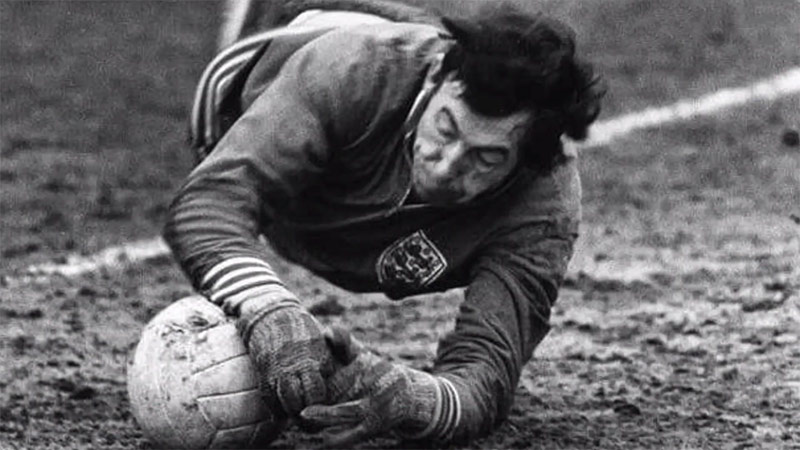
In the modern era of professional football, the image of a goalkeeper is inseparable from their gloves.
Whether it is a Premier League star making a fingertip save or a youth player learning the ropes at a local park, gloves are considered an essential, non-negotiable piece of equipment.
They provide the necessary grip to catch a high-speed ball and the cushioning required to protect the hands from thunderous shots. However, this was not always the case.
For the majority of football’s history, the men between the posts faced the ball with nothing but their bare hands.
The transition from bare-knuckle goalkeeping to the sophisticated, multi-layered latex tools of today is a fascinating journey of innovation, skepticism, and gradual adoption.
Understanding when goalkeepers first started wearing gloves requires looking back over a century of technological evolution.
The Forgotten Genesis: William Sykes and the 1885 Patent
While many fans associate the rise of goalkeeper gloves with the televised era of the 1970s, the conceptual birth of the glove happened much earlier. In 1885, a British football manufacturer named William Sykes applied for and received a patent for a pair of leather goalkeeper gloves.
Sykes was a visionary who recognized that the impact of a heavy, leather ball could be detrimental to a player’s hands.
His design featured leather construction integrated with a layer of India rubber intended to soften the blow of the ball. Despite this early innovation, Sykes’ invention did not spark an immediate revolution.
He never moved into mass production, and it would take more than half a century for the concept to gain any real traction on the pitch.
In fact, the original “rules of the game” established in 1863 made no mention of gloves, meaning there was no official incentive or requirement for keepers to seek hand protection.
The Early Pioneers: Jaguaré and Amadeo Carrizo
For decades after Sykes’ patent, goalkeepers continued to play barehanded. If gloves were worn at all in the early 1900s, they were typically wool or gardening gloves used solely for warmth during the biting winter months.
The first true pioneers who wore gloves for performance reasons emerged in the 1930s and 1940s:
- Jaguaré: The Brazilian goalkeeper is credited by some sources as one of the first to consistently wear gloves during the mid-1930s.
- Amadeo Carrizo: Often cited as the most influential early adopter, the Argentine legend played for River Plate between 1945 and 1968. Carrizo was a revolutionary who also became the first “sweeper-keeper” by regularly leaving his penalty area to clear the ball.
Carrizo’s gloves, however, were a far cry from modern standards. They were primarily made of cotton, a material that proved problematic because it absorbed water rapidly and became slippery in wet conditions. Furthermore, cotton provided very little in the way of cushioning, offering minimal protection against the heavy balls of that era.
The 1960s and 1970s: The Tipping Point
The 1960s marked a turning point where the “trend” of wearing gloves began to move from a rarity to a common sight.
By the late 60s, the legendary England goalkeeper Gordon Banks began wearing gloves, most notably during the 1966 World Cup victory.
However, it was the 1970 FIFA World Cup in Mexico that served as a global showcase for the goalkeeper glove.
Banks experimented with a more specialized set of gloves during this tournament. While they still resembled gardening gloves in their construction, they offered better grip than the previous cotton or wool iterations.
This era also saw the emergence of specialized manufacturers:
- Stanno: In the mid-1960s, Stanno released what many consider the first “modern” gloves, featuring leather construction with rubber inserts to increase grip.
- Reusch: Although the company was founded in 1934 and is considered the first to mass-produce goalkeeper gloves, their popularity surged in the 70s as demand grew.
- Uhlsport and Sondico: These brands also entered the market during this decade, catering to an audience that was finally beginning to see gloves as a necessity rather than a luxury.
Despite this growth, many elite keepers of the 70s, such as Alex Stepney and Pat Jennings, famously continued to play without gloves. For many, gloves were still viewed as a tool specifically for wet weather rather than a standard piece of kit.
The 1980s: The Latex Revolution
If the 1970s were about adoption, the 1980s were about technological explosion. This was the decade when the goalkeeper glove evolved into a high-grip performance tool rather than just a protective layer.
Manufacturers began aggressive experimentation with materials to solve the “grip” problem. They tested everything from terry cloth and microfiber to the rubber padding found on table tennis bats. Eventually, the industry hit upon the gold standard: latex foam.
Latex changed the game forever. It offered a “sticky” surface that allowed goalkeepers to catch balls that would have been nearly impossible to hold onto previously.
By the end of the 1980s, the transition was complete: goalkeeper gloves had become mandatory for almost every player at the professional level.
The 1990s and 2000s: Safety and Ergonomics
By 1990, gloves were considered a total necessity. The 90s saw further refinements, most notably the introduction of “Fingersave” technology.
This involved plastic or rubber protection points on the fingers and knuckles designed to prevent hyperextension and other common “jammed finger” injuries.
In the 2000s, the focus shifted toward ergonomics and specialized “cuts.” Manufacturers began offering different ways the latex was stitched to the glove, including:
- Rollfinger: This cut wraps the latex around the fingers for more surface area and a voluminous feel.
- Negative Cut: Stitched internally for a tighter, more “true-to-hand” fit.
- Hybrid Cuts: Combining different styles for a balance of comfort and performance.
Modern innovations have even introduced internal latex layers to prevent the hand from slipping inside the glove, ensuring that even a fraction of a millimeter of movement does not result in a missed save.
Why the Evolution Take So Long
It is often surprising to modern fans that such a logical piece of equipment took over 100 years to become standard. Several factors contributed to this delay:
- Tradition: Many “old-time” keepers believed that the art of goalkeeping lay in the bare hands and that gloves were a crutch.
- Ball Technology: Early balls were made of heavy leather that absorbed water. As balls became lighter, faster, and made of synthetic materials in the 90s, the need for advanced grip and protection became unavoidable.
- Material Science: The specialized latex required for elite performance simply wasn’t available or mass-produced for the sporting market until the late 20th century.
Conclusion
The history of the goalkeeper glove is a testament to the evolution of football itself. From William Sykes’s ignored patent in 1885 to the cotton experiments of Amadeo Carrizo and the latex revolution of the 1980s, the glove has transformed from a winter warmth accessory into a pinnacle of sports engineering.
Today, a goalkeeper’s gloves are their most trusted allies, embodying over a century of trial, error, and eventual triumph on the pitch.