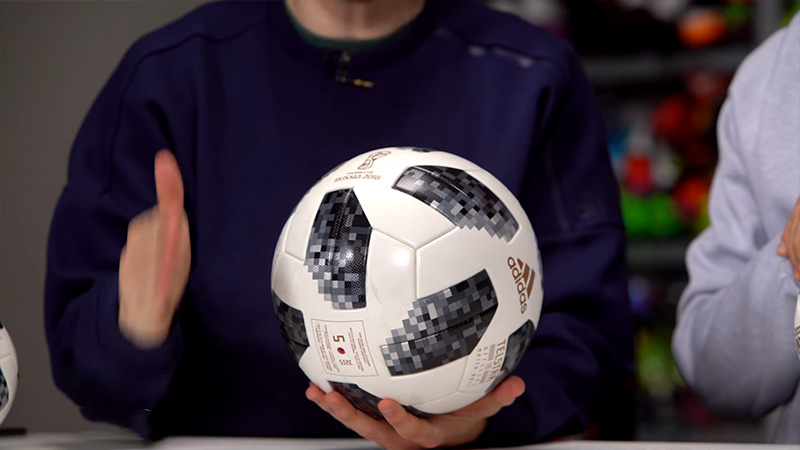
Standardization is the bedrock of professional sports, ensuring that every pass, shot, and save is governed by predictable physical dynamics regardless of the stadium or continent.
In association football, the ball is the most critical piece of equipment, and its specifications are meticulously regulated to maintain the integrity of the game. For senior, adult, and elite professional matches worldwide, the Size 5 ball is the undisputed global benchmark.
This uniformity allows players to develop a precise “touch” and muscle memory that translates across different leagues and international competitions, from the grassroots level to the World Cup.
The Official Standard: Why Size 5 Rules the Game
The designation of “Size 5” is more than just a label; it represents a specific set of physical parameters designed to balance playability, safety, and speed.
Every professional league, including the English Premier League, La Liga, and Major League Soccer (MLS), utilizes the Size 5 ball for senior competition. The reason for this universal adoption lies in the balance the size provides.
It is large enough to be easily tracked by both players and spectators at high speeds, yet aerodynamic enough to allow for the complex flight paths—such as “knuckling” or “curling”—that define modern elite play.
Breaking Down the Dimensions
To the casual observer, soccer balls might appear identical, but the margin for error in professional manufacturing is razor-thin. A professional ball must have a circumference between 68 and 70 centimeters, which translates to approximately 27 to 28 inches.
This specific range ensures that the ball has a diameter of roughly 22 centimeters. If a ball were even slightly larger, it would create excessive wind resistance, slowing down the pace of the game.
Conversely, a smaller ball would be too difficult for goalkeepers to handle and would lack the necessary mass to travel long distances accurately during cross-field passes.
The Evolution of Professional Sizing
Historically, soccer balls were not always so precisely calibrated. Early iterations were made from inflated animal bladders wrapped in leather, leading to inconsistent shapes and weights—especially when the leather became waterlogged.
The shift to the modern Size 5 standard was driven by the need for a “fair” game. Governing bodies like the International Football Association Board (IFAB) and FIFA realized that without strict size and weight constraints, home-team advantages could be unfairly manipulated through equipment choice.
Today, the Size 5 standard ensures that an elite athlete can transition from a match in London to one in Los Angeles without needing to recalibrate their technique.
Technical Specifications of a Professional Match Ball
For a ball to be legally used in a professional match, it must adhere to the technical requirements set forth by FIFA and IFAB. These regulations cover four primary metrics: circumference, weight, diameter, and internal air pressure.
| Metric | Regulation Standard |
|---|---|
| Circumference | 68–70 cm (27–28 inches) |
| Weight | 410–450 grams (14–16 ounces) |
| Diameter | ~22 cm (approx. 8.5–8.8 inches) |
| Air Pressure | 0.6–1.1 atmospheres (8.7–16.0 psi) |
While these numbers provide the “what,” the “why” is equally important. The weight range of 410 to 450 grams is particularly significant.
This mass is heavy enough to resist being redirected by minor gusts of wind but light enough to prevent head injuries when players contest aerial duels.
Furthermore, the pressure regulation of 0.6 to 1.1 atmospheres is measured specifically at sea level to ensure consistent bounce and energy return across different geographic locations.
The Prestigious FIFA Quality Pro Certification
While many balls are labeled as “Size 5,” only a select few are qualified for use in elite professional leagues. These balls undergo rigorous laboratory testing to earn the “FIFA Quality Pro” designation.
This certification is the highest honor a soccer ball can receive and is required for balls used in competitions like the FIFA World Cup or the UEFA Champions League.
Testing for the Elite Level
To earn the “FIFA Quality Pro” mark, a ball is tested for more than just size and weight. Engineers examine its sphericity (how perfectly round it is), its water absorption (to ensure it doesn’t get heavy in the rain), and its “loss of pressure” over time.
A professional ball must maintain its shape even after thousands of high-velocity impacts against a steel plate. This ensures that when a player strikes the ball in the 90th minute, it responds exactly the same way it did in the 1st minute.
Consistency Across Global Leagues
Top-tier leagues often partner with specific manufacturers to create high-performance models that meet these elite standards. For instance, Major League Soccer (MLS) currently utilizes the Adidas Pro Ball, a model specifically engineered to meet the FIFA Quality Pro requirements.
These balls often feature advanced thermal bonding technology instead of traditional stitching, which creates a smoother surface and further reduces water uptake, maintaining the official weight of 410–450 grams even in torrential downpours.
Sizing Gaps: Understanding Youth and Training Progressions
Understanding the Size 5 professional standard also requires looking at the developmental path a player takes. Using a professional-sized ball too early in a child’s development can lead to improper technique or physical strain.
Transitioning from Youth to Senior Play
The progression through ball sizes is designed to match the physical growth of the athlete:
- Size 4: This is the bridge between junior and adult play, utilized by youth players between the ages of 8 and 12. With a circumference of 63.5–66 cm, it is slightly smaller and lighter than a professional ball, allowing younger players to master the mechanics of striking without risking joint injury.
- Size 3: Reserved for junior players under the age of 8, this ball has a circumference of 58.5–61 cm. It is designed to be easily controlled by smaller feet, fostering confidence and engagement with the sport at an early age.
The Utility of Mini Balls
Beyond the competitive sizes, there are “mini” balls, often categorized as Size 1 or Size 2. While these are never used in matches, they serve two professional purposes.
First, they are vital for skills training; many elite academies require players to practice with these smaller targets to sharpen their foot-eye coordination and precision.
Second, they serve as memorabilia or souvenirs for fans, often featuring the branding of professional clubs or major tournaments.
Physics and Performance: The Role of Weight and Pressure
The performance of a professional soccer ball is a symphony of physics. The weight and internal air pressure work in tandem to determine how the ball interacts with both the player’s foot and the turf.
Aerodynamics and Ball Flight
At the professional level, the “Size 5” specification interacts with the ball’s surface texture to dictate aerodynamics. A ball weighing the regulation 410–450 grams possesses enough inertia to maintain its trajectory through the air.
When a player applies “side-spin,” the air pressure differences created around the rotating ball (the Magnus Effect) cause it to curve.
If the ball were lighter than the official standard, it would become unpredictable in flight; if it were heavier, it would be nearly impossible to achieve the necessary velocity for long-range scoring.
Impact on Player Safety and Skill
Air pressure is perhaps the most debated technical specification among players. Regulation standards require a range of 0.6 to 1.1 atmospheres.
A ball at the lower end of this range (8.7 psi) feels “softer” and is easier to control on the chest or foot, but it lacks “ping” or travel distance when struck.
A ball at the higher end (16.0 psi) is much faster and more responsive but requires a higher level of skill to control.
Professional referees always check the pressure before a match to ensure it falls within this legal window, protecting players from the “rock-like” feel of an over-inflated ball while ensuring the game doesn’t feel “sluggish” due to under-inflation.
Frequently Asked Questions (FAQ)
What is the most common soccer ball size for adults?
The most common and official size for adults is Size 5. This is used for all senior-level play, from amateur Sunday leagues to the professional ranks.
Can a Size 4 ball be used in a professional match?
No. Official FIFA and IFAB regulations strictly mandate a Size 5 ball for professional match play. Size 4 balls are reserved for youth development (ages 8–12) and do not meet the weight or circumference requirements for senior competition.
Why is air pressure measured at sea level?
Air pressure is measured at sea level to provide a consistent baseline. Since atmospheric pressure changes with altitude (e.g., playing in Denver vs. playing in Miami), setting a sea-level standard ensures that the ball’s internal tension remains within a safe and predictable range for performance.
How much does a professional soccer ball weigh?
An official match ball must weigh between 410 and 450 grams (14–16 ounces) at the start of the match.
What is a “Mini” soccer ball used for?
Size 1 and 2 balls, often called “mini” balls, are primarily used for skills training to improve footwork or as commemorative souvenirs.
Achieving Peak Performance
Choosing the right equipment is the first step toward professional-level performance. Whether you are an aspiring athlete or a coach, ensuring your gear meets official standards is essential for developing the skills necessary to succeed in the modern game.
The Size 5 ball is not just a piece of equipment; it is a finely tuned instrument of athletic precision. By understanding the metrics of circumference, weight, and pressure, you gain a deeper appreciation for the science that powers the world’s most popular sport.
For those looking to train like the pros, investing in a “FIFA Quality Pro” certified ball—like the models used in top-tier leagues—provides the most authentic match-day experience.
Consistency in your equipment leads to consistency in your game. Master the Size 5, and you are ready for the global stage.