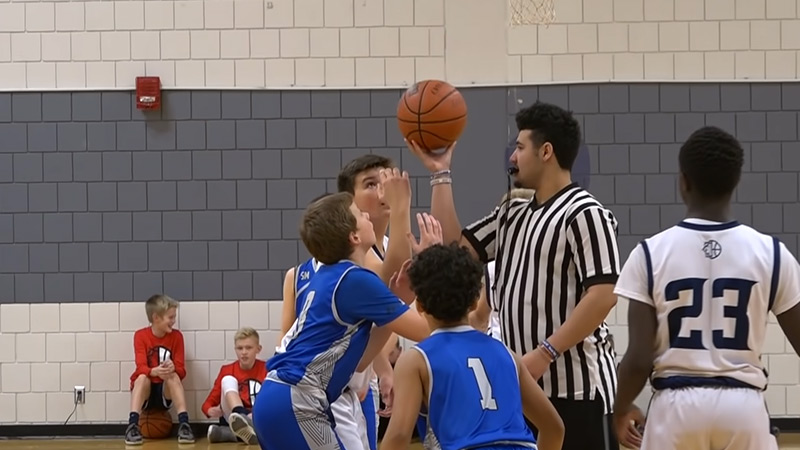
Choosing the right basketball for a 6th-grade player is more than just a matter of preference; it is a critical step in their athletic development.
As players reach the ages of 11 and 12, they enter a “transition year” where the game becomes faster, more competitive, and more aligned with official regulation standards.
The standard basketball size for 6th-grade boys and girls (typically ages 11-12) is a Size 6, which features a 28.5″ circumference.
This specific size serves as the bridge between early youth play and the higher levels of competitive basketball.
The Gold Standard: Understanding the Size 6 (28.5″) Basketball
When a child enters the 6th grade, they are often moving from recreational elementary leagues to middle school or more competitive “travel” teams. For these environments, the Size 6 ball is the universal requirement.
Standard Specifications and Usage According to the sources, the Size 6 basketball is the official standard for both girls’ and boys’ youth, middle school, and women’s regulation play.
It is designed to accommodate the growing hand size and physical strength of athletes in the 11-to-12-year-old age bracket.
Key technical details for the Size 6 include:
- Circumference: 28.5 inches.
- Weight: 20 oz.
- Target Demographic: This ball is specifically applicable to girls aged 12 and older and boys aged 12 to 14.
Why Size 6? The move to a 28.5″ ball is significant because it is the standard for middle school and competitive youth league play. Using this size allows 6th graders to develop the muscle memory needed for the next several years of their playing careers.
The Exception: When to Use a Size 5 (27.5″) Basketball
While the Size 6 is the regulation standard, there are scenarios where a smaller ball is still utilized. Some leagues might use a Size 5 for younger or developing players.
Developmental Considerations Not every 6th grader grows at the same rate. For younger 6th graders or those in early developmental stages, some coaches may still opt to use a Size 5 (27.5″) ball.
This smaller ball is often easier to handle for players who may not yet have the hand span or upper body strength to control the heavier Size 6 effectively.
If your player is participating in a recreational league rather than a competitive middle school team, it is essential to check local guidelines.
Some organizations prioritize skill-building and high success rates (making baskets) over strict adherence to regulation sizes during the early 6th-grade months.
Future-Proofing: How Long Will This Ball Last?
One of the most common questions parents ask is whether they will need to buy another ball the following year. The answer depends entirely on the gender of the player.
- For Girls: The Size 6 (28.5″) is a long-term investment. It remains the standard size for girls from age 12 through high school, college, and professional women’s regulation play.
- For Boys: The Size 6 is a transitional tool. It is the standard for boys aged 12 to 14. Once a boy reaches high school (typically age 15), he will move up to the “official” Size 7 (29.5″).
Summary Checklist for 6th Grade Basketball
To ensure your player is equipped for success, refer to this quick guide based on the Medfield Youth Basketball Association standards:
| Feature | Specification |
|---|---|
| Official Size | Size 6 |
| Circumference | 28.5 inches |
| Weight | 20 oz |
| Primary Users | Boys (12-14) & Girls (12+) |
| Alternative | Size 5 (27.5″) for developmental stages |
Conclusion: Choosing the Right Ball for Your Player
For the vast majority of 6th graders, the Size 6 (28.5″) basketball is the correct choice. It aligns with middle school standards and ensures the player is practicing with the same equipment they will use during competitive games.
However, parents and coaches should remain flexible. If a player is struggling with the weight or size of the ball, or if the specific league dictates it, starting the season with a Size 5 (27.5″) can be a valid developmental strategy.
By matching the ball size to the player’s current skill level and league requirements, you provide them with the best opportunity to develop proper shooting mechanics, ball-handling confidence, and a lifelong love for the game.