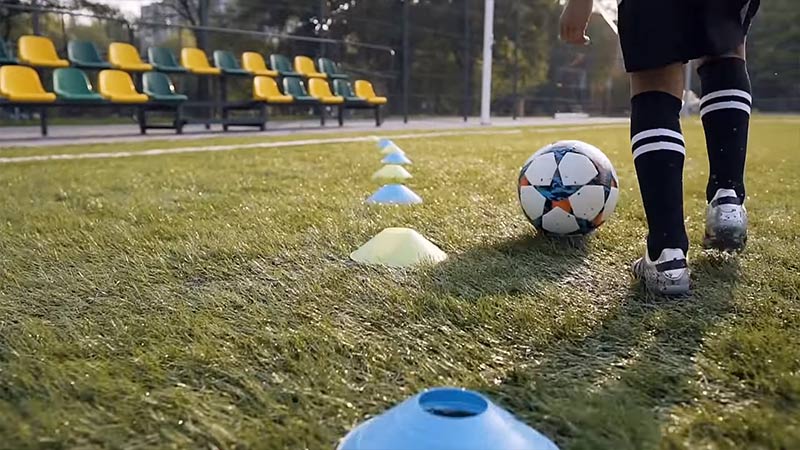
Soccer tryouts are more than just a showcase of your technical skills; they are a comprehensive assessment of your character, discipline, and tactical intelligence.
While many players focus on what to do to stand out, the most successful athletes understand what not to do to avoid immediate disqualification.
Coaches are often looking for reasons to “cut” players from a large pool, and behavioral or tactical red flags can overshadow even the most elite physical talent.
This guide explores the critical errors that can ruin your chances, ensuring you remain a top candidate for any high-performance roster.
The Psychological Impact of Behavioral Mistakes
A coach’s evaluation begins the moment you step onto the facility grounds, long before the first whistle blows. Behavioral red flags are often the fastest way to be eliminated from contention because they suggest a player will be a liability to the team’s culture.
Poor Time Management and Respect
Arriving late is a primary error that demonstrates a lack of professional discipline. Missing the scheduled warm-up shows poor time management and immediately signals to the staff that you may not be fully committed to the team’s standards.
Furthermore, how you interact with the staff during the check-in process is monitored; ignoring coaches or looking away during instructions implies a fundamental lack of respect and poor coachability.
Toxic Communication and Attitude
On the field, your voice is a tool, but it must be used constructively. Complaining openly, grunting, or whining during difficult drills signals a negative attitude that coaches find draining to manage.
One of the most severe “redlines” is blaming teammates or shouting at others for bad passes, which effectively destroys team chemistry and marks you as a toxic leader.
Additionally, showing arrogance or belittling other players isolates you from the group, proving you are not a team player.
Lack of Mental Resilience
High-performance environments require players who can push through discomfort. Faking injuries or quitting a drill due to minor fatigue shows low resilience and a lack of the mental toughness required for competitive match play.
Coaches are searching for athletes who remain composed under pressure, not those who look for an exit when the intensity increases.
Tactical and Performance Errors on the Pitch
Technical ability is expected at a high level, but tactical intelligence is what earns a spot on the roster. Many players fail because they prioritize individual highlights over team efficiency and strategic execution.
Poor Decision-Making and Selfishness
While it is tempting to try and impress scouts with individual skill, hogging the ball and trying to dribble past everyone shows poor decision-making and a lack of situational awareness.
This is often paired with taking wild shots from impossible angles, which reveals low soccer intelligence and a disregard for better-positioned teammates.
Deficiencies in Work Rate
Coaches prioritize players who contribute in all phases of the game, particularly during the transition from offense to defense. Walking on transition or jogging back after losing possession displays a significant lack of effort and defensive responsibility.
Conversely, some players suffer from “performance paralysis,” where they are hiding from the play or standing still to avoid the ball, which suggests low confidence and an inability to handle the pressure of the environment.
Tactical Indiscipline and Physicality
Maintaining the team’s structure is vital for organizational success. Sticking out of position or wandering away from your assigned role confuses your teammates and breaks the tactical flow of the game.
Furthermore, soccer is a contact sport; shying away from tackles or avoiding physical contact shows a fear of intensity that is incompatible with elite-level competition.
Preparation and Professional Gear Standards
Your preparation before the tryout reflects your commitment to the sport. Errors in equipment and self-care are often viewed as “amateur” mistakes that suggest a player is not ready for a professionalized environment.
Equipment Compliance and Branding
Professionalism extends to your gear. Wearing illegal gear or forgetting essential safety equipment like shinguards can disqualify you from playing entirely.
Additionally, a subtle but common mistake is wearing club uniforms or gear from rival clubs, which can create an immediate, negative bias with the evaluating coaches.
Physical Readiness and Maintenance
To perform at your peak, you must manage your body’s requirements. Neglecting hydration or skipping water breaks leads to cramping and a sharp decline in energy levels, preventing you from finishing the tryout as strongly as you started.
Furthermore, a common technical oversight is breaking in new cleats at a tryout; wearing un-tested boots often causes painful blisters that significantly hinder your movement and performance.
Comprehensive Tryout Evaluation Matrix
To help you visualize the “redline” behaviors versus the elite standards coaches expect, refer to the following comparison table.
| Category | The Redline (What Not To Do) | The Gold Standard (What To Do) |
|---|---|---|
| Punctuality | Arriving late/Missing warm-up | Arriving 20 minutes early for prep |
| Communication | Blaming teammates/Complaining | Encouraging others/Positive cues |
| Effort | Walking on transition | Immediate 5-yard sprint on turnover |
| Intelligence | Hogging the ball/Wild shots | Playing the simple, effective pass |
| Resilience | Faking injury/Quitting | Pushing through fatigue/Focusing |
| Equipment | Missing shinguards/Rival gear | Clean, neutral, compliant gear |
Frequently Asked Questions About Soccer Tryouts
Should I talk to the coach during the tryout?
While you should not interrupt a coach while they are speaking or during an active drill, it is beneficial to ask clarifying questions during breaks. This shows you are engaged. However, never use this time to complain or make excuses for your performance.
Is it okay to wear my current club’s jersey?
It is generally advised to wear neutral colors (white, black, or grey) unless the tryout hosts provide a specific shirt. Wearing gear from rival clubs creates immediate bias and can make you seem out of place within the new organization’s culture.
What should I do if I make a mistake on the field?
The biggest mistake you can make after an error is “dropping your head” or walking. Coaches expect mistakes; what they are looking for is your reaction. Immediately sprint to recover the ball or get back into your defensive position to show your work rate.
How do I handle a teammate who isn’t passing the ball?
Never shout at or blame a teammate during a tryout. This reflects poorly on your leadership. Instead, continue to work hard to find open space and communicate with positive, short instructions like “man on” or “turn.”
Conclusion: Securing Your Spot
Mastering a soccer tryout requires a balance of high-level performance and impeccable character. By avoiding the behavioral “redlines”—such as poor time management, toxic communication, and low resilience—you distinguish yourself as a player who enhances team culture.
Simultaneously, maintaining your tactical discipline by avoiding selfish play and showing a high work rate during transitions will catch the eyes of scouts for all the right reasons.
The most elite players understand that every detail matters, from the shoes on their feet to the way they react to a missed shot. Control the controllables: show up early, respect the staff, wear the correct gear, and leave everything on the pitch.
By eliminating these common errors, you move from being just another jersey in the crowd to a must-have asset for the team.