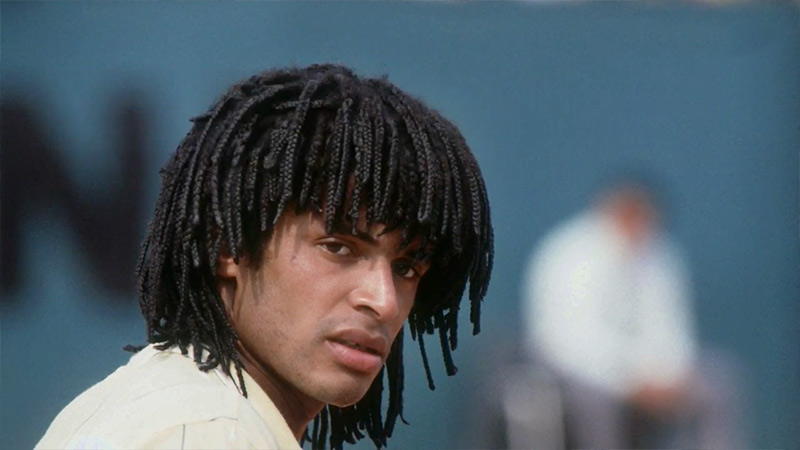
Yannick Noah officially holds dual French and Cameroonian nationality, a legal and cultural status that reflects his deep roots in both Europe and Africa.
Born in Sedan, France, in 1960, he automatically gained French citizenship and spent his professional tennis career representing the French flag.
Simultaneously, his lineage connects him directly to Cameroon through his father, Zacharie Noah, a celebrated Cameroonian footballer.
Today, Noah maintains this “Global Citizen” identity, serving as a traditional chief in Yaoundé while remaining a central figure in French sports leadership, music, and philanthropy.
The Roots of Yannick Noah’s Dual Citizenship
Understanding the legal and cultural identity of Yannick Noah requires a journey through two continents. His status is not merely a matter of paperwork but a lived experience that spans the Mediterranean and the heart of Africa.
This duality has defined his public persona for decades, allowing him to serve as a bridge between different societal frameworks and traditions.
Citizenship by Birth and Descent
Noah was born in Sedan, France, on May 18, 1960. This birth on French soil automatically granted him French citizenship, a legal standing he would maintain throughout his life and professional career.
However, his identity is equally rooted in the African continent through his father, Zacharie Noah, who was a legendary professional soccer player from Cameroon.
This patrilineal connection provides Yannick with Cameroonian citizenship by descent, effectively making him a “franco-cameroonais” national in both a legal and official capacity.
This dual status allows him to navigate both worlds with a unique sense of legal authority and cultural authenticity that few global figures possess.
The Childhood Shift to Cameroon
While born in Europe, Noah’s formative years were deeply influenced by the soil of his father’s homeland. He spent a significant portion of his early childhood growing up in Cameroon.
It was only at the age of 11 that he returned to France to pursue intensive tennis training, a move that would eventually lead him to the pinnacle of global sports.
This early exposure to Cameroonian life laid the foundation for his “global citizen” identity, a concept he frequently uses to describe his blend of European and African cultures.
By the time he reached adulthood, he was as comfortable in the streets of Yaoundé as he was in the stadiums of Paris.
What National Team Did Yannick Noah Represent?
When discussing the nationality of a world-class athlete, the conversation often turns to the flag they defended on the international stage.
For Yannick Noah, his sporting nationality was consistently and proudly French, as he became one of the most successful athletes in the history of the nation.
A Career Under the French Flag
Throughout his entire career on the ATP Tour, Noah played strictly under the French flag. His commitment to French tennis extended beyond his personal matches, as he frequently participated in team competitions that defined the country’s standing in the sport.
His role as a national representative was not just a formality; he was the face of French tennis during a golden era, bringing a level of charisma and athleticism that captivated the public.
Even after retiring from active play, he continued this national service by serving as the captain for both France’s Davis Cup and Billie Jean King Cup squads.
| Year | Tournament | Discipline | Accomplishment |
|---|---|---|---|
| 1983 | French Open (Roland-Garros) | Singles | Champion (Defeated Mats Wilander) |
| 1984 | French Open (Roland-Garros) | Doubles | Champion (with Henri Leconte) |
| Post-Career | Davis Cup | Coaching | Team Captain for France |
| Post-Career | Billie Jean King Cup | Coaching | Team Captain for France |
The Historic 1983 Victory
The crowning achievement of Noah’s sporting career occurred at Roland-Garros in 1983. By defeating Mats Wilander in straight sets, he secured the French Open singles title, a feat that resonated deeply across the nation.
This victory was more than just a personal milestone; it was a moment of national pride, as he remains the last Frenchman to win a home singles Grand Slam title.
This achievement solidified his status as a French hero, ensuring that his name would be forever etched in the annals of the country’s sporting history.
Is Yannick Noah Cameroonian or French?
The question of whether Noah is Cameroonian or French often misses the point of his lived experience. He identifies as a blend of both worlds, embracing a multifaceted identity that refuses to be confined to a single box.
Embracing a Biracial Cultural Identity
Yannick Noah is biracial, born to a Black Cameroonian father and a white French native mother, Marie-Claire Noah. His mother was a dedicated schoolteacher, while his father found fame on the football pitch.
This mixture of backgrounds has made him one of the most prominent Black male athletes in the history of tennis, a sport that has historically lacked diverse representation at its highest levels.
Noah has never shied away from this identity; instead, he has used his platform to honor his mixed descent, becoming a symbol of multiculturalism in a rapidly changing world.
Music as a Bridge Between Worlds
Following his retirement from professional tennis, Noah embarked on a highly successful second career in pop and reggae music. His songs frequently honor his dual cultural identity, blending French lyrics with rhythms and themes that reflect his African roots.
This artistic transition allowed him to reach a broader audience, solidifying his status as a cultural icon in France while maintaining a strong connection to his Cameroonian heritage.
His music serves as a testament to the harmony that can exist between seemingly disparate worlds, proving that nationality is as much about rhythm and soul as it is about borders.
Yannick Noah’s Current Life and Leadership in Cameroon
In recent years, the balance of Noah’s dual nationality has shifted toward his responsibilities in Cameroon. This return to his roots marks a significant chapter in his life, where he has transitioned from a global sports star to a respected community leader.
The Traditional Chief of Etoudi
Following the death of his father, Zacharie Noah, in 2017, Yannick made the decision to relocate permanently back to his childhood home in Yaoundé, Cameroon.
This move was not merely a personal retirement; he officially took over the mantle as the traditional chief of the Etoudi quarter. In this capacity, he is directly embedded into the local civic and cultural leadership framework of the country.
As the official patriarch, he fulfills traditional duties inherited from his father, managing community affairs and providing guidance to the people of the region.
Fulfilling Civic Duties in Yaoundé
Life in Yaoundé allows Noah to live out the African side of his identity in a tangible way. His role as a village chief involves a variety of civic responsibilities that are essential to the social fabric of the community.
He continues to split his time between his duties in Cameroon and his various international commitments, but his heart and daily life are now firmly rooted in the Etoudi quarter.
This transition illustrates a profound full-circle moment, where the boy who left for tennis training at age 11 has returned as a leader to serve his people.
What Is Yannick Noah Doing in 2026?
Even as he embraces his traditional role in Cameroon, Yannick Noah remains a highly active and celebrated public figure on the international stage. His career continues to evolve, encompassing new leadership roles in sports and ongoing philanthropic efforts.
Leadership in Para Tennis and the Laver Cup
Noah’s commitment to tennis has found a new and impactful outlet in the realm of inclusive sports. He currently serves as the official Head of France’s Para Tennis, a position appointed by the French Tennis Federation.
In this role, he manages wheelchair, visually impaired, and deaf tennis activities, continuing his legacy of leadership within French sports.
Additionally, his tactical expertise remains in high demand on the professional circuit, where he serves as the Captain of Team Europe for the Laver Cup team competitions.
These roles demonstrate that his sporting nationality continues to provide immense value to the global tennis community.
Philanthropy and Contemporary News
Philanthropy remains a cornerstone of Noah’s public life. Roland-Garros continues to honor him by hosting the annual Yannick Noah Charity Day during the tournament’s opening week.
This event consistently draws record crowds and raises hundreds of thousands of euros to support underprivileged children, reflecting his enduring commitment to social causes.
In more recent headlines from March 2026, Noah was involved in minor French media coverage regarding an inheritance dispute with his younger sister over family estate properties.
While such personal matters occasionally surface, they do little to overshadow his massive contributions to sports and culture.
Frequently Asked Questions About Yannick Noah
What is Yannick Noah’s official nationality?
He holds dual French and Cameroonian nationality, a status often referred to as franco-cameroonais.
Where was Yannick Noah born?
He was born in Sedan, France, on May 18, 1960.
What is his ethnicity?
He is biracial, of mixed Cameroonian (Black) and French (white) descent.
How many Grand Slams did he win?
He won two Grand Slam titles: the 1983 French Open Singles and the 1984 French Open Doubles.
What is his role in Cameroon today?
He is the traditional village chief of the Etoudi quarter in Yaoundé, a title he inherited from his father.
Is he still involved in tennis?
Yes, he is the Head of France’s Para Tennis and the Captain of Team Europe for the Laver Cup.
Conclusion: A Legacy of Cultural Synthesis
Yannick Noah’s life is a masterclass in navigating a complex, dual identity with grace and purpose. From the clay courts of Paris to the traditional leadership councils of Yaoundé, he has proven that nationality is not a limitation but an opportunity for synthesis.
By embracing both his French and Cameroonian roots, he has built a legacy that transcends sports and music, becoming a true global citizen.
Whether he is leading a para-tennis initiative or fulfilling his duties as a village chief, Noah remains an inspiration for anyone seeking to honor their diverse heritage while making a lasting impact on the world.