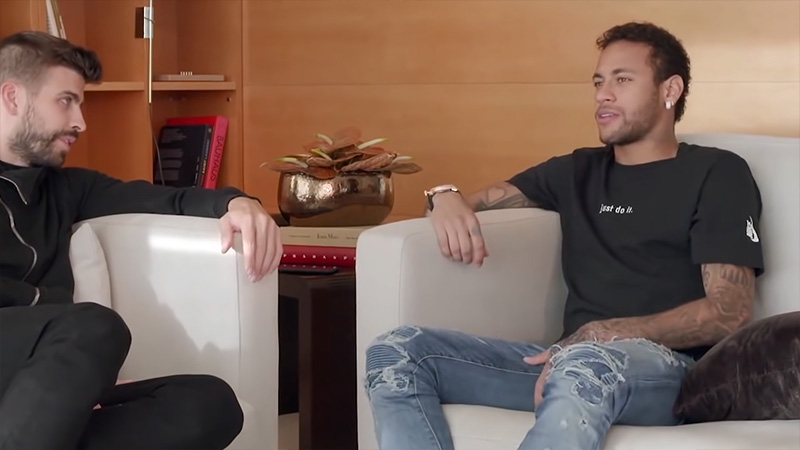
In the world of professional football, few names carry as much weight, flair, and cultural significance as Neymar da Silva Santos Júnior.
Known globally simply as Neymar, he is a figure who transcends the sport, acting as a bridge between South American passion and European professional excellence.
While fans are intimately familiar with his “rainbow flicks,” devastating dribbling, and clinical finishing, there is a more private side to the superstar that often goes overlooked: his voice.
For a player who has spent over a decade in the global spotlight—moving from the sun-drenched pitches of Brazil to the high-stakes arenas of Barcelona, Paris, and eventually Riyadh—communication is key.
This leads many fans and linguistic enthusiasts to wonder: What language does Neymar speak at home?
The Heart of the Matter: Portuguese as the Anchor
When the stadium lights dim and the cameras stop flashing, Neymar returns to his most authentic self. Portuguese is Neymar’s native language and the primary language he speaks at home.
As a native of Mogi das Cruzes, Brazil, Portuguese is not just a tool for communication for Neymar; it is the language of his upbringing, his culture, and his identity.
In his private life, Neymar is almost exclusively heard speaking Portuguese with his family members and his close-knit circle of friends, often referred to as the “Toiss”.
The choice to maintain Portuguese as his domestic language is a common trait among high-profile expatriate athletes.
It provides a sense of “home” regardless of which country they are currently playing in. For Neymar, Portuguese represents a direct connection to his roots in Santos and the Brazilian national team, where he remains a leading figure.
The Role of Family and Inner Circles
Neymar’s reliance on Portuguese at home is deeply tied to his family structure. He maintains an incredibly close relationship with his father, Neymar Santos Sr, and his sister, Rafaella Santos.
Because his family has been a constant presence throughout his career—moving with him to Spain and France—there has never been a functional need to switch to a different language within the household.
Furthermore, Neymar has frequently been surrounded by Brazilian teammates during his club career.
Whether it was Dani Alves at Barcelona and PSG, or Marquinhos and Thiago Silva in Paris, the presence of a “Brazilian colony” in the locker room ensured that Portuguese remained a professional and social staple for him.
The Barcelona Era: Mastering the Spanish Tongue
While Portuguese remains the language of his heart, Neymar’s career trajectory required him to become a polyglot of sorts. One of the most significant linguistic shifts occurred during his tenure with FC Barcelona.
During his time in Catalonia, Neymar successfully developed fluency in Spanish. Unlike some players who struggle to adapt to the local tongue, Neymar integrated quickly into the Barcelona squad.
His ability to speak Spanish was crucial for his chemistry on the pitch, particularly in building the legendary “MSN” partnership with Lionel Messi and Luis Suárez.
Mastering Spanish served two purposes:
- Professional Integration: It allowed him to understand tactical instructions from coaches and communicate seamlessly with teammates who did not speak Portuguese.
- Public Relations: Being fluent in Spanish allowed Neymar to engage directly with the massive Spanish-speaking fanbase and media, further elevating his global brand.
The Paris Chapter: Navigating the French Language
In 2017, Neymar made a world-record move to Paris Saint-Germain (PSG). This transition introduced a new linguistic challenge: French.
However, unlike his mastery of Spanish, Neymar’s relationship with the French language was more reserved. while he spent several years in the French capital, he acquired only limited French skills.
While he could navigate basic interactions and understand common footballing terms in French, he rarely conducted long-form interviews in the language.
The reasons for this are often attributed to the multilingual nature of the PSG locker room at the time, where Spanish and Portuguese were frequently spoken by a large portion of the squad and coaching staff.
Consequently, the immersion required to achieve full fluency in French was less intense than his experience in Spain.
English: The Strategic Tool for a Global Brand
Beyond the pitch, Neymar is a marketing powerhouse with dozens of global endorsements. To maintain this status, he has developed a conversational knowledge of English.
Neymar’s English is primarily used in international settings—such as commercial shoots, interactions with global celebrities, and meetings with sponsors.
While he may not be as fluent in English as he is in Spanish or Portuguese, his ability to communicate conversationally allows him to maintain his position as one of the most recognizable and marketable athletes on the planet.
Why Neymar’s Multilingualism Matters
Neymar’s linguistic profile—consisting of Native Portuguese, fluent Spanish, conversational English, and limited French—is a testament to the modern requirements of a global sports icon.
His ability to switch between these languages reflects his versatility. Speaking Portuguese at home keeps him grounded in his Brazilian identity, while his Spanish and English skills allow him to navigate the complex world of international sports and business.
For fans, knowing that Neymar speaks Portuguese at home provides a glimpse into the man behind the superstar.
It reminds us that despite the fame, the mansions, and the global travel, he remains a Brazilian at heart, holding onto the language of his family as his ultimate sanctuary.
Neymar’s Linguistic Profile
- Home/Native Language: Portuguese
- Professional Fluency: Spanish
- International/Marketing Tool: English (Conversational)
- Acquired (Limited): French
In conclusion, while Neymar Jr. is a citizen of the world, his home will always speak the language of Brazil. Whether he is celebrating a goal or relaxing with his children, Portuguese is the thread that connects all the chapters of his extraordinary life.