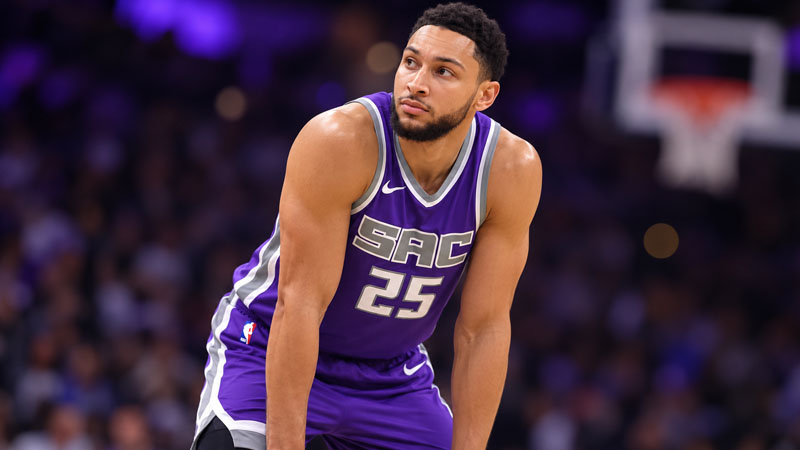
Ben Simmons’ historic decline stems from a devastating synergy of chronic nerve-related back injuries and a profound psychological block regarding his shooting confidence.
Once a perennial All-Star, Simmons faced a perfect storm: a February 2020 nerve impingement that permanently sapped his elite athleticism and the infamous 2021 playoff collapse that shattered his mental resilience.
These physical hurdles, compounded by multiple surgeries and a public fallout in Philadelphia, transformed a generational talent into a player struggling for roster relevancy.
Today, his career remains a cautionary tale of how structural health and mental fortitude are inseparable in high-stakes professional athletics.
The Physical Breaking Point: Chronic Back Issues and Nerve Damage
To understand the regression of a former All-Defensive First Team player, one must examine the physiological damage that fundamentally compromised his explosive movement and lateral quickness.
The Root Cause of Mobility Loss
The beginning of the end for Simmons’ physical dominance can be traced back to February 2020, when he suffered a severe nerve impingement in his lower back during a game against Milwaukee. This was not a minor strain but a structural weakness that created a permanent deficit in his athletic profile.
Before this injury, Simmons was regarded as one of the most explosive and versatile athletes in the league, capable of guarding all five positions.
The nerve issues led to radiating pain down his legs and glutes, which Simmons described as so agonizing that it eventually altered the way he breathed and made it difficult for him to even stand up straight.
Surgical Interventions and Recovery Roadblocks
In an attempt to salvage his career and alleviate chronic pain, Simmons underwent two significant spinal procedures.
The first was a microdiscectomy in May 2022 to address a herniated disc, followed by a second microscopic partial discectomy in March 2024 to mitigate further nerve impingement.
While these surgeries were necessary to improve his quality of life, they highlighted the severity of his condition; medical experts and observers noted that such recurring back issues are rarely “fixed” to the point of returning to 100% elite NBA athleticism.
For a player whose game relied almost entirely on speed and strength rather than a perimeter jump shot, the loss of that “extra gear” was catastrophic.
How Chronic Pain Altered On-Court Performance
The physical toll manifested in a “shadow of himself” version of the player during his tenure in Brooklyn. He looked hesitant, lacked his trademark aggression, and frequently found himself in foul trouble because he could no longer stay in front of quicker guards.
Observers noted that his lateral quickness had been stripped away by the nerve damage, leaving him unable to anchor a defense as he once did.
This physical limitation created a feedback loop with his mental struggles; as his body failed him, his confidence in his ability to impact the game waned even further.
The Psychological Crisis: Why Did Ben Simmons Stop Shooting?
Beyond the physical limitations, a mental struggle often described as “the yips” fundamentally altered Simmons’ offensive utility and his willingness to engage in the game’s most basic scoring actions.
The 2021 Playoff Free-Throw Collapse
A primary driver of Simmons’ mental block was the “Hack-a-Ben” strategy employed by opponents during the 2021 playoffs.
In that series, Simmons shot an abysmal 34.2% from the free-throw line, setting a record for the worst mark in playoff history for a guard. This failure made him a liability in late-game situations and led to an acute aversion to contact.
He became terrified of being fouled, which meant he stopped driving to the rim—the one area where he was previously elite—to avoid being sent to the charity stripe.
The Trae Young Play: A Definitive Turning Point
The definitive moment that fractured Simmons’ career occurred in Game 7 of the 2021 Eastern Conference Semifinals against the Atlanta Hawks.
Simmons famously passed up a wide-open, game-tying dunk over Trae Young, a much smaller defender. This single play served as a microcosm of his total loss of self-belief.
The ensuing public criticism from teammate Joel Embiid and coach Doc Rivers created a rift that never healed, leading Simmons to cite mental health issues and eventually refuse to play for the Philadelphia franchise ever again.
The Kicker Mentality and Fear of Failure
Insights into Simmons’ psychology suggest he viewed his role with a crippling sense of pressure. In one instance, when asked about the most difficult position in sports, Simmons compared being an NBA player to being a football “kicker.”
This analogy is telling; a kicker is expected to perform at 100% efficiency in high-stakes moments with a tiny margin for error.
This perspective suggests that Simmons viewed basketball through a lens of fear—fearing the ridicule of a missed shot more than he desired the glory of a made one. This mental burden became a heavier weight than even his physical injuries.
Statistical Timeline of the Unprecedented Regression
The following table illustrates the stark contrast between his early career accolades and his eventual departure from active play.
| Era / Team | Key Accolades & Status | On-Court Reality |
|---|---|---|
| Rising Star (2017–2021, 76ers) | Rookie of the Year, 3x All-Star, 2x All-Defensive First Team. | Elite playmaker and versatile defender; criticized for lack of jump shot. |
| The Holdout (2021–2022) | Traded to the Brooklyn Nets for James Harden. | Sat out the entire season citing mental health struggles and back pain. |
| The Brooklyn Decline (2022–2024) | Played just 57 total games across two seasons. | Looked like a shadow of himself; lacked aggression and fouled out often. |
| Out of the League (2025–2026) | Played 18 games for LA Clippers before sitting out. | Unsigned for the 2025–26 season; pursued fishing and lifestyle ventures. |
Motivation and Drive: The Natural Talent vs. Work Ethic Debate
A recurring theme in the analysis of “what went wrong” is the question of Simmons’ intrinsic motivation and whether he possessed the relentless drive required to overcome his obstacles.
Early Success and the Goal Achievement Gap
Former associates, including his ex-agent Rich Paul, have suggested that Simmons may have lacked the “relentless, legendary work ethic” found in all-time greats because he achieved his primary life goals—wealth, fame, and All-Star recognition—very early in his career.
Because basketball was something he excelled at naturally due to his size and speed, rather than something he was obsessed with, he lacked the hunger to grind through a grueling rehabilitation or completely reinvent a broken jump shot.
The Andrew Bynum Comparison: Talent vs. Passion
Some analysts compare Simmons’ trajectory to that of Andrew Bynum, a player who was undeniably talented but reportedly “loved what comes with” the game more than the game itself. Like Bynum, when injuries began to pile up, Simmons seemed increasingly “done” with the sport.
For a player who doesn’t truly love the process of basketball, the massive effort required to come back from multiple back surgeries can feel insurmountable, leading to an early exit from the professional ranks.
Criticism of Offensive Skill Stagnation
Throughout his career, Simmons was criticized for a refusal to expand his game. Despite the clear need for a perimeter shot to keep defenses honest, he stayed within a shrinking comfort zone.
Teams like the Boston Celtics exploited this by coaching a “5 on 4” defense, essentially ignoring Simmons when he didn’t have the ball.
His failure to improve these weak points, even while being paid nearly $40 million a year at one point, led to significant frustration among fans and teammates who felt he was coasting on natural gifts.
Life Beyond Basketball: Fishing and Business Ventures
During his time away from the NBA, particularly during the 2025–26 season, Simmons began to transition his focus toward entrepreneurial and lifestyle interests.
The South Florida Sails and Professional Fishing
One of the most surprising developments in Simmons’ life away from the hardwood was his entry into the world of professional sports fishing. He became the majority owner of a team called the South Florida Sails.
This move signaled to many that he was preparing for a life after basketball, finding a new arena where his physical back limitations were less of a hindrance to his competitive participation.
Lifestyle Branding During the Gap Year
Simmons spent much of his unsigned 2025–26 season pursuing various lifestyle ventures. This period of his life was marked by a shift away from traditional basketball training and toward building a brand that was not tied to his performance on the court.
While he remained a public figure, the focus was rarely on his jump shot or defensive stats, but rather on his business interests and personal hobbies.
Frequently Asked Questions: What Is the Future of Ben Simmons?
Will Ben Simmons return to the NBA in 2026?
Reports indicate that Simmons is currently “ramping up” his physical training with the explicit goal of an NBA comeback for the upcoming season.
While he spent a year out of the league, he appears motivated to prove that he can still be a functional contributor at the professional level.
Which teams are interested in signing Ben Simmons?
Simmons has expressed specific interest in joining the Miami Heat, a team known for its rigorous “culture” and conditioning, which might be his last chance to rehabilitate his professional image.
Additionally, there have been rumors of a potential “full circle” return to the Philadelphia 76ers, though the feasibility of this depends heavily on mending fractured relationships with the front office and fan base.
Can physical therapy fix Ben Simmons’ back?
While physical therapy and surgery can alleviate the “agonizing pain” Simmons experienced, the chronic nature of nerve impingement often means that a player never regains the same level of twitch-fiber explosiveness.
Any comeback would likely require Simmons to adapt his game to a “low-impact” style, focusing on high-level passing and positioning rather than the rim-running athleticism of his youth.
Conclusion: The Legacy of a Generational “What If?”
The story of Ben Simmons is one of the most complex and tragic arcs in modern sports history. It is a narrative that cannot be simplified into “just an injury” or “just a mental block.”
Instead, it was the intersection of a broken body and a shattered spirit that derailed a career destined for the Hall of Fame.
Whether he successfully returns as a role player or remains a permanent “what if,” Simmons’ decline serves as a powerful reminder that elite talent is fragile, requiring a perfect alignment of physical health, psychological resilience, and relentless passion to endure.