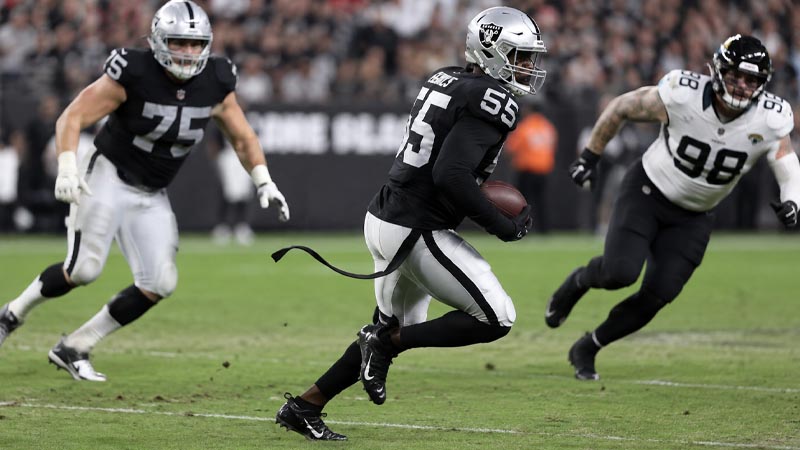
Observe any professional football game, and your eyes will inevitably be drawn to a curious detail: a thin, elongated piece of material dangling from the waistline of several players on the field.
To the casual observer, this might look like an accidental tear in the uniform, a loose thread, or perhaps a decorative piece of fabric.
However, in a sport where every single square inch of gear is engineered for maximum athletic efficiency, nothing is accidental.
The physical feature hanging from an American football player’s waist is actually a specialized towel loop or towel belt. Its primary, grounded purpose is to hold a small sports towel.
While it might seem like a minor accessory to the uninitiated, it plays an incredibly vital role in both the physical performance of the athlete and the visual culture of the sport.
Players at different levels of the game utilize this tool to navigate the extreme physical demands of their positions, balancing the need for physical precision with a desire for personal styling on the field.
Whether we are discussing elite quarterbacks managing a critical third-down pass in a downpour or wide receivers striving to make a contested catch, the towel loop is a critical piece of equipment.
At the same time, it has evolved beyond a mere utility item into a highly visible canvas for personal expression and cultural identity.
This comprehensive guide will explore the multifaceted nature of the football towel, examining its mechanical importance, its surprising history, and its role as an icon of modern on-field identity.
1. The Essential Functional Anatomy of the Towel Loop
To appreciate why elite athletes wear this accessory, one must first understand its physical design and placement. The strap in question is typically integrated directly into the player’s waistband or threaded onto a dedicated utility belt worn around the hips.
The loop itself is designed to be highly secure yet easily accessible, allowing the sports towel to hang freely without restricting the athlete’s natural range of motion during explosive movements like sprinting, jumping, or tackling.
The positioning of the towel loop at the front or side of the waist is strategically chosen. In high-pressure game situations, players do not have the luxury of searching for their gear.
By positioning the towel directly at the midline of the body, players can instinctively reach down and dry their hands or clear their vision without losing focus on the opposing defense.
This immediate physical accessibility is a critical design feature that ensures the towel can be deployed in the split second between the huddle and the snap of the ball.
Furthermore, the materials used for modern towel loops and belts are selected for durability and safety.
In a contact sport where opponents are constantly grabbing at uniforms, any accessory must be able to withstand immense pulling force without tearing, while also posing no hazard to the wearer or other players.
This balance of lightweight flexibility and structural strength makes the towel belt a highly refined piece of athletic engineering, rather than a simple fabric strip.
2. The Physical Science of Ball Security and Grip
At its core, football is a game of possession, and possession is entirely dictated by grip. When an athlete handles the football, the friction between their hands—or their gloves—and the leather surface of the ball determines their level of control.
Any foreign substance that reduces this friction can lead to catastrophic errors, such as inaccurate passes, dropped balls, or fumbles. This is where the sports towel becomes an indispensable performance enhancer on the gridiron.
Sweat Management
During intense physical exertion, especially in high-temperature or highly humid climates, sweat is a constant challenge.
Perspiration on a player’s palms or inside their gloves acts as a lubricant, dramatically reducing the coefficient of friction between the hand and the ball.
For quarterbacks, wet hands make it incredibly difficult to apply the necessary spin to the football, leading to unstable trajectories and reduced passing accuracy.
For running backs and wide receivers, a sweaty hand can turn a routine handoff or catch into a loose ball, resulting in a turnover.
By using the towel loop to dry their hands between plays, athletes actively manage this moisture level. Sweat management is not merely a matter of comfort; it is a direct contributor to ball security.
Keeping the hands and gloves dry ensures that the grip remains consistent throughout the entire four quarters of play, protecting the team’s offensive possessions and minimizing the likelihood of costly turnovers.
Navigating Wet and Unforgiving Weather
The challenges to grip are amplified when games are played in adverse weather conditions. Rain, sleet, snow, and mud can quickly coat both the players’ hands and the football itself. In these environments, the towel loop serves as a vital shield against the elements.
When a quarterback drops back to pass in a steady rain, they must contend with water sheeting off the ball. A wet ball is not only slick but also heavier, altering its aerodynamic properties.
By utilizing the towel, the quarterback can dry their throwing hand immediately before taking the snap, restoring the natural grip needed to deliver a precise pass.
Similarly, wide receivers and running backs face distinct difficulties when playing on synthetic turf or wet grass. Modern synthetic fields are often filled with tiny black rubber pellets, commonly known as turf pellets, designed to provide cushioning and traction.
However, during wet or muddy games, these turf pellets, along with dirt and grass debris, can stick to the players’ hands, gloves, and faces.
If these pellets get caught between a receiver’s glove and the football, they destroy the clean contact patch required to secure a catch.
The waist-mounted towel allows players to quickly clear away mud and turf pellets, restoring a clean surface for maximum friction and control.
Maximizing On-Field Efficiency and Tempo
In modern football, offensive tempo is a major strategic weapon. Teams often run fast-paced offenses designed to keep the defense tired and prevent them from making substitutions.
In such high-tempo schemes, players do not have the time to walk over to the sideline to dry their hands, wipe their faces, or clean their visors.
The towel loop solves this operational bottleneck by offering immediate, on-person efficiency. Because the towel is physically attached to the player’s waist, they can execute their drying routine in a matter of seconds, right on the field.
This rapid utility ensures that the offense can maintain its momentum and tempo without compromising the physical readiness of its key players.
It allows the quarterback, receivers, and running backs to remain fully focused on the play call and the defensive alignment, rather than worrying about the physical condition of their hands.
3. The Cultural Dimension: Fashion, Style, and “Swag Tails”
While the functional benefits of the football towel are clear, the accessory has also undergone a fascinating cultural evolution.
In today’s game, uniform aesthetics are a vital part of a player’s personal brand and identity. What began as a purely practical tool has transformed into a highly visible medium for personal style and self-expression.
The Concept of the “Swag Tail”
Many players, particularly in skill positions, choose to wear the towel loop even when weather conditions are dry and sweat is not a major issue.
In these instances, the towel is worn largely for its aesthetic value. Players will often let exceptionally long straps or highly stylized, decorative towels hang down from their waistbands.
Within the football community, these elongated, stylish straps are frequently referred to as “swag tails”.
The “swag tail” serves as a distinct statement of confidence and individuality on the field. In a sport where players wear identical uniforms and helmets that obscure their faces, small personal accents like custom towel loops, colored socks, and specialized visors allow athletes to stand out from the crowd.
The movement of the hanging fabric as a player sprints down the sideline adds a dynamic, flowing element to their visual presence, conveying a sense of speed and effortless style.
The Practicality of Personal Identification
Beyond personal style and brand building, these distinct waist accessories serve a highly practical, personal purpose for the players’ families and supporters in the stadium.
Football stadiums are massive structures, and watching a game from the upper decks or even on a standard television broadcast can make it difficult to identify individual players quickly, especially when they are moving at high speeds and wearing matching team gear.
Several players have highlighted this specific benefit. For example, prominent wide receiver Brandon Aiyuk has noted that wearing distinct accessories, such as these unique waist straps and towels, helps his family members easily spot and track him on the field from the stands.
In a sea of identical uniforms, a unique “swag tail” or custom-colored towel loop acts as a highly visible marker, allowing loved ones to follow the player’s movements throughout the game and share in their performance.
4. Digging into the Past: The Modesty Origins of the Hanging Strap
To fully understand how this accessory became a staple of modern football, it is helpful to look back at its historical roots.
The transition from a makeshift solution to an engineered athletic product reveals a lot about the evolution of sports apparel.
Interestingly, the historical origins of using extra hanging fabric at the waist trace back to amateur play, where the primary concern was not grip or style, but rather modesty.
In the earlier eras of amateur football, athletic uniforms did not always feature the highly customized, tailor-made fits that modern players enjoy. Uniform pants and compression gear were often tight, revealing, or ill-fitting.
To address this, some players began tucking extra pieces of fabric or small towels into their waistbands to drape down and cover their tight uniform fits.
This makeshift modesty cover helped players feel more comfortable and confident on the field, shielding them from unwanted attention and allowing them to focus entirely on the game. Over time, as sports apparel manufacturers recognized this organic player behavior, they began to formalize the accessory.
What started as an amateur solution for uniform modesty gradually evolved into the standardized, highly engineered towel loops and performance-driven towel belts we see today.
5. Position-by-Position Analysis of Towel Usage
To appreciate the tactical value of this accessory, we can examine how different positions on the field leverage it to gain a competitive advantage on game day.
Quarterbacks: The Ultimate Utility Users
For quarterbacks, the towel loop is a non-negotiable tool. The quarterback is the only player on the field who must handle the ball on every single offensive play.
Because they are responsible for delivering precise, high-velocity passes, even the slightest amount of moisture on their fingers can cause a pass to flutter or fall short.
Quarterbacks will often use their waist towel to dry their hands immediately before receiving the snap, ensuring that their grip is perfect for the upcoming play.
Wide Receivers: Securing the Catch
Receivers rely on their hands to make incredibly difficult, athletic catches while running at full speed. Many modern receivers wear highly specialized sticky gloves to help them secure the ball.
However, these gloves lose their stickiness when they become coated in sweat, rain, or turf debris. By utilizing the waist towel to clean their gloves between plays, receivers can maintain the optimal level of tackiness needed to bring down contested catches.
Running Backs: Preventing the Costly Fumble
Running backs are constantly subjected to high-impact hits from multiple defenders, who are trained to actively strip the ball away. To prevent fumbles, running backs must maintain an ironclad grip on the football, securing it tightly against their ribcage.
Sweat or wet weather can make the ball slick, increasing the risk of it slipping out during a tackle. A quick wipe of the hands or the ball with their waist towel helps running backs maintain a secure hold through heavy contact.
Conclusion: The Perfect Harmony of Performance and Self-Expression
The next time you watch a football game and notice that familiar strap hanging from a player’s waist, you will see it not as a random uniform detail, but as a perfect symbol of the sport itself. It represents a seamless intersection where high-performance engineering meets deep cultural tradition.
From its humble beginnings as an amateur modesty cover to its critical role in preventing game-defining fumbles, the towel loop has earned its place on the modern gridiron.
It serves the quarterback striving for a perfect grip in a rainstorm, while simultaneously allowing players to showcase their unique personalities through “swag tails” and distinct style choices.
On the football field, where every fraction of a second and every inch of control matters, the humble towel loop remains one of the most elegant, dual-purpose accessories in all of professional sports.