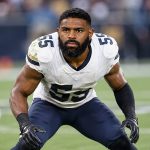
If you have ever watched an American football game, you have likely heard a quarterback barking orders at the line of scrimmage, pointing urgently at a specific defender, and shouting something like, “Fifty-four is the Mike!”
To the casual observer, it might look like basic pre-game trash talk or random yelling. In reality, that single declaration is the cornerstone of modern offensive football.
It sets the structural integrity of the blocking scheme, protects the quarterback from catastrophic sacks, and ensures that five heavily padded linemen move in absolute synchronization.
Understanding the role of the “Mike” and why offenses go to great lengths to identify him transforms how you watch football. It turns a chaotic wall of moving athletes into a calculated game of chess.
What Does “Mike” Mean in Football?
In football terminology, “Mike” is short for middle linebacker.
In a traditional defensive structure—such as the standard 4-3 defense (four linemen, three linebackers)—the linebackers are given single-syllable nicknames. These concise monikers are not just for show; they allow players to communicate rapidly through heavy mouthguards amid a roaring stadium crowd:
- Sam: The strong-side linebacker (lining up on the side of the offensive tight end).
- Mike: The middle linebacker (anchoring the center of the defensive box).
- Will: The weak-side linebacker (lining up away from the tight end).
While the defensive player officially playing middle linebacker is the literal Mike, the offensive pre-snap call carries a slightly different, highly tactical meaning.
When a quarterback or center points out the Mike, they are establishing a reference point for the blocking unit.
Absolute vs. Relative: The Two Definitions of the Mike
To truly master football strategy, you must understand the difference between the absolute Mike and the relative Mike.
1. The Absolute Mike
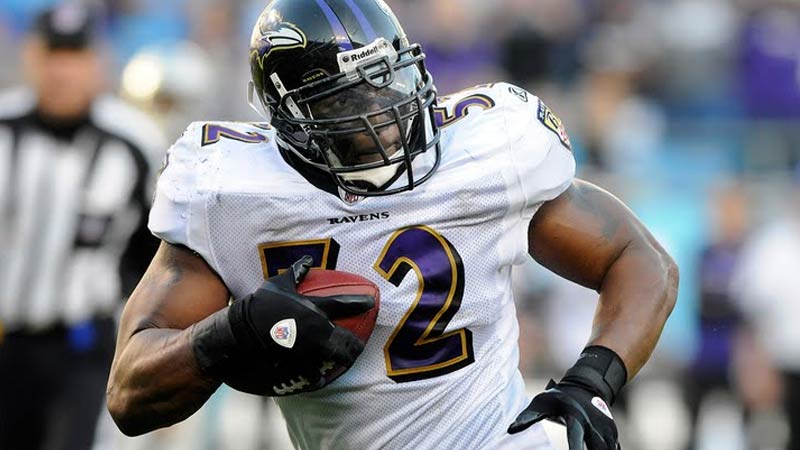
This is the physical player on the opposing defense whose primary job description is playing middle linebacker. He is typically the defensive play-caller, the emotional leader of the front seven, and often the team’s leading tackler.
Legendary players like Ray Lewis, Brian Urlacher, and Luke Kuechly made their Hall of Fame careers playing this exact position.
2. The Relative Mike
This is what the quarterback cares about at the line of scrimmage. Depending on the offensive scheme and the defensive formation, the quarterback may designate any linebacker or defensive safety as the Mike.
Why? Because the offensive line does not block based on a player’s official roster position; they block based on a numbering system anchored to a designated point.
By calling out the Mike, the quarterback tells the offensive line: “Count our blocking assignments starting from this specific defender.”
Why Identifying the Mike Matters
Without a designated Mike, an offensive line risks descending into chaos. Here is why this pre-snap ritual dictates the success or failure of a play:
Setting Blocking Assignments
The five offensive linemen (center, two guards, two tackles) must account for the front-line defenders and the linebackers.
When the quarterback points out the Mike, the center and guards use that player as the central marker to determine who blocks whom.
For example, in many zone-blocking run schemes, the line works outward from the Mike, ensuring that every gap is covered and no defender slips through untouched.
Blitz Pickup and Protection Schemes
Defenses love to disguise their intentions. They will show a heavy blitz package, only to drop players back into coverage, or conversely, rush a defender from an unexpected angle.
Identifying the Mike establishes the pass-protection rules. It tells the running backs and interior linemen which defenders are accounted for in a man-to-man blocking scheme versus who remains “unaccounted for” (meaning the quarterback knows he has to throw the ball quickly to a hot route if that specific blitzer rushes).
Shared Team Communication
Football moves at a blistering pace. A quarterback has mere seconds to read a shifting defense. Yelling a defensive player’s number and declaring them the Mike creates a unified mental picture across the entire offense.
The running back knows which gap to protect, the wide receivers know which coverage shells to anticipate, and the linemen know their slide protections.
How Defenses Try to Counter the Mike Call
Because the Mike call is so vital to offensive success, defensive coordinators spend all week during practice trying to manipulate it.
Defenses will use “window dressing”—moving players around pre-snap, shifting linebackers into odd alignments, or having a safety walk down toward the line of scrimmage—to trick the quarterback into misidentifying the Mike.
If a quarterback falls for the disguise and calls out the wrong player, the entire blocking math breaks down.
This often results in unblocked pass rushers crashing into the backfield, forcing sacks, fumbles, or hurried interceptions.
Frequently Asked Questions
Can anyone other than the quarterback call out the Mike?
Yes. While the quarterback is most frequently heard on television broadcasts making the Mike call, the center shares an equal—and sometimes heavier—burden.
Centers are the brains of the offensive line; they frequently study film extensively to diagnose defensive fronts and will make the final Mike declaration to their fellow linemen.
What happens if the defense shifts after the Mike is called?
If the defense shifts or disguises coverage late in the play clock, the quarterback or center will issue a “check” or change the protection entirely.
You will often hear a flurry of new numbers or color codes yelled out to reset the line’s targeting system before the snap.
Is the Mike always a linebacker?
Not necessarily. While it is usually an inside linebacker, modern hybrid defenses often feature safeties or versatile nickelbacks who walk down into the box.
If a defensive scheme places an extra defensive back in the middle of the box to rush or play run defense, the offense may designate that player as the Mike for blocking purposes.
Conclusion
The phrase “the Mike” is far more than football jargon; it is the vital anchor of offensive execution.
By identifying this single defender, the offense transforms chaos into clarity, turning complex defensive schemes into predictable blocking math.
Next time you tune into a game, listen closely to the pre-snap cadence and watch the quarterback point. Understanding that hidden battle at the line of scrimmage offers a profound appreciation for the intellectual depth driving America’s favorite sport.