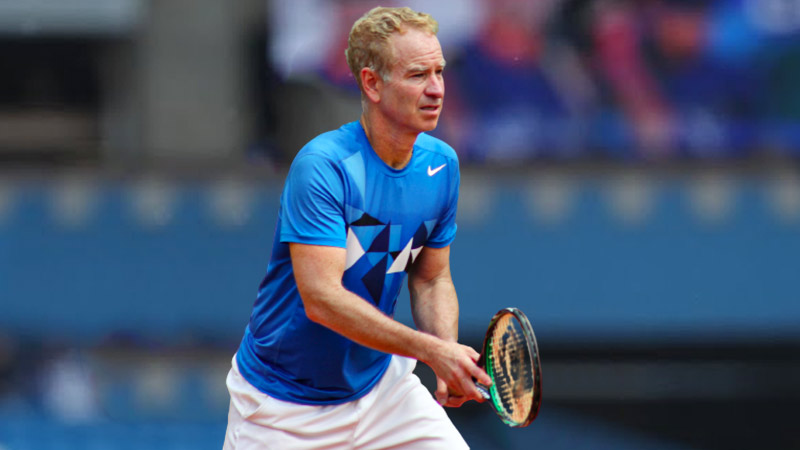
John McEnroe stands as one of the most compelling figures in modern sports history, universally recognized for a unique combination of elite athletic mastery and intense personal drama.
When asking what John McEnroe is most famous for, the answer rests upon two intertwined pillars: extraordinary tennis brilliance and a fiery, explosive on-court temper that fundamentally transformed athletic culture.
Across his professional career, McEnroe captured 7 Grand Slam singles titles and held the coveted world No. 1 ranking for 170 weeks.
Yet, alongside these historic athletic achievements, he became equally famous for his temper tantrums, heated arguments with umpires, throwing rackets, and uttering the iconic catchphrase, “You cannot be serious!”
This dual identity defined his career on the court and laid the foundation for a lasting media presence as a sharp-witted broadcaster and pop culture figure.
John McEnroe’s Career
| Strategic Category | Key Historical Fact | Historical Impact & Context |
|---|---|---|
| World Ranking | 170 Weeks at World No. 1 | Maintained elite global dominance at the pinnacle of professional tennis. |
| Singles Grand Slams | 7 Major Singles Titles | Secured 4 US Open titles and 3 Wimbledon championships. |
| Doubles Grand Slams | 9 Major Doubles Titles | Demonstrated comprehensive court coverage and team mastery. |
| Historic Peak Year | 1984 Season (82–3 Record) | Achieved an unmatched 96.5% win rate in a single season. |
| On-Court Identity | “Superbrat” Persona | Named by British tabloids for yelling at officials and pouting. |
| Iconic Catchphrase | “You Cannot Be Serious!” | Uttered during a 1981 Wimbledon match; later became his autobiography title. |
| Post-Tennis Career | Broadcasting & Pop Culture | Active as a television analyst and featured in movies and commercials. |
Unrivaled Athletic Brilliance: Grand Slam Success and Technical Touch
While casual observers often remember his dramatic outbursts, tennis purists recognize John McEnroe as one of the most gifted players to ever hold a racket.
His game was built upon finesse, rapid decision-making, and unprecedented feel at the net rather than sheer raw power.
Grand Slam Achievements: Singles and Doubles
McEnroe’s record at the major tournaments places him among the elite tier of modern players. His Grand Slam singles legacy includes:
- Four US Open Singles Titles: Demonstrating sustained dominance on American hard courts.
- Three Wimbledon Singles Titles: Showcasing his supreme adaptability and touch on grass courts.
- Seven Total Major Singles Titles: Establishing his status as a multi-surface champion.
In addition to his singles achievements, McEnroe was a dominant force in team play, winning nine major doubles titles.
This dual success in both singles and doubles highlighted his comprehensive understanding of geometry, angles, and net positioning.
Dominant Play Style: The Left-Handed Masterclass
McEnroe’s tactical approach relied on a distinct, highly specialized skill set that confounded opponents:
- Exceptional Left-Handed Shot-Making: His left-handed serve created unique angles that pulled opponents wide out of court positions.
- Delicate Touch and Finesse: Rather than relying purely on baseline power, he used subtle touch to drop shots just over the net.
- Brilliant Volleying Skills: He positioned himself aggressively at the net, punishing floating passing shots with precise volleying.
The Historic 1984 Season and Legendary Rivalries
To fully grasp McEnroe’s athletic stature, one must examine his peak competitive years, highlighted by legendary rivalries and an unmatched single-year win rate.
The Unprecedented 1984 Season
In 1984, McEnroe delivered one of the single greatest individual seasons in the history of professional sports. During this miraculous campaign, he compiled an astonishing 82-of-3 match record, translating to an unprecedented 96.5% win rate.
This period of sheer dominance set a standard for single-season consistency that remains a benchmark in modern tennis history.
Career-Defining Battles: Borg and Connors
McEnroe’s rise to prominence occurred during a golden era of professional tennis, marked by contrasting styles and intense personal rivalries. He engaged in classic, career-defining battles against two fellow legends:
- Björn Borg: A clash of opposites—Borg’s cool, unflappable composure against McEnroe’s raw emotion and aggressive net play.
- Jimmy Connors: A high-intensity rivalry between two fiery competitors who brought unmatched passion and aggression to every point.
These historic rivalries captivated global audiences and elevated professional tennis into mainstream sports entertainment.
The “Superbrat” Persona: Outbursts, Tantrums, and Pop Culture Infamy
Beyond his athletic resume, McEnroe became world-famous for his volatile temperament and explosive conflicts with tournament officials.
The Birth of “Superbrat”
During his competitive trips to the United Kingdom, McEnroe’s frequent confrontations with chair umpires and line judges drew intense scrutiny from the press. British tabloids famously dubbed him “Superbrat” as a direct reaction to his behavior on court:
- Yelling at Officials: Frequently challenging line calls and umpire decisions with high-volume protests.
- On-Court Pouting: Displaying visible frustration whenever his strict standards of execution were not met.
- Throwing Rackets: Smashing and tossing his equipment onto the court surface during moments of intense frustration.
“You Cannot Be Serious!”: The 1981 Wimbledon Incident
The defining moment of McEnroe’s fiery persona occurred during the 1981 Wimbledon championship. Frustrated by a disputed line call, McEnroe famously screamed at the chair umpire: “You cannot be serious!”.
This explosive moment immediately entered the global cultural lexicon. The phrase became so synonymous with his personal brand that McEnroe later selected “You Cannot Be Serious” as the exact title for his 2002 autobiography.
Post-Tennis Evolution: Broadcasting and Mainstream Entertainment
When his playing days came to an end, McEnroe successfully transitioned his signature intensity and deep technical expertise into a thriving second career in media and entertainment.
Sharp-Witted Broadcasting and Commentary
Rather than stepping away from the game, McEnroe became one of tennis’s most respected and prominent television commentators and analysts. His broadcasting style is defined by:
- Unfiltered Honesty: Offering direct, candid evaluations of player performance and tactics.
- Sharp Wit: Delivering incisive, entertaining commentary during major tournament broadcasts.
- Deep Tactical Insight: Leveraging his experience as a 170-week world No. 1 to explain complex match dynamics to viewers.
Pop Culture Appearances and Commercial Success
McEnroe’s cultural reach extends far beyond tennis broadcasts. He has frequently appeared in mainstream movies and commercial advertisements, often playing humorous, exaggerated versions of himself.
By embracing his past reputation with self-deprecating humor, he transformed his fiery sports legacy into enduring entertainment value.
Strategic Takeaway and Final Conclusion
John McEnroe remains an immortal figure in modern athletics because he refused to separate perfectionist athletic standards from raw human emotion.
He was not merely a champion who won 7 Grand Slam singles titles, 9 major doubles titles, and dominated at world No. 1 for 170 weeks; he was an artist whose emotional intensity produced both incomparable shot-making and unforgettable cultural moments.
Whether remembered for his astonishing 96.5% win rate in 1984, his classic clashes with Borg and Connors, his sharp broadcasting commentary, or his iconic cry of “You cannot be serious!”, McEnroe’s legacy stands as a monumental chapter in the history of global sports.