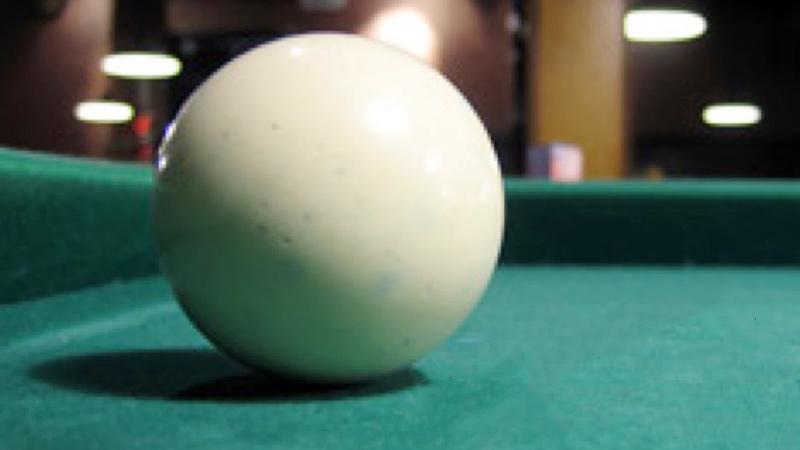
In the world of high-stakes billiards, the difference between a championship-winning shot and a narrow miss often comes down to the microscopic precision of the equipment.
While much attention is paid to the taper of a carbon-fiber shaft or the nap of professional-grade cloth, the most critical element of the game—the billiard ball itself—is frequently misunderstood.
For the casual observer, a pool ball is simply a colored plastic sphere. However, for the seasoned player and the equipment connoisseur, it is a marvel of materials science engineered to withstand thousands of high-velocity impacts while maintaining perfect balance.
This comprehensive guide explores the evolution of the billiard sphere, the technical superiority of modern resins, and the manufacturing secrets that separate professional equipment from recreational toys.
The Foundation: Are Pool Balls Hollow?
One of the most persistent myths in the gaming industry is that pool balls contain a hollow core or a weighted center to assist with rolling. This is fundamentally incorrect. Modern billiard balls are solid, homogeneous spheres.
The material is consistent from the polished surface to the very center of the core. This uniformity is a prerequisite for professional play, as it ensures that the ball’s center of gravity is identical to its geometric center.
Without this homogeneous composition, a ball would develop a “wobble,” making long-distance shots and precise English (spin) impossible to predict. Whether it is a standard object ball or a high-performance cue ball, the density remains constant throughout the entire structure.
Traditional Insights: The Historical Evolution of the Sphere
The history of the billiard ball is a fascinating journey through resource scarcity and industrial innovation. The materials used to play have always reflected the technological capabilities of the era.
The Early Era: Wood and Clay
In the 14th and 15th centuries, billiards was an outdoor game resembling tabletop croquet. During this period, balls were primarily crafted from hardwoods, which were easy to acquire and mold.
However, wood was susceptible to moisture and warping, leading to inconsistent play. As the game moved indoors and became a staple of the European aristocracy, the demand for more exotic and durable materials grew.
The “Ivory” Standard and Its Crisis
For centuries, the gold standard for billiards was ivory. These “ivories,” as they were nicknamed, were carved from elephant tusks. While ivory offered a unique feel and weight, it was plagued by several issues:
- Inconsistency: Being a natural material, ivory balls had varying densities and grain patterns.
- Fragility: They were prone to cracking along the grain after repeated impacts.
- Environmental Impact: The overhunting of elephants created a massive supply crisis and ethical concerns, eventually making ivory inaccessible for mass production.
The Birth of Plastics: Bakelite
The search for an ivory alternative actually spurred the birth of the modern plastics industry. Bakelite eventually became the industry standard for a period in the 20th century.
It was the first synthetic plastic used to create a durable, chip-resistant ball that could be mass-produced with consistent weight.
Modern Materials Science: Phenolic vs. Polyester Resin
In the modern market, the choice of material defines the ball’s longevity, playability, and price point. Today, the industry is dominated by two primary types of resin: Phenolic and Polyester.
Phenolic Resin: The Professional Choice
If you are playing in a professional tournament or a high-end billiard hall, you are almost certainly using phenolic resin balls. This is a durable, thermosetting plastic that is engineered for extreme impact resistance.
The undisputed leader in this field is Saluc, a Belgian company that produces Aramith balls. Aramith’s proprietary phenolic resin is unique because:
- Molecular Stability: As a thermosetting plastic, once the resin is cured and cooled, it cannot be remelted. This creates a molecular bond that is incredibly hard and heat-resistant.
- Longevity: Phenolic balls can last up to five times longer than those made from other materials.
- Cloth Protection: Because phenolic resin is so hard and smooth, it reduces “burn spots” on the pool table cloth, which are caused by the friction of a ball accelerating from a standstill to high speed in milliseconds.
Polyester Resin: The Recreational Alternative
Most entry-level or recreational sets found in big-box stores are made of solid polyester resin. While these balls provide a similar initial feel and density to phenolic balls, they lack the same chemical endurance.
- Durability Gaps: Polyester is more prone to chipping and “pitting” over time.
- Aesthetic Degradation: A notable drawback of polyester resin is its tendency to yellow and lose its sheen after approximately eight years of use.
The Clear Acrylic Option
While less common for serious play, some specialty sets are made from clear acrylic. These are often chosen for their aesthetic novelty—such as “spider” or “glitter” designs—but they generally do not meet the rigorous density standards required for professional tournament play.
The Engineering Process: How a Pool Ball is Born
The manufacturing of a billiard ball is a high-pressure engineering feat. While the specific resin might vary, the general process involves several precision stages.
Molding and Pressurization
The liquid resin (phenolic or polyester) is poured into a spherical mold. These molds are then subjected to extremely high pressure. This ensures the material is incredibly dense and eliminates any internal air bubbles that could ruin the ball’s balance.
Curing and Hardening
The resin is heated to trigger a chemical reaction that hardens the sphere. Once removed from the mold, the “raw” ball is a solid, dull sphere.
The Lathe Stage
To achieve a perfect diameter, the ball is placed on a lathe. It is precision-ground and smoothed until it meets the exact specifications for the game (e.g., 2.25 inches for standard American pool).
Integrated Numbering
Unlike cheap imitations where numbers are merely painted on, high-quality balls have their numbers and designs etched into the surface.
These etchings are then filled with colored resin and polished back down to a seamless, smooth finish. This ensures the numbers never fade or wear off, as they are part of the ball’s structure.
The “Magnetic” Secret: Addressing the Cue Ball Gap
A common question among players is why a cue ball on a coin-operated “bar table” always returns to the end of the table after a scratch, while the numbered balls fall into the storage bin. This involves a specific manufacturing deviation.
While object balls are 100% resin, some modern cue balls contain a thin layer of iron or a metallic component embedded inside. This allows a magnet inside the table’s return mechanism to catch the cue ball and divert it away from the other balls.
Regulatory Standards: The WPA Mandate
To ensure fairness in global competition, the World Pool-Billiard Association (WPA) maintains strict regulatory standards for ball manufacturing. Professional sets must adhere to:
- Diameter: Precise measurements to ensure they fit through pockets and interact with rails correctly.
- Weight: Uniform weight across the entire set to ensure that energy transfer is consistent when one ball hits another.
- Balance: A tolerance for center-of-gravity deviation that is nearly zero.
Advanced FAQ: Expert Insights for the Serious Player
Q: Do billiard balls require special maintenance?
A: Absolutely. Over time, balls accumulate “chalk dust” and skin oils, which can increase friction and cause “clings” (static-like jumps during contact). Using dedicated pool table cleaners and specialized microfiber cloths is essential to maintain the resin’s finish.
Q: Why do some balls feel “heavier” even if they are the same size?
A: This is usually a result of density differences between phenolic and polyester resins. Phenolic resin is naturally denser, allowing for a more “solid” hit feel without increasing the actual diameter of the ball.
Q: Is Bakelite still used today?
A: While phenolic resin is a derivative of Bakelite, pure Bakelite is largely a historical material in the billiards world. Modern resins have surpassed it in terms of color clarity and chip resistance.
Strategic Conclusion: Investing in Quality
Whether you are an aspiring professional or a homeowner looking to outfit a luxury game room, understanding the anatomy of a billiard ball is crucial.
While a polyester set may save costs in the short term, the durability, impact resistance, and cloth-saving properties of 100% phenolic resin—like those found in Aramith sets—provide a significantly higher return on investment over decades of play.
The next time you line up a shot, remember that you are not just hitting a piece of plastic. You are engaging with centuries of history and the pinnacle of modern thermosetting polymer science.