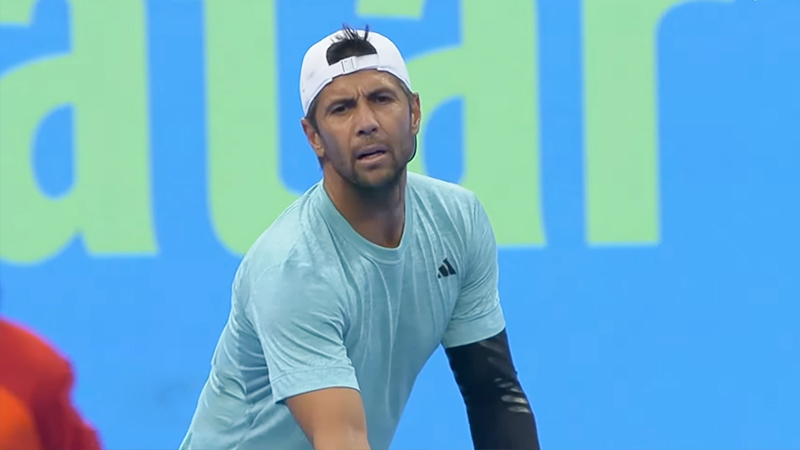
Fernando Verdasco is of Spanish nationality, a status he has held since birth and maintained throughout a professional tennis career spanning over two decades.
Born in Madrid on November 15, 1983, he has consistently competed under the Spanish flag, most notably leading the national team to multiple international championships.
His identity is deeply intertwined with Spanish cultural traditions, from his legal naming structure to his family’s deep-rooted presence in the capital city’s culinary scene.
Although he transitioned his primary residence to the Middle East later in his career, his legal citizenship and athletic allegiance have remained exclusively with Spain.
What Is Fernando Verdasco Nationality and Legal Background?
The question of Fernando Verdasco’s nationality is central to his public persona as a legendary figure in European sports. He holds a Spanish passport and has never represented any other nation in professional competition.
His legal identity is a reflection of his birthright and his commitment to his home country’s athletic programs.
Legal Citizenship and Naming Customs
Verdasco’s full legal name is Fernando Verdasco Carmona, which follows the traditional Spanish naming convention of including both paternal and maternal surnames.
The inclusion of “Carmona” signifies his mother’s lineage, a practice common in Spain to honor both branches of the family tree. This naming structure is a primary indicator of his legal Spanish identity and cultural heritage.
Throughout his career, he has been recognized globally as a Spaniard, adhering to all legal requirements for citizenship maintained by the Spanish government for residents and athletes born within the territory.
Geographic Origins and Madrid Roots
Fernando was born in the heart of Spain, specifically in Madrid, which served as the foundation for his early development.
Unlike many athletes who may hold dual citizenship due to parental background, Verdasco’s parents, José and Olga Verdasco, are Spanish locals.
Their deep ties to the city are evidenced by their ownership of a prominent restaurant chain in Madrid, which has become part of the family’s legacy.
This localized upbringing ensured that Verdasco was immersed in Spanish culture and language from infancy, solidifying his national identity long before he reached the global stage.
Representation of Spain in International Athletics
The most public verification of Fernando Verdasco’s nationality is his extensive history of representing the Spanish National Team.
In professional tennis, nationality is strictly regulated by the International Tennis Federation (ITF), and Verdasco’s entire career record is tied to Spain.
Davis Cup Championships and National Heroism
Verdasco is frequently cited as a national hero in Spain due to his instrumental role in the country’s Davis Cup successes. He was a core member of the squads that captured three prestigious titles in 2008, 2009, and 2011.
His most defining moment for his country occurred during the 2008 Davis Cup final against Argentina.
In a high-pressure environment, he won the deciding match that secured the championship for Spain, a feat that cemented his status as a legendary figure in the annals of Spanish sports history.
These victories were not merely personal achievements but were celebrated as triumphs for the Spanish nation.
Olympic Participation and Global Stage
Beyond team events like the Davis Cup, Verdasco represented Spain at the highest level of individual and multi-sport competition: the Olympic Games. He was an official member of the Spanish Olympic delegation at the 2012 London Olympic Games.
Participation in the Olympics requires verified citizenship and clearance from the national governing body, further confirming his legal status as a Spanish national.
During the opening ceremonies and throughout the competition, he competed under the Spanish flag, reinforcing his national identity to a global audience of billions.
Family Heritage and Spanish Social Ties
Verdasco’s nationality and cultural identity are also reflected in his personal life and the high-profile social circles he occupies within Spain. His marriage and family connections tie him to some of the most influential figures in Spanish society.
Marriage to Ana Boyer Preysler
In a union that captured significant media attention in Spain, Verdasco married Ana Boyer Preysler. Ana Boyer is a prominent Spanish socialite with deep ties to the country’s political and cultural history.
She is the daughter of Miguel Boyer, who served as Spain’s former Minister of Economy, and Isabel Preysler, a well-known figure in Spanish media.
This marriage further integrated Verdasco into the elite social fabric of Spain, linking his name with established Spanish institutions and families.
Connection to Spanish Cultural Icons
Through his marriage, Verdasco is also connected to international music and pop culture figures who maintain Spanish ties. He is the brother-in-law of Enrique Iglesias, the world-renowned singer and son of the legendary Julio Iglesias.
These familial connections highlight the overlap between Verdasco’s athletic career and the broader Spanish cultural landscape. Even as he traveled the world for tournaments, his domestic life remained anchored in the social and familial traditions of his homeland.
Residency in Qatar vs. National Identity
A common point of confusion regarding Verdasco’s nationality stems from his choice of residence during the latter part of his career. It is essential to distinguish between legal citizenship and physical residency in a professional athletic context.
The Move to Doha, Qatar
For over a decade, Fernando Verdasco has maintained his primary residence in Doha, Qatar. Many professional tennis players choose to relocate to regions with favorable climates and training facilities, and Doha has become a hub for international athletes.
However, relocating to Qatar for residency purposes does not equate to a change in nationality. Verdasco has remained a Spanish citizen throughout his time in the Middle East, using his Spanish passport for travel and maintaining his eligibility for Spanish national teams.
Retirement and Final Professional Appearance
Verdasco officially concluded his long-standing professional tennis career in February 2025. His retirement took place at the Qatar Open, a fitting venue given his long-term residency in the city.
Despite retiring in a foreign country, his legacy is recorded as that of a Spanish athlete who reached the pinnacle of the sport while representing his birth nation.
His career trajectory, from the clay courts of Madrid to the hard courts of Doha, serves as a blueprint for the modern, globalized Spanish athlete who maintains deep national roots while navigating an international career.
Statistical Breakdown of National Representation
To understand the depth of Verdasco’s commitment to his nationality, one must look at the technical data surrounding his participation in team-based events. The following table outlines his major contributions to the Spanish National Team.
| Event Type | Years of Major Success | National Achievement |
|---|---|---|
| Davis Cup | 2008 | Champion (Won Deciding Match) |
| Davis Cup | 2009 | Champion |
| Davis Cup | 2011 | Champion |
| Olympic Games | 2012 | Official Representative for Spain |
| Professional Tour | 2001–2025 | Competed under Spanish Flag |
This data illustrates that for nearly a quarter of a century, Verdasco’s identity was systematically linked to the Spanish athletic infrastructure.
His three Davis Cup titles are a testament to his value as a national asset, often performing his best when the pride of his country was at stake.
Frequently Asked Questions About Fernando Verdasco Nationality
Is Fernando Verdasco a citizen of Qatar?
While Fernando Verdasco has lived in Doha, Qatar, for more than ten years, there is no public record of him seeking or obtaining Qatari citizenship. He maintains his Spanish citizenship and has always represented Spain in international sporting events.
Where was Fernando Verdasco born?
He was born in Madrid, Spain, on November 15, 1983. His birth in the capital city to Spanish parents provided him with natural-born Spanish citizenship.
Did Fernando Verdasco ever play for another country?
No, Verdasco has exclusively represented Spain throughout his entire junior and professional career. This includes all Grand Slam appearances, ATP Tour events, the Davis Cup, and the Olympics.
What are Fernando Verdasco’s parents’ nationalities?
Both of his parents, José and Olga Verdasco, are Spanish. They are well-known in Madrid for their local business ventures, specifically their family-owned restaurant chain.
How does Spanish naming custom affect his name?
As is standard in Spain, his full name is Fernando Verdasco Carmona. “Verdasco” is his father’s first surname, and “Carmona” is his mother’s first surname. This reflects the legal and cultural identity standards of his home country.
Final Overview of a Spanish Tennis Legend
The career of Fernando Verdasco is a definitive example of national loyalty and cultural pride. From his early days in Madrid to his final matches in Doha, his identity has remained steadfastly Spanish.
His contributions to Spain’s “Golden Age” of tennis, characterized by three Davis Cup titles, have earned him a permanent place in the nation’s sporting history.
While he has embraced a global lifestyle—marrying into a prominent socialite family and residing in Qatar—these factors have only added layers to his persona without diminishing his core national identity.
For fans and historians alike, Fernando Verdasco will always be remembered as the fiery left-hander from Madrid who played with the heart of a Spaniard and the skill of a world champion.
His retirement in 2025 marks the end of an era for Spanish tennis, but his impact on the sport and his country’s international reputation will endure for generations.