In the high-stakes environment of professional sports, where the margin between victory and defeat is often measured in inches, the utility of deceptive play-calling cannot be overstated.
Among the most effective yet frequently misunderstood maneuvers in the modern playbook is the shovel pass.
Often mistaken for a simple lateral or a botched handoff, the shovel pass is a calculated, high-efficiency tool designed to exploit defensive aggression and create immediate offensive leverage.
This analysis provides a comprehensive examination of the shovel pass, exploring its technical mechanics, its strategic importance in American football, and its versatile applications across various professional sporting disciplines.
The Anatomy of the Shovel Pass
At its most fundamental level, a shovel pass is defined as a short, underhand, or push-style release where the player launches the ball or object forward using a motion that mimics the act of scooping or shoveling dirt.
Unlike the traditional overhand spiral that defines most quarterback play, the shovel pass prioritizes speed of release and proximity over distance.
In the context of American football, the play typically involves a quick underhand toss from the quarterback to a teammate—usually a running back or tight end—who is moving in proximity to the line of scrimmage.
Because the ball is “shoveled” forward, it is legally classified as a forward pass rather than a handoff or a lateral, provided the ball’s trajectory is toward the opponent’s end zone.
This classification is significant for statistical recording and rule application, as an incomplete shovel pass is ruled an incompletion rather than a live-ball fumble.
Strategic Evolution: From “Wrinkle” to Staple
Historically, the shovel pass was a rare occurrence on the football field, often reserved for desperate situations or niche “trick” plays.
However, the landscape of modern coaching has shifted. Leading offensive minds now integrate the shovel pass as a sophisticated “wrinkle” within their standard offensive schemes to keep defensive units off balance.
The primary strategic value of the shovel pass lies in its ability to neutralize an aggressive pass rush. When defensive ends and blitzing linebackers prioritize getting to the quarterback quickly, they often vacate their primary gaps or lose sight of interior movements.
The shovel pass exploits this over-pursuit by allowing the quarterback to release the ball almost immediately, underhand, before the defenders can close the gap.
The Technical Distinction: Shovel Pass vs. Option Pitch
To understand the shovel pass at a professional level, one must distinguish it from the option pitch, a maneuver common in triple-option offenses. While they may appear similar to the untrained eye, the technical and legal differences are profound.
The defining characteristic of a shovel pass is that the ball travels forward. In contrast, a pitch or toss (commonly referred to as a lateral) is thrown backward or parallel to the line of scrimmage.
This distinction is critical; a lateral is a live ball if it hits the ground, creating a high-risk scenario for the offense. By ensuring the shovel pass moves forward, coaches mitigate this risk, as a dropped ball simply results in a dead play.
Tactical Execution: The Art of Misdirection
Successful execution of the shovel pass relies heavily on the “Art of the Fake.” Most offensive systems utilize the shovel pass as a misdirection play, designed to hide the ball’s true destination behind the massive bodies of the offensive line.
The execution process generally follows a specific sequence:
- The Snap and Initial Fake: The quarterback typically takes the snap from a shotgun formation and immediately executes a fake, either mimicking a traditional drop-back pass or faking a handoff to a player in motion.
- The Sneak: While the defense reacts to the fake, a designated receiver—frequently a tight end or running back—sneaks into a position behind the line of scrimmage, usually a few yards in front of the quarterback.
- The Delay: The receiver often delays their movement for approximately one second after the snap, allowing them to hide behind the offensive linemen and wait for the defensive pursuit to clear the interior lanes.
- The Pitch: The quarterback brings the ball down and pitches it forward to the receiver. Crucially, the quarterback must “lead” the receiver, tossing the ball in the direction they are running to ensure their forward momentum is not interrupted.
- The Lead Block: Many shovel pass designs involve “pulling” an offensive lineman (often a guard) to serve as a lead blocker for the receiver as they head toward the outside of the defensive front.
The Kansas City Influence: A Case Study in Elite Application
The modern gold standard for the shovel pass is arguably found in the Kansas City Chiefs’ offensive system. Head coach Andy Reid has famously utilized the shovel pass to maximize the unique skill sets of players like star tight end Travis Kelce.
By using Kelce in these short-yardage situations, the Chiefs leverage his size and agility to secure first downs or scores in high-pressure red-zone environments.
This application demonstrates that the shovel pass is not merely a “small man’s” play; it is a versatile tool for any elite athlete capable of navigating tight spaces.
Multi-Sport Versatility: Beyond the Gridiron
While the shovel pass is a cornerstone of football strategy, its utility extends across the professional sporting world. The core concept—a quick, underhand push to bypass a nearby defender—is a universal mechanical advantage.
- Basketball: In the NBA and collegiate ranks, the shovel pass (often referred to as a push pass) is a vital tool for dribblers. It allows a player to quickly move the ball to a teammate cutting toward the basket for a layup, often delivered with one hand while mid-dribble.
- Lacrosse: Known within the sport as a shuffle pass, players use a rapid wrist flick and a pushing motion with their stick to move the ball around a close defender. This allows for rapid puck or ball movement in the “crease” or tight offensive sets.
- Baseball and Softball: Infielders frequently employ a version of the shovel pass when turning double plays or tossing the ball to a teammate covering a base from a very short distance. This underhand flip is often the fastest way to transfer the ball when a traditional overhand throw would be too slow or awkward.
Addressing Common Misconceptions
Precision in terminology is a hallmark of professional expertise. In the NFL and broader football discussions, the shovel pass is frequently—and incorrectly—referred to as a “shuttle” or “shuffle” pass.
While “shuffle” is an accepted term in lacrosse, its use in football is considered a misnomer. Maintaining the correct terminology ensures clear communication between coaches, players, and analysts.
Enhanced FAQ: Mastering the Nuances
Is a shovel pass considered a rushing or passing play?
In professional and collegiate leagues, a shovel pass is recorded as a forward pass. Consequently, the yards gained are credited as passing yards for the quarterback and receiving yards for the catcher.
Why is the shovel pass so effective in the red zone?
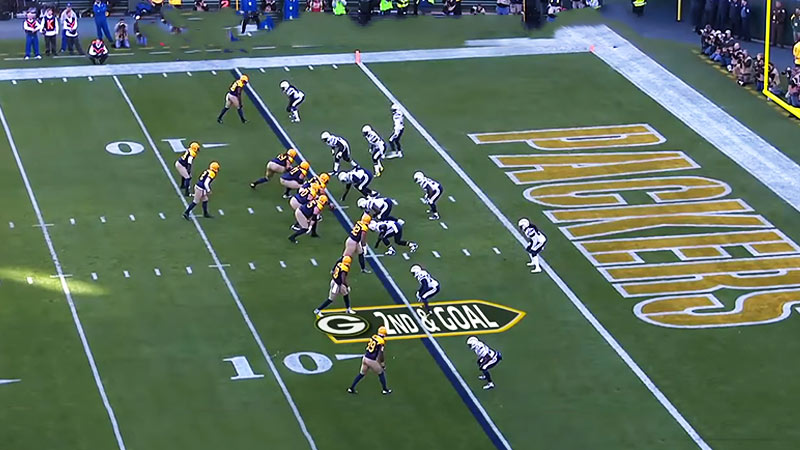
The red zone offers limited vertical space. Defensive units tend to play more “downhill” and aggressively. The shovel pass uses this aggression against them, allowing a receiver to slip through interior gaps while the defense focuses on the quarterback or exterior threats.
Can any player receive a shovel pass?
While typically directed to running backs or tight ends who possess the bulk to handle interior contact, wide receivers are increasingly used in these roles, particularly when they go in motion across the formation.
What happens if the shovel pass is dropped?
If the ball was traveling forward at the time of the release, it is an incomplete pass and the play is dead. This makes it a significantly safer option than a traditional lateral or pitch.
Conclusion: Integrating the Shovel Pass into Modern Strategy
The shovel pass represents the perfect intersection of simplicity and sophistication. By leveraging basic underhand mechanics and “scooping” motions, an offense can dismantle even the most complex defensive fronts.
Its evolution from a neglected “trick” to a foundational element of elite playbooks underscores its effectiveness.
For coaches and players at any level, mastering the shovel pass requires more than just physical execution; it requires an understanding of timing, deception, and the legal nuances of the forward pass.
When executed correctly, it remains one of the most devastating and “sneaky” plays in the game today.