In the complex ecosystem of professional rugby, every position carries a specific set of physical and tactical requirements.
However, few roles are as intellectually demanding or as physically relentless as the scrum half. Traditionally wearing the jersey number 9, the scrum half serves as the critical link between the team’s two distinct units: the heavy, powerful forwards and the agile, high-speed backs.
To understand the scrum half is to understand the rhythm of the game itself. They are the primary architects of a team’s offensive flow, responsible for taking the raw power generated by the forwards and translating it into scoring opportunities for the backline.
This position requires a rare combination of elite aerobic fitness, technical precision, and the tactical leadership necessary to manage thirty players on a pitch simultaneously.
The Bridge: Connecting Power to Pace
The most fundamental definition of a scrum half is that of a connector. In a standard rugby match, the “forwards” (numbers 1 through 8) do the heavy lifting—competing for possession in scrums, lineouts, and rucks. Conversely, the “backs” (numbers 10 through 15) are the finishers, using space and speed to cross the try line.
The scrum half sits directly in the center of these two groups. Without a high-functioning number 9, the forwards’ hard-won possession often goes to waste, and the backs never receive the ball in a position to strike.
This role requires the player to “fetch” the ball from the ground following a tackle or a set-piece, ensuring that the momentum of the attack remains unbroken.
The Physical Reality of the Breakdown
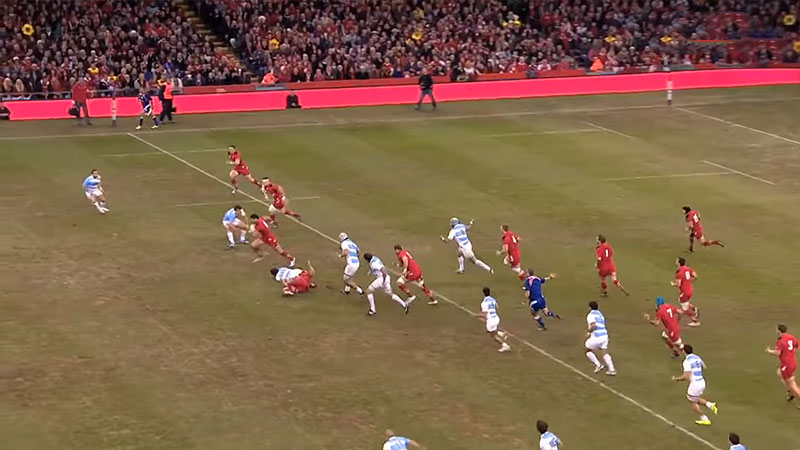
A primary duty of the scrum half is to be the first player to arrive at every breakdown (a ruck or a scrum). This is a grueling physical requirement. While a winger might wait for the ball to come to them, the scrum half must chase the ball wherever it goes.
Whether the play moves sixty meters downfield or stalls in a muddy corner, the number 9 must be there to pick up the ball and initiate the next phase of the attack.
The On-Field General: Communication and Leadership
If the fly-half (number 10) is often considered the “playmaker,” the scrum half is the “general.” Much like a quarterback in American football, the scrum half is responsible for calling the plays and directing the movement of their teammates.
Shouting orders is not merely a personality trait of the position; it is a functional necessity.
Because the scrum half has the best view of the ball as it emerges from a ruck, they are the only player who can accurately tell the massive forwards where to stand, when to drive, and where the opposition’s defensive gaps are located.
This leadership involves:
- Directing the Forwards: Ensuring the “heavy” players are positioned correctly to protect the ball or provide a platform for an attack.
- Managing the Officials: The scrum half is often the primary communicator with the referee during dynamic play, advocating for their team while staying within the laws of the game.
- Psychological Edge: A vocal scrum half keeps their team focused and can often frustrate the opposition by dictating the narrative of the match.
Controlling the Pulse: The Art of Game Management
One of the most nuanced aspects of the position is controlling the pace of the game. A world-class scrum half knows that rugby is played in “beats.”
There are moments when a team must strike with lightning speed to catch a defense off-guard, and there are moments when a team must slow down to catch their breath or protect a lead.
Speeding Up the Attack
When the opposition’s defense is disorganized, the scrum half will opt for a “quick tap” or a rapid pass from the base of a ruck. By moving the ball before the defenders can set their line, the number 9 creates “broken play,” which is where most tries are scored.
Slowing Down for Control
Conversely, if the team is under immense pressure or playing in poor weather conditions, the scrum half may choose to slow the game down.
This might involve waiting for the forwards to fully secure a ruck before box-kicking the ball deep into the opponent’s territory to gain a positional advantage.
The Technical Toolkit: Passing, Kicking, and Decision-Making
To execute these tactical mandates, a scrum half must possess a highly specialized technical skill set. These skills must be performed under extreme fatigue and while being targeted by the opposition’s largest players.
1. Precision Passing from the Ground
Unlike other players who pass from a standing position, the scrum half frequently passes the ball directly from the turf.
This requires quick hands and incredible core strength to generate the power needed to spiral the ball 15 to 20 meters accurately to the fly-half.
2. Tactical Kicking (The Box Kick)
The “box kick” is a staple of the modern game. This involves the scrum half kicking the ball high into the air from behind a ruck.
It is a strategic tool used to “clear” the ball from the team’s defensive zone or to create a contestable ball that their teammates can chase and recover.
3. Elite Decision-Making
Every time a scrum half touches the ball, they have a split-second to choose between three options: pass, kick, or run. Making the smart choice under the pressure of a 120kg flanker charging at them is what separates professional-grade players from the rest.
Physical Profile: Why Size Isn’t Everything
In a sport dominated by giants, the scrum half is often the smallest player on the pitch. However, what they lack in raw mass, they make up for in speed and endurance.
A scrum half must be able to:
- Sprint 7 to 9 kilometers over the course of an 80-minute match.
- Maintain a high level of aerobic capacity to ensure their brain continues to make “smart choices” even when their body is exhausted.
- Possess the agility to “snipe” through small gaps in the defense if the opposition forgets to guard the base of the ruck.
The Quarterback Comparison: A Tactical Deep Dive
The comparison to an American football quarterback is widely accepted among fans and analysts. Both roles are defined by their ability to touch the ball on almost every offensive play and their responsibility for “reading” the defense.
However, there is a key difference: while a quarterback has a headset and a coach in their ear, the rugby scrum half must make every decision in real-time without breaks in play.
This makes the intellectual demand of the jersey number 9 one of the highest in all of professional sports.
Strategic Conclusion: The Architect’s Impact
The scrum half is far more than just a player who passes the ball. They are the architect of the pitch, the link between physical dominance and strategic execution.
A great scrum half can make a mediocre team look world-class by simply making the right decisions at the right time.
For those looking to dominate the game, mastering the “number 9” mindset—combining relentless speed, vocal leadership, and technical precision—is the surest path to victory.