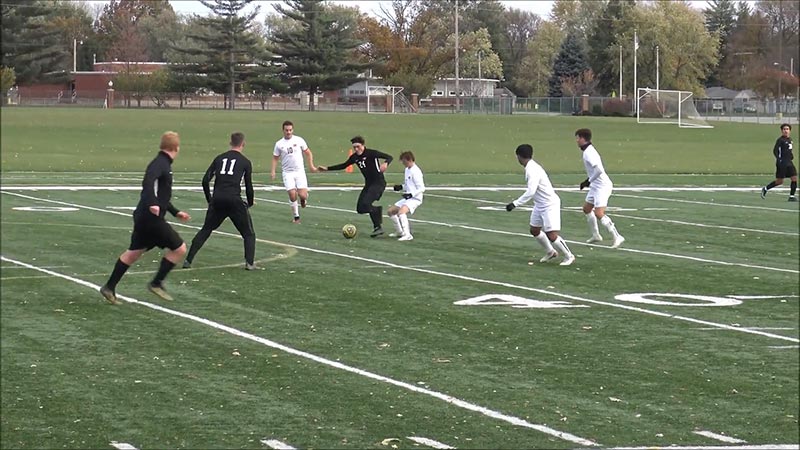
A soccer scrimmage is a high-level practice tool designed to bridge the gap between technical drills and the intensity of a live match.
It serves as a simulated game environment where coaches can test tactics, evaluate player chemistry, and refine decision-making without the pressure of league standings.
By manipulating rules and field sizes, teams can replicate specific match-day challenges in a controlled setting.
Understanding the nuances of a scrimmage is essential for any coach or player looking to achieve professional-grade performance and tactical mastery on the pitch.
Defining the Soccer Scrimmage Environment
A scrimmage in soccer is fundamentally a practice game or simulated match used to improve skills and teamwork in a realistic, yet controlled, environment.
Unlike official competitive games, these sessions do not count toward league standings and are typically held during regular training hours. The primary objective is to move beyond isolated drills and force players to utilize their techniques under match-like pressure.
The Core Purpose of Simulated Play
The scrimmage serves as a critical bridge between learning a skill and executing it in a chaotic game scenario. It allows for the development of “Game IQ,” which encompasses spatial awareness and decision-making in a way that stagnant drills cannot.
Furthermore, it acts as a tactical testing ground where a coaching staff can experiment with new formations and player positions without the risk of losing a real game.
For many players, the scrimmage also serves as an “audition” to prove their readiness for upcoming official matches.
Distinguishing Scrimmages from Drills
While traditional drills focus on repetitive skill-building, the scrimmage focuses on application and context. An effective practice goes beyond running the same drills over and over again.
It requires a specialized approach to maximize every player’s individual potential. Scrimmages provide the first-hand experience necessary for players to understand how the game actually works.
Coaches must find a balance, as some recommend using scrimmages sparingly—perhaps 10 minutes per hour—to ensure enough time remains for repetitive skill-building drills.
Architectural Characteristics of a Scrimmage
The structure of a scrimmage is highly flexible, allowing it to be tailored to the specific needs of the squad at any given time. This flexibility is what makes it a superior tool for tactical development and situational awareness.
Team Composition and Setup
In most professional and amateur settings, a scrimmage involves dividing a single squad into two groups, often referred to as an intra-squad game. This can involve the starting XI playing against the reserve team to compare strengths and make adjustments to selection.
Alternatively, a scrimmage can be an informal, friendly game against a local rival team to test the squad against unfamiliar opponents.
Fluid Rules and Coaching Intervention
One of the most defining traits of a scrimmage is the use of fluid rules. Coaches often alter standard FIFA regulations to focus on specific training goals, such as removing goalies to encourage defensive pressure or limiting the number of touches to speed up ball movement.
Furthermore, coaching involvement is much higher; a coach can stop play at any moment to provide immediate feedback or correct positioning.
This immediate tactical correction is strictly prohibited during official matches, making the scrimmage an invaluable teaching moment.
Tactical Variations: Full-Game vs. Small-Sided
The format of a scrimmage can vary significantly depending on the tactical objective the coaching staff wishes to achieve.
| Scrimmage Type | Player Count | Primary Focus | Best Use Case |
|---|---|---|---|
| Full-Game | 11v11 | Overall analysis | Testing full team strength and versatility |
| Small-Sided | 5v5 or less | Problem-solving | Improving specific phases of play or individual skills |
The Strategic Value of 11v11 Formats
Full-game scrimmages involve two full teams playing under mostly normal soccer rules. This format is best for an overall analysis of the team’s collective strengths and weaknesses.
It enables the coach to test the team’s full strength against varying skill levels and provides an opportunity to test players in different positions to gauge their versatility.
Small-Sided Scrimmages and Contextual Training
Small-sided scrimmages typically involve 10 players or fewer, often in 5v5 or 3v3 formats. These allow coaches to focus on specific game situations and individual player development.
For example, if a coach wants to simulate a defensive phase following an opponent’s goal-kick, a small-sided game is more efficient than using two full teams.
These formats are highly effective for finding solutions to identified weaknesses or figuring out how to maximize existing strengths.
8 Professional Pillars for Maximizing Scrimmage Efficiency
To ensure a scrimmage is more than just “playing for fun,” specific professional standards should be applied to the session.
1. Implementing a Competitive Scoring System
At advanced levels, it is beneficial to add a layer of competitiveness by keeping score. This encourages players to be serious about their development and adds stakes to the simulation.
Adding incentives for the winning team can further bring out the players’ commitment and effort, mimicking the high-pressure environment of a real match.
2. Time Management in Small-Sided Play
When conducting small-sided games, it is essential to reduce the time spent on each activity. Because these games are meant for contextual training and problem-solving, you do not need the full duration of a 90-minute game to achieve the training goals.
Shorter sessions allow for a better assessment of each individual player’s skill level without the distraction of watching 22 players at once.
3. Strategic Rule Manipulation
Coaches should not feel bound by standard rules during a scrimmage. Introducing new rules can keep the session fresh and more targeted toward specific developmental goals.
For example, in enclosed spaces, removing set pieces like throw-ins or corner kicks can maximize the time the ball is actually in play. This is particularly useful when the training objective requires the ball to remain active to solve specific tactical problems.
4. Integration of Data and Individual Statistics
The influence of data analysis in soccer is growing, and incorporating it into practice sessions is a hallmark of elite training. Tracking individual statistics during a scrimmage makes it easier to gauge the development and effort of each player objectively.
While the “eye test” is common, it is often not as accurate as data, making statistics a vital tool for performance tracking.
5. Video Analysis and Recorded Sessions
Recording a scrimmage provides a much more detailed and accurate approach to evaluation. Watching a live game can cause a coach to miss minor details, particularly movements that happen away from the ball.
Film allows the staff to study the defensive line’s movement during transitions and re-watch specific sequences as many times as necessary to gather critical information.
6. Role Reversal and Positional Switching
Modern soccer requires all players to contribute to both the attacking and defensive phases of play. During a scrimmage, it is beneficial to have teams switch roles.
If one team is practicing a defensive “regroup” instruction while the other attacks, they should exchange roles after a set period. This ensures the entire squad, including reserves, can execute specific instructions in a real game situation.
7. The Bonus Point System
A bonus point system can be used to encourage players to go beyond the bare minimum.
For example, if a scrimmage focuses on chance creation, a team might get a standard point for a goal but a bonus point if the goal follows a sequence of fifteen uninterrupted passes.
This encourages the development of passing skills, ball handling, and spatial awareness simultaneously.
8. Targeted Opponent Simulation and Tactical Auditions
To elevate a scrimmage to a professional-grade preparation tool, coaches should use the session to replicate the specific threats and formations of upcoming opponents.
By instructing one side of the squad to mirror a rival’s attacking or defensive style—such as a high press or a specific corner routine—the other team can practice technical solutions, like a “regroup” instruction, in a realistic environment.
Furthermore, this format serves as a vital tactical audition, allowing the coaching staff to compare the starting XI against the reserves and evaluate player versatility in different positions before the stakes are raised in an official match.
Scrimmaging Across the Player Development Spectrum
The application of a scrimmage must be tailored to the age and experience level of the participants to be truly effective.
Training Methods for Younger Players
For players experiencing soccer for the first time, the primary goal of a scrimmage is often to teach the rules of the game. There is no better way to learn how a real game plays out than through a simulated match.
At this level, keeping score may be less important than ensuring the children are having fun while learning the basic flow of the sport.
Tactical Refinement for Experienced Teams
With experienced squads, scrimmages are used to trial new styles of play or complex formations. For instance, if an upcoming opponent requires the team to regroup rather than press high, the scrimmage is the perfect place to practice this transition.
By splitting the squad and having one side act as the specific opponent, the team can refine their tactical execution in a safe environment.
Frequently Asked Questions
How long should a soccer scrimmage last?
Full-game scrimmages may last for a significant portion of a session, but small-sided scrimmages should be kept short to maintain high intensity and focus on specific problem-solving.
Can you have a scrimmage with another team?
Yes, scrimmages can be informal games against local rivals or other clubs, often referred to as friendly matches.
Do scrimmages follow FIFA rules?
Not necessarily. Coaches are encouraged to tweak rules, such as removing set pieces or changing field dimensions, to meet specific training objectives.
What is an intra-squad scrimmage?
This is a scrimmage where a single team is split into two groups—such as the “A-team” vs. the “B-team”—to play against each other.
Why is recording a scrimmage important?
Recording allows for a detailed analysis of player movement away from the ball and helps coaches spot tactical errors that might be missed during live play.
Conclusion: The Path to Tactical Excellence
Integrating scrimmages into a training regimen is a highly efficient philosophy that offers far more benefits than traditional, isolated drills alone.
As the sport of soccer continues to evolve globally, staying competitive requires coaches and players to embrace flexibility and innovation in their practice habits.
By utilizing the diverse formats of the scrimmage—from small-sided tactical simulations to full 11v11 match rehearsals—teams can ensure they are prepared for the unpredictable nature of game day.
Mastering the architecture of the scrimmage is, ultimately, the most effective way to unlock a team’s full potential and ensure every player is ready to perform when it matters most.