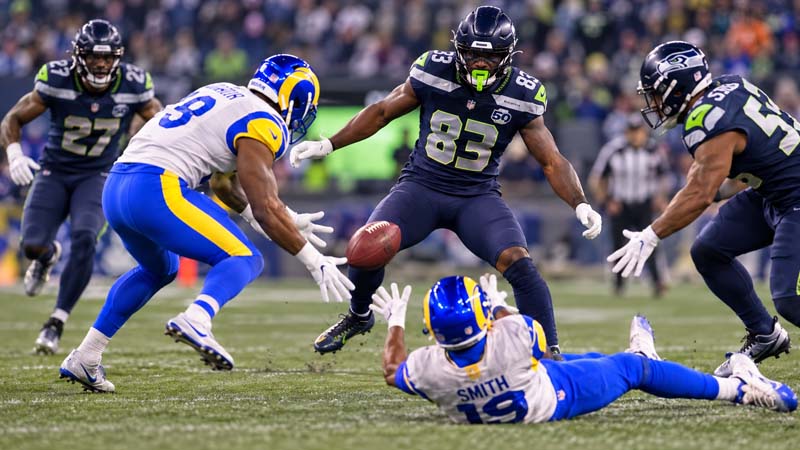
Special teams plays in the National Football League represent some of the most volatile, high-stakes moments in professional sports.
Among these, few events generate as much immediate stadium chaos, sideline confusion, and post-game debate as the muffed punt.
To the casual observer, a returner dropping a kicked ball looks like a simple turnover. Yet, the governing rulebook details surrounding this specific play are so dense that they frequently leave passionate fans, veteran commentators, and even legendary head coaches entirely bewildered.
By analyzing the strict technical rules, examining real-world case studies, and breaking down the precise physics of the football rulebook, this comprehensive guide will clarify exactly what a muffed punt is, how it differs from a fumble, and why its unique mechanics dictate some of the most controversial decisions on the gridiron.
The Core Definition: What Exactly is a Muffed Punt?
To understand why this play causes such widespread confusion, we must first look at how the NFL officially defines a “muff.”
According to the official rulebook, a muff is “the touching of a loose ball by a player in an unsuccessful attempt to obtain possession of it”.
In practical terms, a muffed punt occurs when a player on the receiving team makes physical contact with a kicked ball but fails to secure clear control or possession before the ball drops, squirts, or bounces away.
The moment that contact is made without control, the play enters a highly specialized legal status under football rules:
- No Possession Established: The receiving team never secures the football.
- Live Ball Status: Because the receiving team touched the ball but did not gain possession, the ball remains loose and live in the field of play.
- Equal Recovery Rights: Since the receiving team has touched the ball, the restriction preventing the kicking team from recovering a punt is lifted. Any player from either team can legally recover the loose ball.
This immediate transition from a protected kick to a chaotic free-for-all is the catalyst for massive game-day shifts, yet the rules governing what happens after the recovery are where the true complexity begins.
The Legal Divide: Muffs vs. Fumbles
The primary source of confusion for the average football fan is the tendency to use the terms “muff” and “fumble” interchangeably. In casual conversation, any dropped ball is labeled a fumble. In the eyes of the NFL officials, however, these two plays are governed by entirely separate sections of the rulebook, yielding completely different tactical outcomes.
The fundamental distinction lies in a single concept: prior possession.
The Fumble Pathway
For a fumble to occur, a player on the receiving team must first establish clear, undeniable possession of the football and subsequently lose control of it.
If a returner catches a punt cleanly, tucks it into his arm, takes two strides downfield, and is hit—causing the ball to pop loose—that is a fumble.
Because possession was established, the ball is fully live. If a member of the kicking team recovers this fumble, they can pick it up and run it directly into the end zone for a touchdown.
The Muff Pathway
Conversely, a muff occurs entirely before possession is ever secured. If the returner is running under a drifting punt, reaches out, has the ball bounce off his fingertips, chest, or helmet, and it tumbles away, he has muffed the punt.
Because the receiving team never had possession, the kicking team cannot profit from an advanced return. If a kicking team player recovers a muffed punt, the play is immediately blown dead at the spot of recovery.
The recovering team is awarded possession of the football, securing a turnover, but they are strictly barred from advancing or running with the ball.
This distinction exists to protect the fairness of special teams play, but it leads to highly dramatic moments when players and coaches expect a touchdown, only to be turned back by the referee’s whistle.
Case Study 1: Pete Carroll’s Sideline Fury (Seattle vs. Minnesota, 2023)
To see the dramatic impact of the advancement restriction in action, we only need to look back at a highly publicized matchup in 2023 between the Seattle Seahawks and the Minnesota Vikings.
During this game, the Seahawks’ special teams unit fired a deep punt downfield. The Vikings’ returner, positioned deep in his own territory, signaled for a fair catch but ultimately failed to secure the ball cleanly, muffing it.
A flying Seahawks coverage player swooped in, scooped up the loose, rolling football, and sprinted triumphantly into the end zone for what appeared to be a stunning special teams touchdown.
The stadium erupted, and the Seahawks celebrated. However, the officiating crew immediately stepped in, blew the play dead, and spotted the football precisely at the point of the recovery, denying the touchdown.
The ruling was technically perfect: because the Vikings’ returner only touched the ball without establishing possession, it was a muffed punt. Consequently, the Seahawks could secure the turnover but were legally forbidden from advancing it.
This decision led to a famous sideline moment. Seahawks head coach Pete Carroll, widely recognized as one of the finest football minds in the modern era, was captured on camera absolutely furious with the referees, demonstrating that even legendary coaches can find themselves temporarily blind to the nuances of this specific rule.
Had the Vikings’ returner caught the ball, secured it, and then fumbled, Seattle would have been allowed to return the ball for a touchdown. But because control was never established, the play was dead the instant the Seahawks player secured the ball.
The End Zone Conundrum: Why a Muff is Not a Safety
While the advancement rule causes frustration, the absolute pinnacle of fan confusion occurs when a muffed punt travels backward into the receiving team’s end zone.
A famous real-world incident involving the Pittsburgh Steelers perfectly illustrates this scenario. A punt was launched downfield, and a Steelers returner muffed the ball around his own 10-yard line.
As the ball bounced erratically backward toward the goal line, a teammate chased it down, diving onto the loose ball in the end zone, where he was immediately touched down by the pursuing coverage team.
To the average fan, this appeared to be a textbook safety. The ball had entered the Steelers’ own end zone, and they had downed it there. Fans expected the opposing team to be awarded two points and a free kick. Instead, the officiating crew ruled the play a touchback, awarding the Steelers first-and-ten at their own 20-yard line—leaving fans and commentators stunned.
To understand why this was the correct ruling, we must dive into the precise definitions of Impetus, Touchbacks, and Safeties within the official NFL rulebook.
Section 38: The Touchback Rule
According to the NFL rulebook, a touchback is declared if:
“the ball is dead on or behind the goal line a team is defending, provided that the impetus comes from an opponent, and that it is not a touchdown or an incomplete pass.”
Section 29: The Safety Rule
Conversely, a safety is ruled if:
“the ball is dead in possession of a team on or behind its own goal line when the impetus comes from the team defending that goal line.”
Section 17: The Science of Impetus
The entire ruling hinges on impetus—defined as the action of a player who carries the ball or provides the force (such as a pass, kick, snap, or fumble) that causes a ball in the field of play to touch or cross a goal line.
The rulebook explicitly dictates how impetus is tracked on a kicked ball:
“If a Loose Ball touches or crosses a goal line, the impetus is attributed to the team whose player passed, kicked, snapped, or fumbled the ball…”
Crucially, the impetus is always attributed to the kicking team (the offense), unless the defending/receiving team creates an entirely “new force” that sends the ball behind their own goal line. The rulebook outlines only four specific actions by a defending player that can establish a new force:
- Muffing a ball that is completely at rest, or nearly at rest.
- Batting a ball that has been kicked or fumbled.
- Batting a backward pass after it has struck the ground.
- Illegally kicking any ball.
Applying the Rule to the Steelers Play
When the Steelers player initially touched the punted ball at the 10-yard line, the ball was still in flight and moving rapidly. Because the ball was not “at rest or nearly at rest,” his contact did not legally constitute a “new force” under Section 17.
Therefore, the original impetus that sent the ball toward and across the goal line remained with the kicker.
When the second Steelers player dove onto the loose ball in the end zone to secure it, his action of sliding or diving to recover the ball did not count as batting, kicking, or illegally touching.
Because the original impetus was still attributed to the opponent’s kick, and the ball became dead in the end zone, the play met all the criteria of Section 38. It was a touchback, not a safety.
As one analyst noted, there was never an initial possession to call a safety on. The ball was considered live until being recovered in the end zone, which resulted in a touchback.
Had the returner caught the punt at the 10-yard line, established possession, fumbled it, and then had it roll into the end zone for a recovery, a safety would have been the correct call.
A Quick Reference Scenario Matrix
To help keep these highly specific rules straight, refer to this breakdown of standard punt-return scenarios and their official rulings:
Clean Catch and Fumble
- The Play: The returner catches the punt, holds it for two seconds, runs three yards, gets hit, and drops the ball. The kicking team recovers and runs it into the end zone.
- The Ruling: Touchdown. Because possession was fully established, the play is a fumble. The ball is live and can be advanced by either team upon recovery.
Open-Field Muff
- The Play: The returner tries to catch the punt at his own 30-yard line, but it bounces off his chest. A kicking team player dives on the ball at the 25-yard line and tries to get up and run.
- The Ruling: Kicking Team Possession at the 25-Yard Line. The ball is blown dead immediately upon recovery. Kicking team takes over first-and-ten but cannot advance the ball.
Muffed Fair Catch
- The Play: The returner waves his hand for a fair catch, but the ball deflects off his hands. The kicking team recovers the ball and runs it into the end zone.
- The Ruling: Kicking Team Possession at the Spot of Recovery. The touchdown is negated. Under NFL rules, a muffed fair catch is treated as a muff. Kicking team gets the turnover but no advancement.
Backward Muff Into the End Zone
- The Play: A punt is traveling deep. The returner muffs the moving ball at the 5-yard line. The ball rolls backward into the end zone, where the receiving team recovers it and is tackled.
- The Ruling: Touchback. Because the ball was moving and not at rest when touched, no “new force” was created. The original impetus belongs to the kicker. Since the ball became dead behind the defending goal line, it is a touchback.
Conclusion: The Golden Rule of Special Teams Chaos
When analyzing the chaotic and fast-paced world of NFL special teams, remembering one simple, overarching rule will help you cut through the confusion of any officiating decision: a player must fully gain possession before anyone can move that ball in either direction.
Without established possession, there can be no fumble, no runbacks by the kicking team, and no safety on a ball driven backward into the end zone.
The next time you see a returner misjudge a booming kick and a mad scramble ensues on the field, you can watch the referee’s signaling with absolute confidence, knowing the exact mechanics that govern the madness.