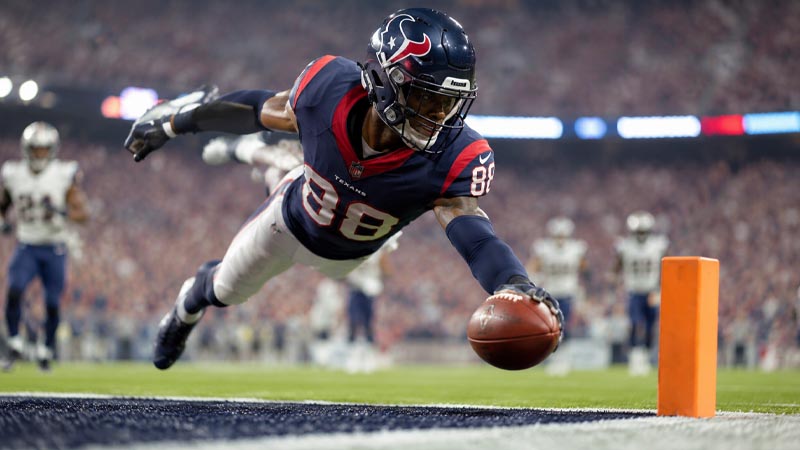
The scoring of a touchdown is the most celebrated moment in American football. However, once the ball crosses the goal line and the six points are added to the scoreboard, the game does not simply pause. Instead, it enters a highly regulated, strategically dense phase of play.
For coaches, players, and analysts, the sequence of events following a touchdown is a critical battleground where games are won or lost.
From the immediate decision of the “Try” to the newly structured mechanics of the kickoff, every second is governed by precise rules designed to balance competitive balance, safety, and strategic diversity.
This guide provides an analytical breakdown of the mandatory post-touchdown procedures in the National Football League (NFL), examining the mechanics of the extra point, the mathematics of the two-point conversion, the rare exceptions to the rules, and the league’s updated kickoff rules.
Understanding the Post-Touchdown “Try”
Immediately after a touchdown is scored, the scoring team is granted an opportunity to score additional points before giving up possession.
This phase of the game is officially known as the “Try”. Teams have two mutually exclusive options during the Try: a one-point kick or a two-point offensive play.
                  POST-TOUCHDOWN SEQUENCE
                             │
                             ▼
                     Touchdown Scored
                       (6 Points)
                             │
                             ▼
                     ┌───────┴───────┐
                     │   The "Try"   │
                     └───────┬───────┘
                             │
            ┌────────────────┴────────────────┐
            ▼                                 ▼
    Extra Point (PAT)                Two-Point Conversion
  • Kicked from 15-yd line          • Offensive snap from 2-yd line
  • Worth 1 Point                   • Worth 2 Points
            │                                 │
            └────────────────┬────────────────┘
                             │
                             ▼
                     The New Kickoff
               • Kicker at own 35-yd line
               • Cover team at opponent's 40-yd line
               • Restrained until ball is touched/received
The Traditional Extra Point (PAT) Kick
The Point After Touchdown (PAT)—commonly referred to as the extra point—is the most frequently chosen option.
- The Line of Scrimmage: By rule, the ball is snapped from the defensive team’s 15-yard line for a kick attempt. This placement means the kick itself is approximately a 33-yard attempt, factoring in the 10 yards of the end zone and the standard 8-yard spot for the holder.
- The Objective: The kicking team must successfully snap, hold, and kick the football through the opponent’s upright goal posts.
- The Reward: A successful kick earns the team exactly 1 point.
Historically, the extra point was snapped from the 2-yard line, making it a near-automatic 20-yard kick. T
he league’s decision to move the snap back to the 15-yard line introduced a layer of difficulty, exposing kickers to weather conditions and defensive pressure, thereby transforming a routine play into a strategic variable.
The High-Risk, High-Reward Two-Point Conversion
When a team requires more than a single point to align with their strategic goals, they can opt for a two-point conversion play.
- The Line of Scrimmage: Unlike the kick attempt, the snap for a two-point conversion occurs at the defensive team’s 2-yard line.
- The Objective: The scoring team must run a standard offensive scrimmage play (either a pass or a run) and successfully advance the ball across the goal line into the end zone.
- The Reward: A successful conversion awards the team 2 points.
The choice between a one-point kick and a two-point play is heavily analyzed using modern game theory and win-probability models. While the kick remains the statistically safer option to secure a single point, the two-point conversion is deployed strategically based on game situation, time remaining, and point differentials.
Strategic Analytics: Deciding Between One and Two Points
The decision of whether to kick or go for two is rarely left to instinct. Head coaches rely on mathematical charts and analytical departments to make real-time decisions. The choice is fundamentally a calculation of expected value and game-state leverage.
| Decision Type | Line of Scrimmage | Success Rate (Avg.) | Point Value | Expected Value |
|---|---|---|---|---|
| PAT Kick | 15-Yard Line | ~93% – 95% | 1 Point | ~0.94 Points |
| Two-Point Play | 2-Yard Line | ~47% – 50% | 2 Points | ~0.96 Points |
The Mathematical Baseline
Statistically, the expected value of both plays is remarkably close. If an NFL team converts 94% of its extra points from the 15-yard line, the expected value of a kick is 0.94 points.
If that same team converts 48% of its two-point plays from the 2-yard line, the expected value is 0.96 points.
Despite the slight mathematical edge for the two-point play, NFL coaches traditionally lean toward the kick due to risk aversion.
A failed two-point conversion yields zero points, which can severely impact team momentum and alter the requirements for subsequent possessions.
Critical Strategic Scenarios
There are several scenarios where analytics dictate an aggressive move toward the two-point conversion:
- The “Down by 8” Scenario: If a team scores a touchdown while trailing by 14 points, they are now down by 8. Going for two immediately is mathematically optimal. If they succeed, they are within 6 points (a single touchdown). If they fail, they still have an opportunity to go for two on their next touchdown to tie the game.
- The “Down by 5” Scenario: Scoring a touchdown while trailing by 11 points cuts the deficit to 5. A successful two-point conversion puts the team down by 3 (a single field goal), whereas a kick leaves them down by 4, which still requires a touchdown to take the lead.
- Late-Game Deciders: Late in the fourth quarter, a coach may decide to go for a two-point conversion to win the game in regulation rather than kicking a PAT to force overtime, particularly if their defense is fatigued or struggling to stop the opponent’s offense.
The Golden Exception: When the Try is Bypassed
While the Try is a mandatory component of the scoring sequence in almost every situation, the NFL rulebook outlines a highly specific exception where no Try is attempted.
- The Rule: If a team scores a game-winning touchdown as time expires at the end of regulation or during overtime, the post-touchdown Try is completely skipped.
- The Logic: Because the touchdown has already secured a definitive victory and no time remains on the game clock, any additional points from a Try are mathematically irrelevant to the outcome of the game.
- The Impact: Skipping the Try prevents unnecessary physical contact, reducing injury risk on a play that has no bearing on which team wins or loses. It also allows the game to conclude cleanly without delay.
This rule represents a pragmatic approach by the league, emphasizing player safety and operational efficiency over the rigid completion of scoring phases.
Resuming Play: The Mechanics of the Modern Kickoff
Once the Try has been completed (or bypassed under the walk-off exception), the scoring team must transition to defense. Play is restarted via a kickoff, where the scoring team kicks the ball downfield to the opposing team.
In recent years, the kickoff has undergone the most significant structural changes in modern NFL history. The league redesigned the play to address safety concerns surrounding high-speed collisions while preserving the excitement of the kickoff return.
The Alignment Constraints
The modern kickoff drastically alters where players are positioned on the field before the foot makes contact with the ball:
- The Kicking Spot: The kicker continues to place and kick the ball from their own 35-yard line.
- The Setup Zone: The remaining ten players on the covering team do not line up alongside the kicker. Instead, they must line up far downfield at the opponent’s 40-yard line.
- The Receiving Setup: The receiving team must position at least nine players in their own setup zone, located between their 35- and 30-yard lines. This concentrates nearly all 20 non-kicking players within a tight, 5-yard window before the play begins.
The Movement Restrictions
To eliminate the dangerous, high-velocity collisions that occurred when covering players got a 30-yard running start, the NFL introduced strict movement rules:
- The Covering Team Constraint: The ten players lined up at the opponent’s 40-yard line are restricted from moving forward or laterally.
- The Trigger for Movement: These players must remain completely stationary until the receiving team’s returner either touches the football or the ball physically enters the designated landing zone.
- The Kicker’s Role: The kicker is also restricted from advancing downfield until the ball is in play, acting primarily as a last line of defense.
These positioning rules represent a fundamental shift in special teams strategy. By neutralizing the physical running start of the coverage unit, the league has effectively transformed the kickoff into a play that resembles a standard offensive run, emphasizing spatial blocking and lateral agility over raw straight-line speed.
Key Takeaways for Football Enthusiasts
The sequence of events after an NFL touchdown is a masterclass in regulatory detail and strategic execution.
- The Try represents a crucial strategic junction: Teams must balance the near-certainty of a 1-point PAT from the 15-yard line against the coin-flip odds of a 2-point conversion from the 2-yard line.
- Rules adapt to game context: The league eliminates redundant plays by skipping the Try entirely during game-ending, walk-off touchdowns in regulation or overtime.
- Safety dictates structural change: The redesigned kickoff rules, which restrict player movement until the ball is received or touches the landing zone, represent a bold effort to preserve special teams returns while aggressively minimizing high-impact injuries.
Understanding these rules allows fans and analysts alike to appreciate the subtle chess match that occurs on every single post-touchdown play, illustrating that in the NFL, the game is played just as intensely between the whistles as it is during major drives.