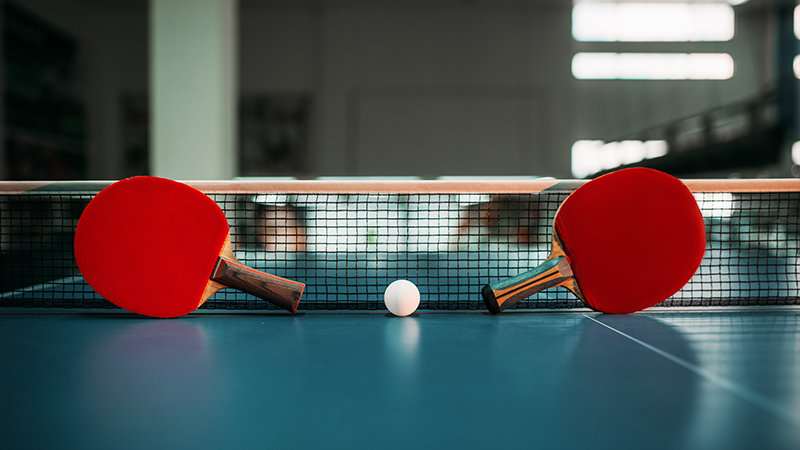
In the fast-paced world of competitive table tennis, where a ball can reach speeds exceeding 100 kilometers per hour, precision is everything.
However, even in a game of such high velocity and technical demand, the flow is occasionally interrupted by a specific official ruling: the let.
For the uninitiated, a let might seem like a mere pause, but for the seasoned professional and the strategic enthusiast, understanding the nuances of this rule is the difference between maintaining mental composure and losing a critical match.
As we explore the “let,” we move beyond simple definitions to understand its role in the integrity of the sport.
Established brands like Heemskerk, which has been at the forefront of gaming tables since 1939, emphasize that a deep knowledge of the rules is the foundation for a superior playing experience.
Defining the Let: The Reset Button of Table Tennis
At its core, a let is an official term in table tennis indicating that a point must be replayed. Unlike a fault or a penalty, a let does not result in a point being awarded to either player.
It serves as a “reset button,” triggered when a malfunction or an unforeseen circumstance disrupts the natural flow of play.
The International Rules of the Game dictate that a let occurs when play is interrupted due to circumstances strictly beyond the players’ control.
This ensures that the outcome of a point is determined by skill and strategy rather than external interference or equipment failure.
Whether you are competing on a professional-grade ITTF net or playing a casual game at home, the let rule remains a universal constant in the sport.
The Anatomy of a Service Let
The most frequent occurrence of a let happens during the service. Because the serve is the only moment in a rally where a player has total control over the ball, the rules regarding its execution are stringent to maintain fairness.
The Net Touch (The “Net” Serve)
A let is called if the served ball, in passing over or around the net assembly, touches the net, provided the service is otherwise correct. For the serve to be “otherwise correct,” the ball must first bounce on the server’s side and then land correctly in the opponent’s court. If the ball hits the net and then lands out of bounds, it is considered a fault, not a let.
Receiver Readiness
A let is awarded if the service is delivered when the receiving player or pair is not ready. However, there is a caveat: if the receiver attempts to hit the ball, they are considered ready, and no let can be claimed.
External Interference During Service
If a sudden distraction—such as a ball from an adjacent table rolling into the playing area or a sudden loud noise—occurs exactly as the server is releasing the ball, a let is granted.
Lets During Regular Play: Handling the Unforeseen
While service lets are common, a let can be called at any time during a rally if the conditions for fair play are compromised. These “in-play” lets are vital for maintaining the competitive integrity of a match.
External Disruptions
In a busy sports hall or club environment, it is common for a ball from another table to enter your court. In such cases, play must stop immediately to prevent injury or unfair distraction, and the point is replayed.
Equipment Malfunction
If the ball becomes damaged or breaks during a point, a let is called. Similarly, if there are technical problems with the table tennis table or the net assembly that affect play, the referee will intervene.
Spectator and Environmental Factors
Suddenly, loud noises or spectator movement that distracts the players can justify a let. In official tournament settings, the referee is the sole arbiter of whether these external factors were significant enough to warrant a replay.
The Strategic Distinction: Let vs. Fault
Understanding the difference between a let and a fault is fundamental for any player looking to dominate the rankings. This distinction often dictates the psychological momentum of a set.
| Scenario | Ruling | Result |
|---|---|---|
| Served ball hits net and lands in | Let | Replay point; no score change |
| Served ball hits net and lands out | Fault | Point awarded to opponent |
| External ball enters court during rally | Let | Replay point; no score change |
| Ball bounces twice on your side | Fault | Point awarded to opponent |
| You hit the ball before it bounces | Fault | Point awarded to opponent |
| Ball hits net during a rally (not serve) | Valid Play | Point continues |
A let has no effect on the score; the players return to their previous positions and the server repeats the serve. A fault, however, is an error that immediately grants the opponent a point.
Match Protocol: Professionalism Under Pressure
When a let occurs, how a player reacts reflects their level of professionalism and sportsmanship. Following the correct procedure ensures the match remains respectful and focused.
Immediate Cessation of Play
As soon as a let situation is identified—such as a net touch on serve or a distraction—players should stop playing immediately. Continuing to play after a let can lead to confusion and disputes.
Communication
In matches without an umpire, clear communication is essential. If a ball from another table enters the area, call “Let” loudly and clearly. In official matches, wait for the referee’s signal before stopping or restarting.
The “No Abuse” Policy
A let should only be claimed for genuine disruptions. Using the let rule to break an opponent’s momentum or to get a “second chance” after a poor serve is considered unsporting behavior and will not be tolerated in competitive play.
The Role of High-Quality Equipment in Rule Compliance
The frequency of technical lets can often be reduced by using superior equipment. Heemskerk, with nearly a century of expertise, designs products that minimize the “unforeseen circumstances” that lead to lets.
- Consistent Net Tension: Professional ITTF-approved nets maintain a consistent height and tension, reducing the likelihood of “lucky” net touches and ensuring that when a ball does hit the net, it reacts predictably.
- Surface Reliability: A high-quality table tennis table provides a uniform bounce across the entire surface. This reduces lets caused by the ball taking an odd jump due to table defects.
- Ball Integrity: Using professional-grade table tennis balls reduces the chances of a ball cracking mid-rally, which would otherwise necessitate a let.
Advanced Insights: The Referee’s Perspective
In high-stakes environments, the referee’s role in calling a let is paramount. They must distinguish between a minor distraction that a player should play through and a significant disruption that warrants a replay.
Referees also look for technical problems with equipment. If a net becomes loose or a table leg shifts, the referee will call a let to rectify the hardware before play resumes.
This level of oversight ensures that the match is decided by the athletes’ performance, not by the environment.
Frequently Asked Questions (FAQ)
Q: If the ball hits the net during a regular rally (not the serve), is it a let?
A: No. If the ball hits the net during a rally and lands correctly on the opponent’s side, it is a valid point, and play continues. The let rule for net touches applies primarily to the service.
Q: How many lets can I have in a row during a serve?
A: There is no limit to the number of lets you can have in a row. As long as the ball hits the net and lands correctly, the point is replayed every time without penalty.
Q: Can I call a let if I am distracted by a loud noise?
A: Yes, if the noise is sudden and unforeseen, it can be grounds for a let. However, in official matches, the final decision rests with the referee.
Q: Does the score change after a let?
A: No. The score remains exactly the same as it was before the point started.
Conclusion: Elevating Your Game Through Knowledge
Mastering the rules of table tennis, including the intricate details of the let rule, is essential for any player committed to excellence. It fosters a fair playing environment, prevents unnecessary conflict, and allows you to maintain your focus on strategy and technique.
By combining this knowledge with world-class equipment from heritage brands like Heemskerk, you ensure that every match is a true test of skill. Whether you are a beginner or a seasoned pro, respect for the rules is what defines a champion.