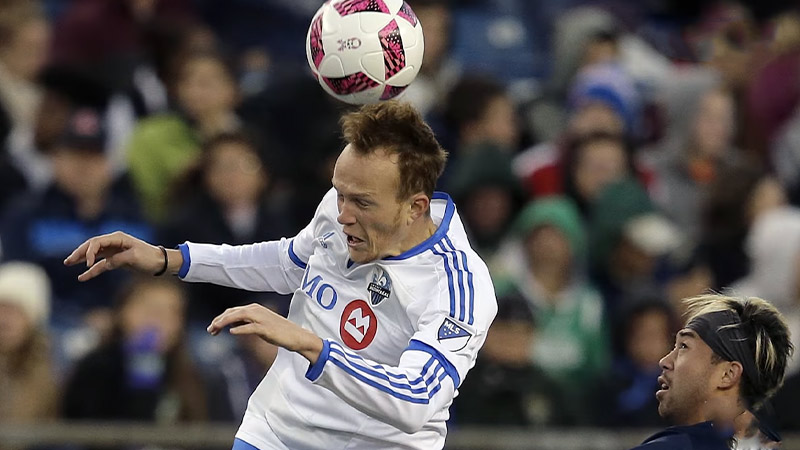
Soccer is often defined by intricate footwork, yet the head remains a vital tool for elite tactical execution. A header in soccer occurs when a player intentionally strikes or redirects the ball using their head to pass, shoot, or clear the ball.
It is a fundamental skill utilized across both offensive and defensive phases of the game. From clinical finishes during corner kicks to towering clearances in the defensive third, mastering this technique is essential for competitive success.
However, modern soccer now balances this athletic skill with rigorous safety standards to protect the long-term well-being of players at all levels.
Understanding the Role of the Header in Modern Tactics
The header is far more than a simple collision between a player and the ball; it is a calculated athletic maneuver used to control the vertical space on the pitch. In competitive play, the ability to win an aerial duel can determine the outcome of a match.
Offensively, headers are primary weapons during set pieces, such as crosses or corner kicks, where players attempt to find a gap in the defense.
Defensively, the header serves as a first line of protection, allowing players to move the ball away from the goal and out of immediate danger.
Because soccer is a game of continuous movement, the header provides a way to interact with the ball when it is too high to be reached by the feet or chest. This verticality adds a three-dimensional layer to the sport, forcing defenses to account for aerial threats.
This skill requires a combination of timing, physical strength, and spatial awareness to be executed effectively under pressure from opposing players.
Categorizing the Key Types of Soccer Headers
The application of a header changes based on the player’s position and the immediate objective on the field. Coaches categorize these movements to help players understand the specific physics and intent required for each scenario.
Offensive and Attacking Headers
The primary goal of an attacking header is to score. To achieve this, players are taught to direct the ball downward toward the corners of the net. By aiming low, the player makes it significantly harder for the goalkeeper to react and reach the ball in time.
This requires a specific “snap” of the neck and core to ensure the ball travels with enough velocity to beat the keeper.
Defensive and Clearance Headers
In contrast to attacking headers, defensive headers focus on distance and height. When a player is in their own defensive zone, the objective is to clear the ball as far away from the goal as possible.
These headers are typically aimed high and long, giving the defensive line time to reset and push the opposing team back. Strength in the neck and upper body is crucial here to ensure the ball is pushed well out of the danger area.
Specialized Tactical Headers
Beyond standard offense and defense, there are specialized techniques used for specific ball trajectories:
- Flick Header: This involves a slight touch that redirects the ball’s existing path toward a teammate or into the goal. It relies on the ball’s incoming momentum rather than the player’s power.
- Diving Header: A player executes this by diving forward to reach a low or fast-moving ball that cannot be reached with the feet. While spectacular, it requires high levels of coordination to land safely after contact.
The Mechanics of Proper and Safe Technique
To execute a header effectively while minimizing the risk of injury, players must adhere to a strict set of technical guidelines. Proper form is the primary defense against the jarring forces associated with aerial play.
Precision in the Point of Contact
Safety and control begin with the part of the head used to strike the ball. Players are instructed to use the center of the forehead, specifically at or near the hairline. This area of the skull is the flattest and strongest, providing a stable surface for redirection.
Using the top or side of the head is discouraged, as it reduces control and increases the risk of injury.
Power Generation Through Core Engagement
A common mistake among beginners is letting the ball hit them. Professional standards dictate an “active strike,” where the player “hits the ball”.
This involves snapping the head and core forward at the moment of contact to generate power and maintain stability. By being the aggressor in the contact, the player’s muscles are braced, which helps stabilize the head and neck.
Maintaining Vision and Physical Balance
Successful heading requires total concentration. Players must keep their eyes open and fixed on the ball until the moment of contact to ensure accuracy. Closing the eyes leads to mistimed headers and potential injury.
Furthermore, players should maintain balance with their knees slightly bent, using their upper body and neck muscles to drive through the ball rather than just using the neck alone.
Modern Safety Regulations and Governing Body Rules
As medical research continues to highlight the importance of brain health, soccer organizations have implemented strict rules regarding heading.
These regulations are designed to reduce the cumulative impact on players, particularly during their developmental years.
Youth Development Restrictions
In the United States, youth soccer has seen significant changes to its curriculum. Children aged 10 and under are generally prohibited from heading the ball during both practice and competitive games.
This ban is intended to protect developing brains from unnecessary impact. For players in the 11–13 age bracket, heading is not banned but is strictly limited to a specific number of repetitions per week during training sessions.
Professional and Global Standards
The focus on safety is not limited to youth players. Professional leagues, including the English Premier League, have introduced guidelines that recommend limits on high-force headers during training sessions.
These changes reflect a global shift in the sport’s culture, prioritizing long-term neurological health over traditional training methods that involved high-volume heading drills.
Why Technique Matters for Long-Term Health
The emphasis on “hitting the ball” rather than letting it hit the player is the cornerstone of modern soccer safety.
When a player uses their neck and core muscles to proactively strike the ball, the force is distributed through the entire upper body rather than being absorbed solely by the head.
This technical nuance is why professional coaching is essential before players are encouraged to use headers in a match environment.
| Feature | Proper Technique | Improper Technique |
|---|---|---|
| Contact Point | Center of forehead/hairline | Top or side of the head |
| Eye Contact | Eyes open, fixed on ball | Eyes closed at contact |
| Movement | Active strike, snapping core | Passive contact (ball hits player) |
| Power Source | Core and neck muscles | Neck muscles only |
The Strategic Value of the Header in Set Pieces
Set pieces—such as corners and free kicks—are where the header shines as a tactical tool. In these dead-ball situations, teams often employ tall players or those with high vertical leaps to act as “target men.”
The goal is to deliver a precise cross into the box where a teammate can use an attacking header to direct the ball into the net.
Because defensive headers are meant for long clearances, defenders must also be adept at reading the flight of the ball to win these aerial duels.
This “battle for the air” is a game within the game, requiring players to use their bodies to shield opponents while maintaining the focus needed to make clean contact with the forehead.
Frequently Asked Questions About Soccer Headers
At what age can players start heading the ball?
In many regions, including the U.S., players can begin limited heading training at age 11, with competitive heading usually becoming more common by age 12 or 13. However, children 10 and under should avoid heading entirely to ensure safety.
Does heading the ball hurt?
When done correctly with the forehead and an active strike, the sensation is one of firm contact rather than pain. Pain usually occurs when the ball strikes the top of the head or if the player is passive during contact.
Why are there limits on heading in training?
Limits are in place to reduce the total volume of impacts a player experiences. Research suggests that cumulative headers, especially high-force ones, can impact long-term brain health, leading leagues like the EPL to issue protective guidelines.
How do I improve my heading power?
Power comes from the core and the “snap” of the upper body, not just the neck. Strengthening your abdominal and back muscles, combined with practicing the timing of your jump, will significantly increase the force of your headers.
Conclusion: Balancing Skill with Safety
The header remains one of the most distinctive and effective skills in soccer, offering a unique way to control the game’s vertical dimension.
Whether you are clearing a dangerous cross or scoring a last-minute goal, the ability to head the ball with precision is a hallmark of a complete player. However, the evolution of the sport has made it clear that safety must come first.
By adhering to age-appropriate rules, limiting training repetitions, and mastering the proper “active strike” technique with the forehead, players can enjoy the tactical benefits of heading while protecting their long-term health.
As the sport continues to adapt to new medical insights, the focus will remain on technical excellence and player welfare. For coaches and players alike, the goal is to respect the power of the header by training smarter, not just harder.
Embracing these safety standards ensures that soccer remains a safe and enjoyable game for generations to come.