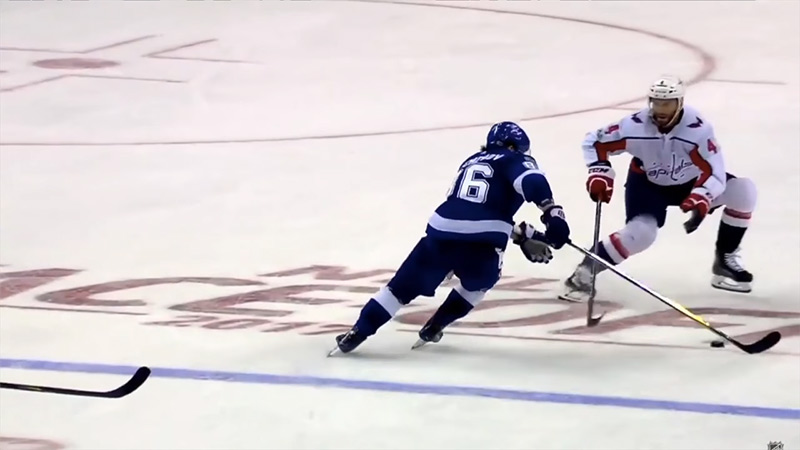
In ice hockey, few individual skills generate as much excitement as a perfectly timed maneuver that leaves a defender out of position or deceives a goaltender for a clear shot at the net.
Broadly known across the sport as a deke, this fundamental offensive technique combines physical mechanics, edge control, and psychological deception.
Whether executing a simple body movement on open ice or attempting a complex stickhandling sequence in tight spaces, understanding how and why a deke works is essential for players at every level of competition.
What is a Deke? (Definition and Etymology)
The term deke is a Canadian linguistic contribution formed as a shortened phonetic abbreviation of the word decoy. Etymologically, a decoy serves to mislead or entice an opponent into making a tactical error.
In ice hockey, a deke refers to any feint, fake, or deceptive maneuver where an offensive player tricks a defensive player or goaltender into shifting out of position while the puck carrier maintains full possession and control.
The primary objectives of executing a deke include:
- Drawing Out Defenders: Forcing a checking opponent to commit prematurely to a specific direction, poke check, or body check.
- Creating Open Ice: Opening clean skating or passing lanes by steering defensive coverage away from targeted space.
- Maintaining Puck Possession: Shielding the puck from stick checks, sweeps, and turnover attempts while in motion.
                     [ Offensive Player Approaching ]
                                    │
                         ┌──────────┴──────────┐
                         ▼                     ▼
               [ Physical Deception ]  [ Speed Modulation ]
                         │                     │
                         └──────────┬──────────┘
                                    ▼
                      [ Defender Commits Weight ]
                                    │
                                    ▼
                      [ Rapid Direction Change ]
                                    │
                                    ▼
                   [ Space Created / Lane Opened ]
Why Beginners Struggle with Deking
A common obstacle for developing hockey players is the tendency to emulate highlight-reel maneuvers performed by elite professional athletes without first building foundational puck control.
Beginners frequently attempt complex multi-step stickhandling tricks at high speeds, only to lose possession before reaching an advantageous scoring or passing area.
Effective deking relies far less on rapid stick movements and far more on functional puck protection, footwork, and spatial awareness.
Trying to perform intricate stick maneuvers without mastering edge control and weight transfer usually leads to predictable play and lost opportunities.
What Makes a Deke Work?
The Priority of Footwork and Speed Modulation
While hand speed and stick blade control are necessary components, what a player does with their feet often dictates the success of a deke.
Stickhandling without changing skating trajectory or velocity allows defensive players to maintain proper gap control and strip the puck.
An effective deke combines stick movement with two key physical adjustments:
- Change of Direction: Shifting body weight to one skate forces the defender to pivot or lean in that direction. Once the defender commits, the puck carrier quickly pushes off the opposite edge to accelerate into open ice.
- Change of Speed: Altering skating pace disrupts a defender’s timing. Approaching a defender at a moderate pace and suddenly accelerating as they reach out with a poke check allows the puck carrier to slide past before the defender can recover.
Psychological Deception and Mental Anticipation
At its core, deking is an exercise in applied psychology and pattern recognition. The process follows a structured three-part sequence:
- Engage the Opponent: Drive directly toward the defender to force a defensive reaction.
- Induce Commitment: Use a fake shot, shoulder shift, or stick extension to persuade the defender that you are taking a specific path.
- Accelerate to Counter: Execute the true maneuver in the opposite direction precisely as the defender commits their weight or extends their stick.
Crucially, expert players do not merely react to a defender’s movement; they anticipate it. For example, when carrying the puck near a defender’s reach, an experienced skater moves the puck within poke-check range to draw the attempt, then pulls it away an instant before contact is made.
This proactive timing requires reading the opponent’s body language and adjusting to their tendencies during the game.
Essential Deques Every Hockey Player Must Master
The Body and Head Fake
The head fake is one of the simplest yet most effective moves in hockey. By briefly directing gaze, head position, and upper body posture toward one side of the ice, the puck carrier deceives the opponent regarding their intended skating lane or passing target.
- Execution Tip: Glance deliberately toward a teammate or open corner while turning your shoulders slightly in that direction. As the defender leans to block that path, keep the puck moving straight or cut sharply to the opposite side.
The Single Deke (Forehand-to-Backhand Shift)
The single deke serves as the primary standard move for one-on-one open-ice encounters. It relies on shifting body weight toward one side before sweeping the puck across the body to the other blade face.
- Execution Tip: Shift your weight onto your lead skate to fake an inside drive. Rapidly pull the puck from your forehand to your backhand (or vice versa), plant your outside edge, and accelerate past the defender’s stick hand.
The Forehand Toe Drag
The toe drag is designed to punish defenders who overextend their stick during a poke check. When a defender reaches out to strip the puck, the attacker uses the toe of the stick blade to pull the puck back toward their body, letting the defender’s stick sweep uselessly through empty air.
- Execution Tip: Extend the puck forward on your forehand to invite the poke check. Turn the blade down, hook the puck with the very tip (toe) of the blade, and pull it inward in an “L” or “J” shape while stepping around the defender.
Advanced Variations: Backhand Toe Drag, Double Deke, and the Datsyuk Deke
As players master basic maneuvers, they can incorporate higher-complexity variations into their game:
- Backhand Toe Drag: Performed on the backhand side, this move uses the heel or toe of the backhand blade face to pull the puck inward. It is especially effective when driving down the wing at a sharp angle to protect the puck in traffic.
- Double Deke: Designed for defenders who do not bite on initial fakes, the double deke chains two rapid directional changes together. The attacker fakes left, immediately fakes right, and then explodes back to the left, taking advantage of the defender’s delayed momentum.
- The Datsyuk Deke: Named after NHL Hall of Famer Pavel Datsyuk, this finesse move is primarily used against goaltenders on breakaways or shootouts. The player approaches at moderate speed, fakes a forehand shot to force the goalie into a butterflied slide, pulls the puck back across their body with the toe of the blade, and lifts it over the goalie’s pad into the open upper portion of the net.
The Myth and Reality of the “Triple Deke”
Popularized in media culture by the 1990s film The Mighty Ducks, the triple deke is widely discussed among recreational players and enthusiasts. In film lore, Coach Gordon Bombay presents it as an unstoppable sequence of three rapid stickhandling moves prior to shooting.
In competitive hockey, there is no standardized, formal rulebook definition for a “triple deke”. However, the concept reflects a real tactical pattern: stringing together multiple quick stick actions or fakes to force a goaltender to shift laterally across their crease, exposing openings through the five-hole or upper corners.
Progression Roadmap – From Puck Protection to Dynamic Deception
Mastering dekes requires a structured training progression. Attempting advanced tricks before establishing core blade control leads to frustration and inconsistent play.
Foundational Puck Control and Edge Work
Before trying to trick opponents, a player must be able to move the puck fluidly around all areas of their body.
- Blade Cupping: Practice rolling your wrists over so the blade face cups the puck on both forehand and backhand passes. This cradling motion keeps the puck settled on the ice.
- One-Handed Extension: Practice reaching out with one hand on the top knob of the stick to sweep pucks back into control. This skill is essential for retrieving loose pucks across the blue line or keeping possession along the boards.
- Skate-to-Stick Recovery: Develop the muscle memory to kick a loose puck from your skate blades back up to your stick blade without stopping or looking down.
Off-Ice Conditioning and Motor Memory
Building hand-eye coordination off the ice allows players to focus on reading the play rather than watching the puck during games.
- Off-Ice Training Surfaces: Use specialized training pucks, synthetic ice tiles, or slide boards in garage or driveway setups.
- Head-Up Habits: Perform basic stickhandling drills while reading numbers off a wall or watching television to ensure your head remains up.
- Soft Hands Practice: Use lightweight wooden or rubber stickhandling balls to practice rapid wrist rotation and narrow-to-wide dribbling drills.
Tactical Application – Defenders vs. Goaltenders
Once mechanical execution becomes automatic, players must adapt their strategy based on who they are facing:
- Against Defensemen (“Dangling”): Focus on protecting the puck while navigating around extended sticks. The goal is to bypass the defender’s reach to gain entry into the offensive zone or drive directly to the high-danger scoring area.
- Against Goaltenders: Focus on changing shot angles and manipulating the goalie’s depth in the crease. Faking a wrist shot forces the goaltender to freeze or commit to a butterfly stance, creating vulnerable spaces under the crossbar or between their pads.
Conclusion
Mastering the ice hockey deke is an ongoing process that connects technical skating skills with psychological deception.
While flashy highlight-reel plays dominate video compilations, the most successful hockey players value effectiveness over flashiness.
A simple, well-timed head fake or speed adjustment that creates two feet of open space is always more valuable than a complex trick that results in a turnover.
Focus on mastering basic puck protection, developing strong edge work, and keeping your head up to read defensive positioning.
As these foundational habits become second nature, deceptive moves will naturally integrate into your game, making you a far more dynamic offensive threat on the ice.