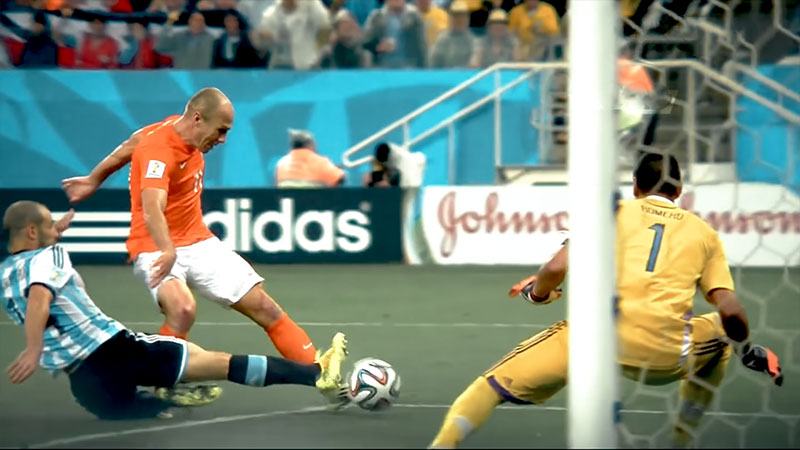
The evolution of the soccer defender represents one of the most profound tactical shifts in modern sports history.
Once regarded as the “stoppers” whose sole objective was to physically obstruct the opposition, today’s defenders are highly technical architects of the game’s offensive flow.
As Pep Guardiola famously observed, football is no longer divided into isolated phases of attack and defense; instead, every action is interdependent.
The Architecture of Defense: Defining the Modern Role
In association football, a defender is an outfield player whose primary role is to stop attacks and prevent the opposition from scoring. However, this definition barely scratches the surface of the complexity inherent in the position today.
Defenders must function as a line of protection for the goalkeeper while simultaneously serving as the primary starting point for counterattacks.
Modern success in the backline requires a multifaceted skill set. It is no longer sufficient to possess only physical strength or height; a top-tier defender must exhibit discipline, exceptional communication skills, tactical intelligence, and explosive speed.
They are expected to manage the ball under high pressure, maintain a secure first touch, and possess the confidence to carry possession out of the defensive third.
The Four Pillars: Categorizing Defensive Specialists
Defensive structures typically fall into four main categories: centre-backs, full-backs, wing-backs, and sweepers.
While the centre-back and full-back roles remain the most common in modern formations, the rise of specialized systems has revitalized the wing-back and sweeper roles in innovative ways.
1. The Centre-Back: The Heart of the Defense
The centre-back, also known as a central defender, operates in the area directly in front of the goal. Historically, this was a rugged, physical role occupied by players tasked with marking center-forwards and winning aerial duels.
In the modern era, teams typically employ two or three centre-backs. Formations like the 4-4-2 or 4-3-3 utilize a pair, whereas a 3-5-2 relies on a trio.
The contemporary centre-back partnership often balances a physically dominant “destroyer” with a more agile, ball-playing partner who can distribute possession effectively.
Legends like Virgil van Dijk and John Stones exemplify this modern archetype—defenders who are as comfortable delivering a 40-yard cross-field switch as they are executing a goal-saving tackle.
2. The Full-Back: The Flank Guard
Full-backs (left-back and right-back) occupy the wide positions of the defensive line. Traditionally, their responsibilities were limited to staying in defense and tracking opposing wingers in 1v1 situations.
However, since the 1950s, the role has become increasingly specialized and dynamic. Modern full-backs are expected to cover immense ground, providing physical obstructions to wingers while making off-the-ball runs into the final third to deliver crosses.
They are the game’s utility players, often possessing the pace of a winger and the stamina of a midfielder.
3. The Wing-Back: The Hybrid Engine
The wing-back is a variation of the full-back with a heavier emphasis on offensive contribution. Usually employed in formations with three centre-backs (such as a 3-5-2 or 5-3-2), wing-backs are responsible for providing the team’s width.
This position is widely considered one of the most physically demanding in soccer, requiring exceptional stamina to fulfill both attacking and defensive duties across the entire length of the pitch.
4. The Sweeper (Libero): The Tactical Safety Net
Positioned between the goalkeeper and the main defensive line, the sweeper’s job is to “sweep up” any balls that breach the primary defense.
This role, pioneered by Karl Rappan and popularized by Franz Beckenbauer, was traditionally the “free” defender—unburdened by man-marking tasks.
While the traditional sweeper has largely disappeared due to the prevalence of zonal marking and the offside trap, the concept has evolved into the “sweeper-keeper”.
Modern goalkeepers like Manuel Neuer and Alisson Becker act as a 12th man, frequently leaving their goalmouth to intercept through balls and participate in the team’s build-up play.
Technical Proficiency: The Defensive Toolkit
To excel at the highest level, a defender must master a specific range of technical actions. These are not merely physical responses but calculated tactical decisions.
The Art of the Tackle
Tackling is the act of dispossessing an opponent or gaining control of a loose ball. There are three fundamental techniques:
- Block Tackle: Used primarily for “50-50 balls,” where the defender uses their body and feet to shield the opponent and knock the ball away.
- Poke Tackle: Executed when a defender is behind or horizontal to the attacker, using the tip of the foot to “poke” the ball away without making contact with the player.
- Slide Tackle: The riskiest maneuver, where the defender purposely slides into the ball. This requires precise timing to avoid committing a foul.
1v1 Defending: Shut Down, Slow Down, Sit Down
Effective 1v1 defending is a psychological and physical battle. The defender’s objective is to reduce the distance available to the opponent (“shut down”), decelerate as they approach to avoid being bypassed (“slow down”), and adopt a low, side-on body stance to force the attacker away from the goal (“sit down”).
Aerial Dominance and Heading
Defenders, particularly centre-backs, must be commanding in the air. This is crucial for defending set-pieces and long, direct balls.
Successful heading requires vertical lower-body power for height, upper-body strength to hold off opponents, and impeccable timing.
The Strategic Clearance
Often under-appreciated, a clearance is the act of redirecting the ball away from high-pressure zones like the penalty area.
Effective clearances are measured by height, depth, and distance, ensuring the team has time to regroup or potentially regain possession.
The Modern Playmaker: Tactical Trends and Innovations
The tactical landscape of soccer is currently defined by how defenders are used to disrupt traditional structures.
The Inverted Full-Back
One of the most significant recent trends is the use of the inverted full-back. Popularized by Pep Guardiola, this involves a full-back moving into central midfield when their team has possession.
This movement creates a numerical overload in the middle of the pitch, allowing the team to dominate possession and providing better passing angles for ball progression.
Players like Trent Alexander-Arnold and João Cancelo have redefined their teams’ offensive output from this position.
The Overlapping Centre-Back
Pioneered by Sheffield United, the overlapping centre-back involves the wider centre-backs in a back-three, making forward runs into the final third.
This tactic is designed to disrupt deep-sitting defensive blocks by creating unexpected overloads in wide areas, forcing the opposition out of their organized structure.
Ball Management and Passing Range
Today’s defenders are secondary playmakers. They are expected to possess a varied passing range—from short, incisive balls into the midfield to expansive cross-field switches that shift the point of attack.
High-level defenders must scan 360 degrees, maintaining spatial awareness to identify the best options for ball progression while under pressure.
Psychological Attributes: The Invisible Skills
Beyond physical and technical prowess, the elite defender is defined by their mental acuity.
- Vision and Anticipation: Reading the game allows a defender to intercept passes and control offside positions before a threat even materializes. They must recognize “triggers”—cues in the opponent’s movement that signal when to press high or when to drop back to cover space.
- Positioning and Awareness: Defenders must maintain constant awareness of their positioning relative to the goal, their teammates, and the attackers. This includes “marking in advance,” where a defender covers space rather than a specific player when the ball is on the opposite side of the pitch.
- Composure and Communication: Because defenders operate in high-risk zones, composure is vital to avoid giving the ball away in dangerous areas. They act as the “eyes” of the team, constantly communicating instructions to the midfield and organizing the backline.
Case Studies in Excellence
The history of the position is marked by individuals who pushed the boundaries of what a defender could achieve.
- John Terry & Tony Adams: Represent the pinnacle of the traditional “stopper”—brave, physically imposing, and unmatched in their ability to organize a defensive unit through leadership and physical sacrifice.
- Franz Beckenbauer: The definitive libero, whose elegance on the ball and ability to transition from defense to attack changed the tactical perception of the position.
- Paolo Maldini: A master of both the full-back and centre-back roles, known for his tactical intelligence and ability to defend with such precision that he rarely needed to resort to sliding tackles.
- Virgil van Dijk: The modern archetype who combines the physical dominance of the past with the technical ball-management and passing range required in the contemporary game.
Enhanced FAQ: Understanding the Nuances
What is the difference between a full-back and a wing-back?
A full-back is typically part of a defensive line of four and has a more balanced role between defending and attacking. A wing-back is used in formations with three centre-backs and has a much higher emphasis on offensive width and stamina.
Why do modern defenders need to be good at passing?
Because many teams now employ a possession-based style that starts from the back. If a defender cannot manage the ball or find a teammate, they become a weak link that the opposition can exploit through high-pressure.
What is a “stopper”?
Historically, a stopper was an exclusively defensive player tasked with winning every confrontation, primarily through tackling and physical pressure. This role is now more commonly found in youth soccer than in elite professional systems.
How do defenders help the offense?
Defenders help by recycling possession, creating overloads in midfield (inverted full-backs), delivering crosses into the box, and starting counterattacks through long, pinpoint passes.
The Foundations of Success
The defender remains the cornerstone of any championship-winning team. While the flashier offensive players often capture the headlines, the modern defender’s role is perhaps the most demanding on the pitch. They must be athletes, tacticians, and creators all at once.
As the game continues to evolve, the distinction between positions will likely continue to blur. The “total football” philosophy means that tomorrow’s defenders will need even greater versatility, blending the grit of the 1990s with the technical mastery of the 2020s.
For any aspiring player, understanding these roles is the first step toward mastering the most complex and rewarding position in soccer.