In the high-stakes world of modern football, the ability to transition the ball from the periphery of the pitch into the heart of the scoring zone is a hallmark of elite teams.
This maneuver, known as the cross, remains a fundamental pillar of offensive strategy, providing a direct bridge between wide-area possession and clinical finishing.
While often perceived as a simple delivery, the modern cross is a complex tactical instrument requiring exquisite timing, collective synchronization, and technical mastery.
Defining the Soccer Cross: More Than a Pass
At its core, a cross is a medium-to-long-range pass played from a wide area—typically the flanks—into the opponent’s penalty area with the explicit intent of creating a scoring opportunity.
It is characterized by its trajectory across the “mouth of the goal,” where it is intended to be met by a teammate who has prepared themselves to strike.
Whether executed by a marauding fullback or a traditional winger, the cross is a strategic attacking tool designed to bypass a compact midfield and inject chaos into the opposing defense.
Success in this area is not merely an individual achievement; it is the culmination of a coordinated team decision.
The Tactical Evolution: From “Hit and Hope” to Precision Engineering
The historical perception of the cross was often limited to a desperate long ball sent into a crowded box without significant preparation.
However, the contemporary game has transformed this action into a highly nuanced discipline. Elite coaches no longer view the cross as an end-of-play event but as a consequence of intelligent play.
Modern methodologies prioritize creating defensive imbalances through prior movements and the intelligent occupation of space before the ball is even struck. This evolution has birthed a variety of deliveries tailored to specific match contexts:
- Lofted or Floated Crosses: High-trajectory balls designed to clear the reach of central defenders and drop into space.
- Driven Crosses: High-velocity deliveries meant for rapid action, often harder for goalkeepers to track.
- Low Crosses and Cut-backs: Strategically aimed backward from the endline toward the edge of the penalty box to find late-arriving midfielders.
By diversifying the delivery, teams force defenders to constantly adjust their positioning, making the defense less predictable and more susceptible to error.
The Mechanics of a World-Class Delivery
Technical execution is the foundation of an effective cross. A “good” delivery is defined by its ability to leave ample room for the attacker to move to the ball without granting an advantage to the defender.
Precision in placement is critical; documentation suggests that effective crosses are generally directed toward the “far post”—the goalpost farthest from the passer.
Targeting the far post is a deliberate strategic choice. If a ball drops too short or stays near the near post, it becomes significantly easier for the defense to collect or clear.
Conversely, a ball met at the far post can be redirected into the goal rapidly, often catching the goalkeeper out of position as they struggle to adjust their stance to the changing angle.
Beyond placement, two other technical keys are paramount:
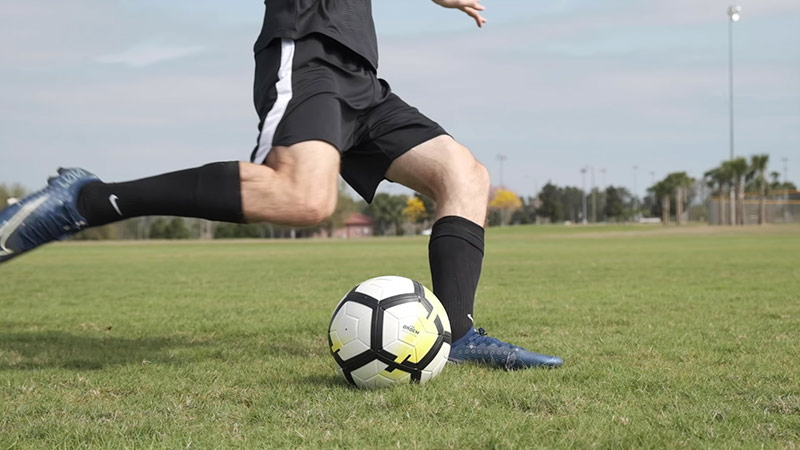
- Body Positioning: The angle of the kicker’s body at the moment of contact directly dictates the power, curve, and height of the ball.
- Timing and Anticipation: An early cross can catch a retreating defense before they have time to organize, while a delayed delivery may allow for more sophisticated offensive patterns.
Attacking the Box: The Role of the Finisher
A cross is only as effective as the player receiving it. Forwards and midfielders cannot be passive observers; they must attack the ball with determination and conviction. The timing of the run is perhaps the most decisive factor in converting a delivery into a goal.
Effective finishers utilize a “machine-like” synchronization with the passer. This involves identifying vacant pockets of space and anticipating the defender’s movement. Key areas of occupation include:
- The Near Post: To flick the ball on or catch the defense sleeping on short deliveries.
- The Penalty Spot: To provide an option for cut-backs and low crosses.
- The Far Post: To exploit the widest angles and keep the goalkeeper off-balance.
Defensive Excellence: Neutralizing the Threat
Defending against the cross is a test of organizational discipline and individual focus. The primary objective for a defender is to always stay between the opponent and the goal while maintaining a compact line.
Key defensive principles include:
- Goalkeeper Command: The keeper must be prepared to step up within the goal box to punch or catch the ball, effectively ending the threat before a shot can be taken.
- Anticipation: Reading the passer’s intent and the ball’s trajectory allows a defender to intercept the play before it reaches a dangerous target zone.
- Communication: Constant verbal cues between defenders and the goalkeeper are essential to ensure all attackers are marked, and no “blind side” runs are left unchecked.
Developing Mastery: Age-Specific Training Frameworks
To internalize these complex tactical and technical concepts, players must engage in structured, analytical training that simulates real-match scenarios.
Foundation Level (U-8): The “Sideways Goal”
At the youngest ages, the goal is to introduce the concept of width. The “Sideways Goal” drill encourages players to run down the flank and send a ball through a secondary goal set at a ninety-degree angle to the real one.
This teaches children to keep the field spread out and understand the directionality of a cross before they enter the chaos of the penalty area.
Intermediate Development (U-9 to U-12): “Dribble and Pass”
As players mature, drills should incorporate fitness, ball control, and goalkeeping interaction. The “Dribble and Pass” exercise utilizes the full length of the field, requiring players to make wall passes in the midfield before sprinting to the corner arc to deliver a cross. This reinforces the idea that a cross is the result of a buildup play rather than an isolated action.
Advanced Mastery (13 and Up): “Bahia” and “Many Points”
For older players, training focuses on precision and the use of the non-dominant foot.
- The Bahia Drill: Players are organized into five lines, with crossers alternating from the sidelines and finishers timing their runs to specific zones (near post, far post, and center box).
- Many Points Drill: This competitive exercise awards points based on the difficulty of the finish—such as diving headers or full volleys—to incentivize attackers to meet the ball in the air with maximum effort.
The Competitive Advantage
Mastering the cross provides a decisive edge in modern competition. It is a skill that blends individual technical brilliance with collective tactical awareness.
By integrating advanced analytics to evaluate performance and focusing on the synchronization between the wing and the box, teams can turn a standard phase of play into a consistent scoring of goals.
Frequently Asked Questions
What is the “Target Zone” for a cross?
The ideal target zone generally sits between the top of the penalty box and the top of the goal box, specifically leaning toward the far post to maximize shooting angles.
Why is communication so important in crossing?
Communication ensures that the passer knows exactly where the finisher is heading, and vice versa. Without it, the “machine-like” synchronization required for elite scoring is impossible to achieve.
How do goalkeepers defend against crosses?
Goalkeepers must be proactive, using their ability to anticipate trajectories to either catch the ball or punch it out of the danger zone before an attacker can make contact.
Conclusion
The cross remains a fundamental tactical tool in football, evolving from a simple long ball into a sophisticated method of collective synchronization.
Success relies on both the precise delivery from the flanks and the determined movement of attackers meeting the ball with conviction.
By mastering various techniques—such as driven balls or cut-backs—teams create defensive imbalances that lead to scoring opportunities.
Defensively, organization and anticipation are vital to neutralizing these threats. Ultimately, consistent development through age-appropriate drills ensures players internalize these complex concepts.
Whether delivering to the far post or defending your goal, mastering the cross provides a decisive competitive advantage.