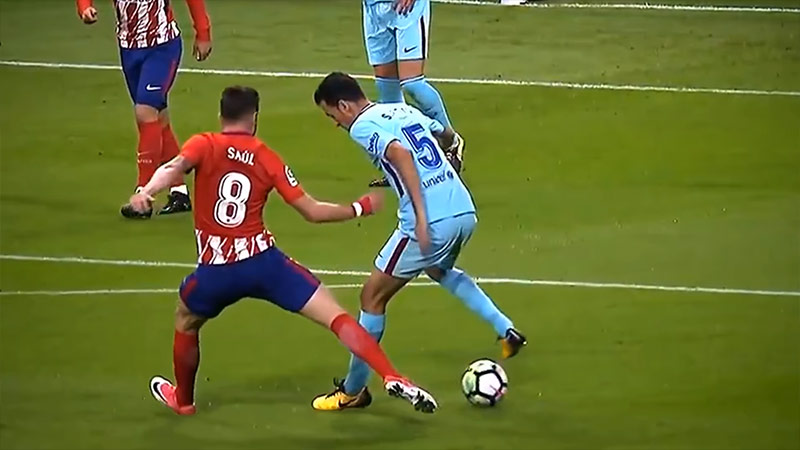
In the architecture of modern football, the Central Defensive Midfielder (CDM) represents the structural foundation upon which both defensive stability and offensive fluidity are built.
Often referred to as the “Number 6,” this role has evolved from a purely destructive force into a sophisticated tactical pivot that dictates the tempo and rhythm of the entire match.
To understand the CDM is to understand the equilibrium of a team; they are the connective tissue between the defensive backline and the creative attacking units.
Defining the Strategic Pivot: What is a CDM?
The Central Defensive Midfielder occupies the critical space directly in front of the center-backs—a zone often called “the hole”.
While the role’s primary objective is to provide a shield for the defense, the modern interpretation of the position demands a much broader technical and cognitive profile.
The CDM is essentially the tactical anchor. When the team is out of possession, they are the first line of defense against central incursions.
When in possession, they become the primary outlet for recycling the ball and initiating the transition from the defensive third into the attacking phases.
This dual responsibility requires a player who can seamlessly alternate between physical aggression and composed playmaking.
The Defensive Architecture: Shielding and Structural Integrity
The most traditional and visible aspect of the CDM’s role is their defensive contribution. This is not merely about making tackles; it is about managing the geometry of the pitch to minimize the opponent’s options.
1. Positional Discipline and Screening
A high-level CDM does not chase the ball; they manage space. By maintaining a disciplined position in front of the center-backs, the CDM forces the opposition to play wide, effectively neutralizing the most dangerous central passing lanes.
This “screening” process prevents strikers from receiving the ball in “the hole,” forcing the attacking team into less efficient areas of the pitch.
2. The Art of the Interception
While slide tackles are often highlighted in highlight reels, elite CDMs prioritize interceptions and ball recoveries. This requires an advanced ability to read the game—anticipating the opponent’s next move before the pass is even made.
By stepping into passing lanes, the CDM regains possession without ever having to go to the ground, allowing for an immediate counter-offensive transition.
3. Second Ball Management
In the physical duels that characterize the midfield, many balls are partially cleared or deflected. The CDM is responsible for “cleaning up” these second balls.
This requires high situational awareness and a physical presence to win 50/50 challenges, ensuring that the team maintains control over the middle of the park.
The Transition Architect: Mastering the Offensive Pivot
Once the ball is won, the CDM’s role shifts instantly from a “destroyer” to a “creator.” In the modern game, a CDM who cannot pass is a liability. They must act as the team’s “safety valve,” always available to receive the ball under pressure.
1. Ball Recycling and Tempo Control
One of the most underrated skills of a CDM is the ability to “recycle” possession. This involves receiving the ball from a pressured teammate and moving it quickly to a player in a better position, often laterally or backward to the center-backs, to reset the attack. This keeps the ball moving and tires out the opposition’s pressing units.
2. Verticality and Line-Breaking Passes
While recycling possession is essential, the elite CDM also possesses the vision to play vertical, line-breaking passes.
These are passes that bypass the opponent’s midfield line and reach the attacking midfielders or strikers directly. This skill effectively turns a defensive moment into a goal-scoring opportunity in a matter of seconds.
3. Long-Range Distribution
Switching the point of attack is a hallmark of the deep-lying playmaker variant of the CDM. By using accurate long balls to find wingers on the opposite side of the pitch, the CDM can exploit the opponent’s defensive shifts, creating 1v1 situations in wide areas.
The Cognitive Dimension: The Power of Scanning and Awareness
The physical and technical requirements of the CDM are significant, but the mental requirements are what truly separate world-class players from the rest. The CDM must process a staggering amount of information in real-time.
1. Scanning Frequency
Elite midfielders scan their environment—looking over their shoulders to check the positions of teammates and opponents—constantly.
This “mapping” of the pitch allows them to know their next move before they receive the ball. A CDM who does not scan is prone to being caught in a “blind-side press,” leading to dangerous turnovers in the central third.
2. Communication and Leadership
Because the CDM sits in the center of the pitch, they have a panoramic view of the game. They are often the most vocal players, directing the positioning of the full-backs, organizing the midfield press, and alerting teammates to runners.
They are the tactical coaches on the field, ensuring that the team’s shape remains compact.
3. Emotional Intelligence and Composure
The CDM operates in the most congested and high-pressure area of the field. They must remain calm when surrounded by multiple opponents. Panic at the base of the midfield often leads to catastrophic errors; therefore, a high level of composure is a non-negotiable trait.
Archetypes of the Modern CDM
Not all CDMs play the role in the same way. Depending on the manager’s tactical philosophy, a CDM might lean more toward defensive destruction or offensive orchestration.
- The Destroyer: This archetype focuses almost exclusively on breaking up play. They are physically imposing, excellent tacklers, and prioritize defensive coverage over ball progression. Their job is to “win it and give it” to more creative teammates.
- The Regista (Deep-Lying Playmaker): Popularized in European systems, the regista operates from the CDM position but functions as the primary playmaker. While they still have defensive duties, their main value lies in their passing range and ability to dictate the game’s rhythm.
- The Anchor: This is the most tactically rigid version of the role. The anchor rarely leaves the central zone, acting as a fixed point around which the rest of the team rotates. They provide the ultimate insurance policy for adventurous full-backs.
Physical Performance and Endurance
The CDM position is one of the most physically demanding on the pitch. They often cover the highest distance of any player, as they must transition between support for the defense and support for the attack constantly.
- Stamina: The “engine” in “engine room” refers to the aerobic capacity required to maintain high-intensity movement for 90 minutes.
- Functional Strength: While they don’t necessarily need to be the tallest players, they must have the core strength to hold off opponents while shielding the ball.
- Agility: Because they operate in tight spaces, the ability to change direction quickly and navigate through a crowd of players is essential.
Tactical Integration: The CDM in Different Formations
The role of the CDM shifts slightly depending on the formation being utilized.
- The Single Pivot (4-3-3): In this system, one CDM sits behind two more advanced midfielders. This requires the highest level of positional discipline, as there is no other defensive partner in the central lane.
- The Double Pivot (4-2-3-1): Here, two CDMs work in tandem. This allows for more flexibility; one player can “sit” while the other “bites” or joins the attack. Communication between the two is vital to ensure they don’t both vacate the central space simultaneously.
Frequently Asked Questions
What is the difference between a CM and a CDM?
A Central Midfielder (CM) typically has a “box-to-box” role, contributing equally to both defense and attack. A Central Defensive Midfielder (CDM) is more specialized, focusing primarily on the defensive structure and deep-level distribution.
Why is the CDM called the “Number 6”?
In traditional numbering systems, the numbers 2 through 5 were assigned to the defenders. The number 6 became the standard for the player sitting immediately in front of them, acting as the bridge to the attack.
Can a small player be a successful CDM?
Absolutely. While height can be an advantage for aerial duels, many of the greatest CDMs in history have been shorter players who relied on a low center of gravity, exceptional balance, and elite tactical reading of the game to dominate the midfield.
How can a player improve their CDM skills?
Focus on three areas: scanning frequency (checking your surroundings), passing accuracy under pressure, and positional discipline. Watching professional CDMs and analyzing their movement off the ball is also highly effective.
Conclusion: The Unsung Pillar of Success
The Central Defensive Midfielder is the ultimate selfless role. They rarely receive the accolades of the prolific striker or the flashy winger, yet no championship-winning team functions without a master in the “engine room”.
By balancing the dark arts of defensive disruption with the precision of modern playmaking, the CDM ensures that their team remains both hard to beat and impossible to ignore.
Mastering the position requires a lifelong commitment to tactical education and physical conditioning.
Whether you are a “destroyer” or a “regista,” your primary goal remains the same: to be the heartbeat of the team, the shield for the defense, and the architect of the attack.
In the complex puzzle of a soccer match, the CDM is the piece that holds everything else together.