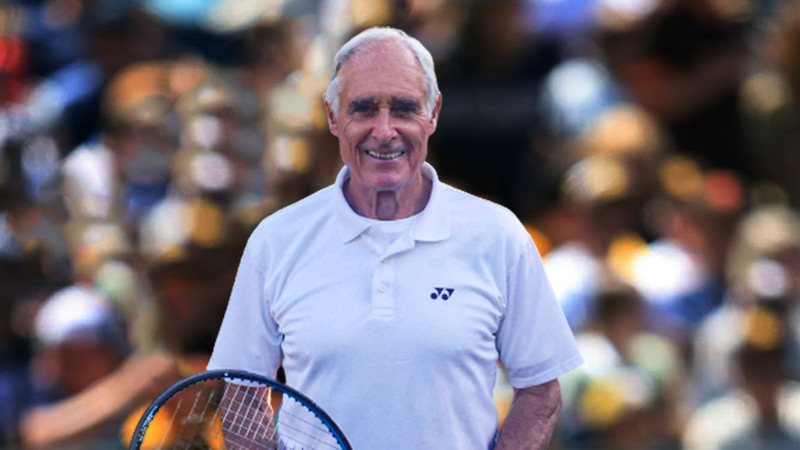
Former British No. 1 Roger Taylor remains a respected figure in London at 84 years old. After a storied career defined by three Wimbledon semi-finals and two US Open doubles titles, Taylor recently released his June 2025 autobiography, The Man Who Saved Wimbledon.
While he remains connected to local tennis through his wife, Alison, he is currently managing serious health challenges, including prostate cancer and amyloidosis.
His legacy is anchored by his courageous decision to defy the 1973 player boycott to play for the public, a choice that solidified his status as a permanent icon of British sportsmanship and integrity.
What Happened to Tennis Player Roger Taylor?
Roger Taylor has transitioned from a high-performance athlete to a senior statesman of the sport, balancing a public legacy with private health battles. His life in 2025 is a mixture of literary celebration and medical resilience.
Managing Dual Health Diagnoses in Senior Years
At 84, Taylor is currently navigating the complexities of dual health diagnoses: prostate cancer and amyloidosis. Despite these serious medical challenges, he continues to reside in London with his second wife, Alison.
His resilience in the face of these conditions mirrors the tenacity he once displayed on the grass courts of SW19.
He remains a visible part of the tennis community, occasionally attending local initiatives and supporting the sport alongside his wife, who continues her work as a prominent tennis coach.
Reclaiming the Narrative with a New Autobiography
In June 2025, Taylor released his official biography, titled The Man Who Saved Wimbledon. This publication has provided a platform for Taylor to share previously unknown details of his life and career, particularly the emotional and psychological toll of his most controversial professional decisions.
The book serves as a definitive account of his rise from public parks to international stardom, offering fans a deep look into the man behind the “Handsome Eight” persona.
The Formative Years of a British Tennis Icon
The journey of Roger Taylor began far from the manicured lawns of prestigious clubs, rooted instead in the industrial landscape of South Yorkshire. His early development was defined by a self-made work ethic and familial support.
Honing Skills Against the Walls of Sheffield
Born in Sheffield in 1941, Taylor’s introduction to the game was humble. He was taught to play by his mother and spent countless hours perfecting his strokes by hitting tennis balls against park walls.
This grassroots beginning instilled a unique grit in his playing style. He made his tournament debut in 1958 and quickly proved his potential by securing his first title at the Lee-on-Solent Open just a year later in 1959.
These early victories paved the way for a transition from a local standout to a national prospect.
Breaking Through as an Amateur Giant-Killer
Taylor’s rise to international prominence was marked by significant “upsets” that signaled the arrival of a new force in British tennis.
In 1964, while still competing as an amateur, he made waves at the US National Championships by defeating the top-seeded Fred Stolle. This victory propelled him to the quarter-finals and established his reputation as a formidable opponent on any surface.
By 1967, he had achieved his first deep run at his home Grand Slam, reaching the Wimbledon semi-finals and capturing the imagination of the British public.
Trailblazing the Professional Era with the Handsome Eight
As tennis moved toward the Open Era, Roger Taylor played a pivotal role in changing how the sport was organized and perceived. He was at the forefront of the movement to professionalize the game.
Joining Lamar Hunt’s World Championship Tennis
In 1968, Taylor became a historical trailblazer when he was signed by multi-millionaire Lamar Hunt as the only British member of the “Handsome Eight.”
This elite group was instrumental in establishing the World Championship Tennis (WCT) tour, which effectively forced the transition into the professional era we know today.
Being part of this exclusive group not only elevated his global profile but also placed him at the center of the sport’s commercial and structural evolution during a period of massive upheaval.
Achieving Peak Performance in Singles and Doubles
While Taylor is often remembered for his singles exploits, his versatility allowed him to dominate the doubles circuit as well.
In 1970, he reached the semi-finals of both Wimbledon and the Australian Open, famously stunning the defending champion Rod Laver along the way.
His mastery was further cemented in the early 1970s when he secured back-to-back US Open Men’s Doubles titles. He won in 1971 alongside John Newcombe and defended the title in 1972 with Cliff Drysdale, proving his elite status among the world’s best.
The Moral Courage of the 1973 Wimbledon Boycott
The year 1973 stands as the most defining chapter of Roger Taylor’s career, showcasing a level of individual integrity that transcended the sport itself. This period remains the emotional core of his recent biography.
Choosing the British Public Over Peer Pressure
During the 1973 season, the Association of Tennis Professionals (ATP) organized a massive boycott of Wimbledon to protest the suspension of Yugoslav player Nikola Pilić.
While 81 of his fellow professionals refused to play, Taylor—then the British No. 1—made the solitary decision to defy the strike. He felt a profound obligation to the British public and the prestige of the tournament.
While this decision preserved the event’s credibility for the fans, it resulted in Taylor being ostracized by many of his peers, an experience that took a significant psychological toll on him for years to follow.
The Borg Match: An Unmatched Act of Sportsmanship
Taylor’s 1973 run was also marked by a legendary act of fairness during his quarter-final match against a 17-year-old Björn Borg.
When the umpire awarded Taylor a match point that Borg disputed, Taylor voluntarily offered to replay the point despite it being a critical moment in the match.
He won the replayed point anyway, advancing to his third Wimbledon semi-final. This gesture earned him the permanent adoration of fans and solidified his reputation as a man who valued the spirit of the game above the result.
Roger Taylor’s Grand Slam Career Record Summary
The following table highlights the remarkable consistency and success Roger Taylor achieved across all four Grand Slam tournaments throughout his career.
| Tournament | Best Singles Result | Best Doubles Result |
|---|---|---|
| Wimbledon | Semi-Finalist (1967, 1970, 1973) | Quarter-Finalist (1968, 1969, 1973) |
| US Open | Quarter-Finalist (1964) | Champion (1971, 1972) |
| Australian Open | Semi-Finalist (1970) | Quarter-Finalist (1962) |
| French Open | Quarter-Finalist (1973) | Third Round (1963) |
The James Bond Secret and Life Beyond the Baseline
Beyond the confines of the tennis court, Taylor’s life included extraordinary opportunities that could have altered his path toward Hollywood. His personal choices reflected a deep commitment to his family.
Turning Down the Role of 007
In the late 1960s, Taylor was heavily considered as a potential replacement for Sean Connery in the role of James Bond. He successfully advanced through several screen tests and was on the verge of a cinematic career.
However, he famously turned down a swimsuit audition at Pinewood Studios because his first wife disapproved of the idea. He chose his marriage over the chance to become one of the most iconic characters in film history, and the role eventually went to George Lazenby.
Building a Legacy in Business and Coaching
After retiring from competitive play in 1980 with six ATP singles titles and over 30 career titles overall, Taylor focused his energy on business and leadership.
He successfully launched and operated a tennis holiday business for several decades, sharing his passion for the game with enthusiasts.
Simultaneously, he took on significant coaching roles, leading the British Ladies Wightman Cup team to a victory in 1978 and eventually serving as the Great Britain Davis Cup Captain from 2000 to 2004.
Coping with Personal Tragedy and Heartache
Despite his professional successes, Taylor’s private life has been marked by profound sorrow. His ability to persevere through loss has been a testament to his character.
The Loss of His Son Greig
One of the most challenging periods of Taylor’s life followed the untimely death of his son, Greig Taylor. Like his father, Greig was a talented tennis player, but he tragically passed away at the young age of 46.
This deep family heartache has been a significant part of Taylor’s journey, yet he has managed to maintain his connection to the tennis world, often supported by his second wife, Alison. His story is not just one of athletic triumph, but of human endurance in the face of grief.
Frequently Asked Questions About Roger Taylor
Is Roger Taylor still alive?
Yes, Roger Taylor is currently 84 years old and living in London with his wife, Alison. While he is managing dual health diagnoses of prostate cancer and amyloidosis, he remains active in the community and recently celebrated the release of his autobiography.
Why is Roger Taylor called “The Man Who Saved Wimbledon”?
The title refers to his decision during the 1973 ATP boycott. As the British No. 1, his refusal to join 81 other players in the strike ensured that the tournament maintained its credibility and gave the British public a home favorite to support during a crisis for the sport.
Did Roger Taylor almost play James Bond?
Yes, in the late 1960s, he advanced past screen tests to potentially replace Sean Connery. He ultimately turned down the final swimsuit audition because his first wife was uncomfortable with the role, leading to George Lazenby being cast as 007 instead.
The Enduring Spirit of a Champion
Roger Taylor’s life serves as a powerful reminder that a legacy is built on more than just trophies and rankings.
While his two US Open doubles titles and three Wimbledon semi-finals place him among the elite of British tennis history, it is his moral compass that truly sets him apart.
Whether he was replaying a point for a young Björn Borg or standing alone against a boycott to serve the fans, Taylor always prioritized the integrity of the game.
Today, as he faces personal health challenges, his story continues to inspire a new generation of players to value character as much as a cross-court winner.
For those looking to dive deeper into his remarkable journey, his 2025 autobiography offers a profound look at a man who truly gave his all to the sport.