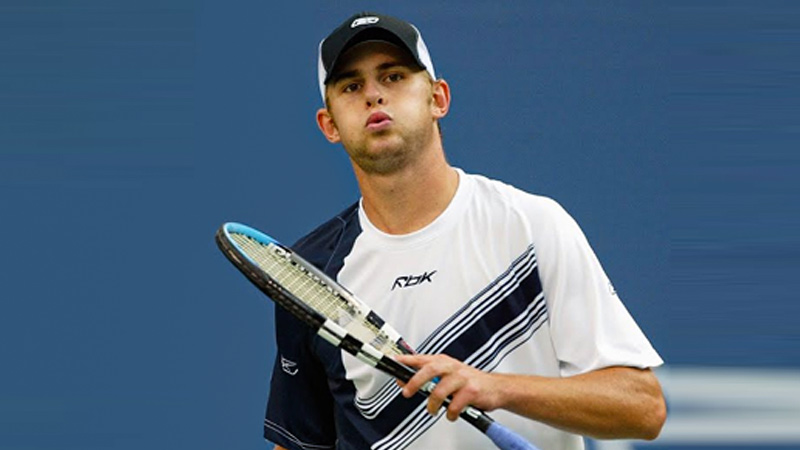
Andy Roddick, the last American man to win a Grand Slam singles title, transitioned from a teenage prodigy to a global icon before retiring at age 30 in 2012.
Today, Roddick has reinvented himself as a media mogul and savvy entrepreneur based in Austin, Texas. He manages a diverse portfolio, including a commercial real estate empire focused on triple-net leases and the premium bourbon brand Sweetens Cove.
By balancing his role as a leading tennis analyst on his podcast Served with significant philanthropic work through his foundation, Roddick’s post-retirement life is a masterclass in professional evolution.
The Tennis Legacy of the Last American World No. 1
Andy Roddick’s playing career was defined by a historic 155 mph serve and an unwavering competitive spirit that kept him in the ATP top ten for nine consecutive years.
His journey from a 17-year-old professional to the top of the rankings remains the gold standard for American men’s tennis in the 21st century.
The 2003 US Open Victory and Rise to World No. 1
The year 2003 remains the most significant milestone in Roddick’s athletic history. At just 21 years old, he secured his first Grand Slam title at the US Open, a victory that propelled him to the World No. 1 ranking.
This achievement solidified his status as the face of American tennis following the era of Pete Sampras and Andre Agassi. His game was built on raw power, specifically a blistering flat forehand and a serve that held the world record for speed at 155 mph for years.
During this peak, he was not only a champion but a cultural phenomenon, representing the peak of athletic performance on the global stage.
Defining Rivalries with the “Big Three” Era
Roddick’s career is often viewed through the lens of his battles with the “Big Three”—Roger Federer, Rafael Nadal, and Novak Djokovic.
Despite the dominance of these rivals, Roddick remained incredibly consistent, reaching four additional Grand Slam finals between 2004 and 2009.
The most memorable of these was the 2009 Wimbledon final against Roger Federer, a marathon match that ended 16-14 in the fifth set.
While he did not take home the trophy that day, his performance earned him universal respect for his grit and technical evolution. He maintained a top-ten presence from 2002 until 2010, proving his longevity in an era of unprecedented competition.
The Decision to Retire at Age 30
On his 30th birthday during the 2012 US Open, Roddick surprised the sports world by announcing his retirement. His reasoning was deeply personal and strategic: he refused to play if he could not maintain his elite standards.
He did not want to rely on wildcard entries or be a “middle of the pack” player after being a champion for so long. He retired while still highly competitive, having won his 32nd career title in Eastbourne just a month prior.
This exit allowed him to walk away on his own terms and focus entirely on the next chapter of his life in Austin.
How Andy Roddick Built a Real Estate Empire
Beyond the tennis court, Roddick has cultivated a sophisticated investment strategy that provides long-term stability and significant financial growth. Rather than following typical celebrity endorsement paths, he focused on tangible assets and market fundamentals.
The Strategy of Triple-Net Lease Investments
One of the most successful aspects of Roddick’s second act is his foray into commercial real estate. Starting around the 2008 financial crisis, he partnered with Phil Myers to build a massive portfolio.
His primary strategy involves triple-net leases, a model where the tenant is responsible for all operating expenses, including taxes, insurance, and maintenance.
Roddick focuses on stable, long-term assets such as bank buildings and medical facilities. This approach has allowed him to generate consistent cash flow while his properties appreciate, mirroring the consistency he once showed on the baseline.
Lifestyle Brands and the Success of Sweetens Cove
Roddick has also made significant waves in the lifestyle and beverage industry. He is a co-founder of Sweetens Cove, a premium bourbon brand that has gained a cult following among spirits enthusiasts.
This venture is a collaborative effort with other high-profile figures, including NFL legend Peyton Manning. The brand is tied to the Sweetens Cove Golf Club in Tennessee, a nine-hole course that has been praised as one of the best in the United States.
By blending luxury spirits with a unique sporting experience, Roddick has successfully targeted a high-intent audience seeking quality and authenticity.
A New Career in Media and Sports Analysis
Roddick has successfully pivoted to the broadcast booth and digital media, becoming one of the most respected and articulate voices in the sport today.
His transition into media has been seamless, driven by the same technical expertise that made him a champion.
The Rise of the Served with Andy Roddick Podcast
In the digital age, Roddick has embraced the podcasting format to engage directly with his audience. His weekly show, Served with Andy Roddick, has quickly become a must-listen for tennis fans.
On the show, he provides a blend of “locker room” stories, technical breakdowns, and commentary on the current state of the ATP and WTA tours.
This platform allows him to maintain his influence in the tennis world while building a modern media brand that he completely controls. It showcases his wit, intelligence, and deep understanding of the game’s nuances.
Technical Analysis for Tennis Channel and ESPN
In addition to his independent media ventures, Roddick is a staple of traditional sports broadcasting. He serves as a premier analyst for the Tennis Channel and has contributed extensively to ESPN’s coverage of major tournaments.
Unlike many former players who provide generic commentary, Roddick is known for his sharp-witted and highly technical insights.
He can break down a player’s service motion or tactical shift in real-time, providing value to both casual viewers and hardcore tennis enthusiasts. His authority in this space is undisputed, as he remains the last American man to reach the pinnacle of the sport.
Personal Life and the Andy Roddick Foundation
While his professional achievements are vast, Roddick’s commitment to his community in Austin and his family remains his top priority. He has leveraged his fame to create lasting social impact through dedicated philanthropic efforts.
Supporting Central Texas Youth Through Philanthropy
The Andy Roddick Foundation (ARF) is a cornerstone of his legacy. Based in Austin, the foundation’s mission is to provide high-quality after-school and summer learning opportunities for children in low-income communities.
The ARF focuses on literacy, the arts, and sports, ensuring that students have a safe and enriching environment to grow. Since its inception, the foundation has raised millions of dollars, transforming the lives of thousands of young people in Central Texas.
For Roddick, this work is about creating opportunities that extend far beyond the tennis court.
Life in Austin and Philosophy on Success
Roddick lives a relatively low-profile life in Austin with his wife, model and actress Brooklyn Decker, and their two children. He has often spoken about his desire for a “normal” family life away from the constant spotlight of the professional tour.
One of the most fascinating insights into his mindset is his philosophy on material success. Roddick famously admitted to discarding many of his runner-up trophies, keeping only the ones that truly mattered to him.
This suggests a man who is focused on the journey and the personal growth derived from competition, rather than the clutter of past accolades.
| Career Milestone | Year | Achievement |
|---|---|---|
| Professional Debut | 2000 | Turned pro at age 17 |
| World No. 1 Ranking | 2003 | Reached the top spot after US Open win |
| US Open Championship | 2003 | Defeated Juan Carlos Ferrero in the final |
| Retirement | 2012 | Retired at age 30 at the US Open |
| Hall of Fame Induction | 2017 | Inducted into the International Tennis Hall of Fame |
Frequently Asked Questions About Andy Roddick
What is Andy Roddick’s net worth and how did he make his money?
While exact figures vary, Roddick earned over $20 million in career prize money alone. However, the majority of his current wealth comes from his strategic commercial real estate investments, specifically triple-net leases, and his successful business ventures like Sweetens Cove bourbon.
Why did Andy Roddick retire so early at age 30?
Roddick retired because he felt he could no longer compete at the very highest level of the game. He valued his health and family life, and he wanted to exit while he was still ranked high enough to be a factor in major tournaments, rather than fading away slowly.
Is Andy Roddick still involved in tennis today?
Yes, Roddick is heavily involved as a media personality and analyst. He hosts the Served with Andy Roddick podcast and frequently appears on the Tennis Channel to provide expert commentary on major ATP and WTA events.
Who is Andy Roddick married to?
Andy Roddick has been married to Brooklyn Decker since 2009. Decker is a well-known model and actress, and the couple has two children together. They reside in Austin, Texas, where they are active in the local community.
What is the Andy Roddick Foundation?
The Andy Roddick Foundation is a non-profit organization that focuses on providing educational and enrichment programs for children in underserved communities. It is primarily active in the Austin, Texas area and has become a leader in after-school programming.
Conclusion: The Blueprint for a Successful Second Act
The story of what happened to Andy Roddick is one of intentional evolution. He refused to be defined solely by his past athletic achievements, instead using the discipline and resources he gained on the court to build a diversified and meaningful life.
From the high-stakes world of commercial real estate to the creative challenges of media and the impactful work of his foundation, Roddick has proven that there is life—and immense success—after professional sports.
He remains a beloved figure in the tennis community and a role model for athletes looking to navigate the transition into a second career.
His legacy as the last great American champion of his era is secure, but his work as a businessman and philanthropist may eventually become his most enduring contribution.