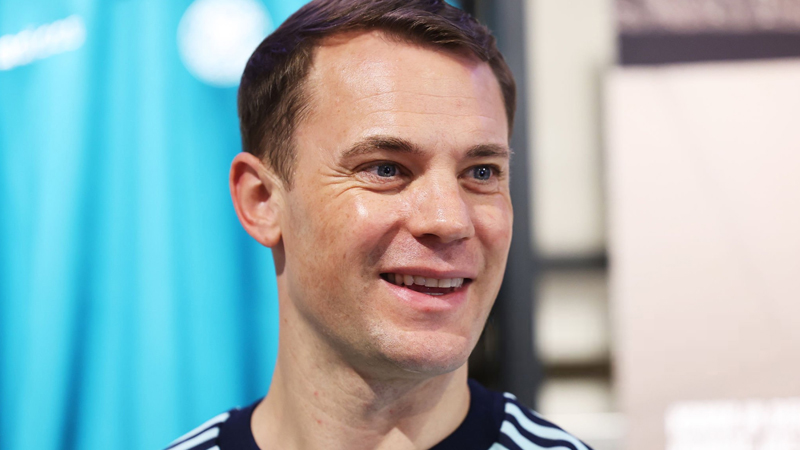
Manuel Neuer is not merely a goalkeeper; he is the architect of the modern “sweeper-keeper” role, a position that demands equipment as versatile and precise as the athlete himself.
For over a decade, Neuer has remained a cornerstone of the Adidas football family, consistently opting for the Adidas Predator Pro series.
However, the gear seen on his hands during a Champions League final or a World Cup fixture is rarely a standard “off-the-shelf” product.
Instead, his equipment is a masterpiece of custom engineering, designed to balance sensory feedback, structural support, and elite-level grip across 90 minutes of high-stakes play.
The Engineering Philosophy of the Adidas Predator Pro Custom
The base model for Manuel Neuer’s equipment is the Adidas Predator Pro, a line famous for its “Demonskin” or “High-Definition Grip” elements.
While the commercial versions focus on aggressive aesthetics and lightweight materials, Neuer’s personal requirements lean toward a more traditional yet refined construction.
He views his gloves as a direct extension of his hands, requiring a level of customization that ensures no material interference during distribution or shot-stopping.
A Comparison: Retail vs. Neuer’s Match-Day Customization
To understand what makes his gear unique, one must look at the divergence between what is available to the public and what is delivered to the Säbener Strasse training ground.
| Feature | Retail Predator Pro | Manuel Neuer Custom Build |
|---|---|---|
| Wrist Closure | Often Strapless / Extended Knit | Classic Single Wrap-around Strap |
| Palm Latex | URG 1.0 (Pro) or URG 2.0 | Modified URG 2.0 (No Embossing) |
| Cut | Various (Hybrid/NC) | Pure Negative Cut (NC) |
| Internal Tech | Standard Grip Elements | Custom Internal Wrist Padding |
| Durability | Standard | High (Reinforced for longevity) |
The Seamless Negative Cut (NC)
One of the most critical aspects of Neuer’s specifications is the Negative Cut. This design involves stitching the fingers from the inside, which results in a much tighter, “second-skin” fit compared to the roomier Flat Palm or Roll Finger cuts.
For a goalkeeper who prides himself on his ability to distribute the ball like a midfielder, this tactile sensitivity is non-negotiable.
The internal seams ensure the latex is always in direct contact with the fingers, providing maximum ball control and a “true” feel for the sphere when catching or throwing.
The Great Latex Debate: Why URG 2.0 Rules the Pitch
In the world of professional goalkeeping, the choice of foam—or latex—is the most debated technical detail. Adidas offers various tiers of grip, with URG 1.0 being marketed as the pinnacle of “pro-only” stickiness.
Interestingly, photographic evidence and technical reports frequently show Neuer opting for URG 2.0 instead. This choice reflects a professional preference for consistency over raw, fleeting “tackiness” that can degrade mid-match.
Balancing Grip and Durability
While URG 1.0 offers unparalleled grip, it is notoriously fragile. Some professionals find that it loses its peak performance after just a few high-impact dives or if the pitch conditions change.
Neuer’s preference for URG 2.0 suggests a need for a reliable balance of elite grip and superior durability across varying weather conditions.
For a keeper who is constantly involved in the play, having a latex that doesn’t crumble under the pressure of repeated ball contact is essential.
Custom Surface Modifications
Further analysis of Neuer’s match-worn gloves reveals that he often requests his URG 2.0 latex to be non-embossed. Commercial gloves often feature grooves or “abrasion zones” on the palm to help with durability or flexibility.
Neuer frequently rejects these additions, preferring a smooth, continuous surface of latex for a more uniform grip. By removing the abrasion zones, he ensures that every square millimeter of the palm provides the same level of friction against the ball.
Proprietary Modifications: The Strap and the Padding
Beyond the fingers and the palm, the wrist construction is where Neuer’s gloves truly diverge from modern trends. In recent years, Adidas has pushed “strapless” technology, using high-tension knit materials to secure the glove to the arm.
Neuer, however, remains a staunch advocate for the classic wrist strap, albeit with his own specific twist.
The Single Wrap-around Strap
Neuer explicitly requests a single, secure wrap-around strap. While some modern gloves use double-wrap elasticated straps for extra compression, Neuer finds these too bulky.
He requires a tight, adjustable fasten that provides distinct wrist support without any overlapping material that could get in his way or feel loose.
This mechanical lock allows him to feel confident when parrying heavy shots, knowing the glove will not shift on his hand.
Innovation in Wrist Padding
A highly unique feature of Neuer’s gear is the addition of padding on the inside of the wrist. Most standard gloves stop the latex or padding at the base of the palm.
Neuer discovered that when collecting low, bouncing balls or “smothering” at an attacker’s feet, the ball often makes contact with the inner wrist area.
By extending the padding to this zone, he gains an extra layer of security, reducing the risk of the ball slipping through the gap between his hands and forearms.
The “Four-Fingered” Anomaly: Emergency Engineering
Perhaps the most famous variation of Neuer’s equipment is the custom four-fingered glove he has worn during various injury spells.
This is not a stylistic choice but a brilliant piece of orthopedic engineering provided by Adidas when Neuer suffers from finger or hand capsule injuries.
Dealing with Capsule Injuries
When a finger is jammed or a capsule is torn, the standard medical practice is “buddy taping”—taping the injured finger to a healthy one for stability.
In a standard five-fingered glove, this is impossible because each finger has its own tight compartment. Adidas solves this for Neuer by manufacturing a glove where the ring and little finger slots are combined into a single, wider compartment.
This allows him to play with his fingers taped together inside the glove while still maintaining the structural integrity and grip needed for world-class performance.
Professional Maintenance and Match-Day Rituals
A world-class goalkeeper’s relationship with his gloves is personal and meticulous. Neuer does not simply pull a fresh pair out of the plastic on match day.
His process involves “bedding in” the equipment to ensure the material has reached its optimal state of flexibility and grip.
The Bedding-In Process
Neuer typically follows a strict usage cycle:
- Training: He will use a new pair for one or two training sessions before they ever see a match. This “breaks in” the foam and allows the glove to mold to the shape of his hand.
- Frequency: He estimates that he goes through approximately two pairs of gloves for every three games.
- The “Used” Advantage: On extremely wet days, Neuer sometimes opts for an older, well-worn pair rather than a new set. This is because the older latex, having been washed and used, can sometimes provide a more predictable “feel” for the ball when the surface is slick.
Environmental Adaptations
Neuer is a proponent of keeping the latex slightly moist to activate the grip. If the pitch is hard and the ball is dry, he will often add moisture using a water bottle or by spitting on the palms.
This is a common professional tactic to ensure the “pores” of the latex remain open and tacky rather than becoming dry and slick. Despite the high-tech nature of his gear, his focus remains on the fundamental “touch and feel” for the ball.
Frequently Asked Questions About Neuer’s Gear
Does Manuel Neuer use Fingersave (finger protection)?
Generally, no. Neuer prefers a more “natural” feel and maximum flexibility, which plastic Fingersave spines can inhibit. However, he has used the custom four-fingered “orthopedic” variations mentioned above when dealing with specific injuries.
Can I buy the exact gloves Manuel Neuer wears?
While you can buy the Adidas Predator Pro with the same colorway, the exact specifications—such as the inner wrist padding and the non-embossed URG 2.0 latex—are exclusive to his custom pairs.
How does he prepare his gloves for a wet match?
In addition to bedding them in, Neuer keeps a towel in his goal to dry his hands if they become too soaked. He emphasizes that the right balance of moisture is key; too dry and the ball slides, too wet and the latex becomes a “sponge”.
The Evolution of the Keeper’s Craft
Reflecting on his career, Neuer notes the dramatic shift in equipment technology. As a child, he played on gravel pitches with robust, thick-padded gloves that were built to survive abrasion.
Today, the transition to pristine grass pitches has allowed for the development of sensitive, high-performance foams that prioritize grip over pure durability.
While the materials have evolved from “gravel-proof” rubber to the elite URG 2.0 latex he uses today, Neuer’s philosophy remains unchanged: the glove must be a transparent interface between the athlete and the ball.
For Neuer, every stitch, strap, and millimeter of padding is a calculated decision aimed at one goal—total control over the game.