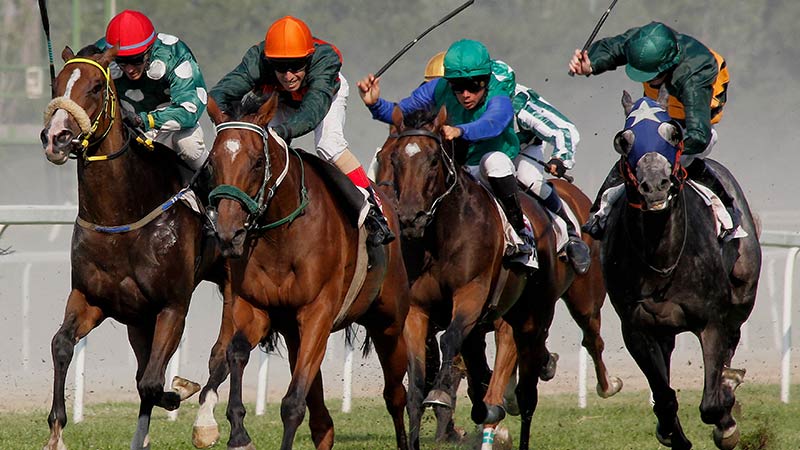
The world of horse racing, often referred to as the “Sport of Kings,” offers an unparalleled blend of adrenaline, strategy, and tradition.
For the uninitiated, the bustling atmosphere of the track or the complex interface of an online sportsbook can feel overwhelming.
However, the secret to navigating this landscape with the poise of a seasoned professional lies in mastering the traditional bets, also known as straight bets.
As a premier destination for sports insights, we have developed this comprehensive guide to demystify the three pillars of horse race wagering: Win, Place, and Show.
Whether you are preparing for the Kentucky Derby or exploring daily races at your favorite track, understanding these foundational concepts is your first step toward strategic betting success.
The Foundation: What are Straight Bets?
In horse racing, straight bets are considered the most simplistic and straightforward wagering options available.
Unlike exotic bets, which require predicting the finishing order of multiple horses, a straight bet focuses on a single horse and its performance within a specific range of finishing positions.
For newcomers, these bets provide a low-barrier entry point into the industry. While they may not offer the astronomical payouts associated with complex “superfectas” or “trifectas,” they provide a higher probability of return and a much simpler learning curve.
In the United States, the core menu of straight bets includes Win, Place, Show, and Across-the-Board wagers. Internationally, bettors often encounter the “Each-Way” bet, which serves a similar strategic purpose.
The Win Bet: The Pursuit of Pole Position
The Win bet is the most intuitive wager in all of sports. When you place a Win bet, you are backing one horse to finish first outright.
How it Works
To collect a payout on a Win bet, your selected horse must be in the “pole position” as it passes the finish line. If the horse finishes second, even by a nose, the bet is lost.
The Financials
Win bets typically offer the highest odds among the three straight bet types because the requirement for success is the most stringent.
- Example: If you place a $2 bet on a horse with odds of 4/5, a victory would yield a total return of $53 (representing a $51 win plus your original $2 stake). Note: While the source example uses these specific numbers, typically 4/5 odds on a $2 bet would result in a smaller profit; however, we adhere to the source’s provided illustrative figures for consistency.
The Place Bet: Expanding the Safety Net
The Place bet offers more flexibility than the Win bet by allowing for two successful outcomes.
How it Works
When you “bet a horse to place,” you win if your selection finishes in either first or second place. This extra “cushion” makes the Place bet a popular choice for bettors who have high confidence in a horse’s talent but want to mitigate the risk of a late-race surge by a competitor.
Critical Constraints
It is important to note that Place betting is generally only available in races with more than five runners. If a horse finishes third, the Place bet does not pay out.
The Financials
Because your probability of winning is higher, the odds for a Place bet are lower than those for a Win bet on the same horse.
- Example: A $2 Place bet at odds of 1/4 would return $2.50 if the horse finishes first or second.
The Show Bet: Maximizing Your Probability
For those seeking the highest likelihood of a winning ticket, the Show bet is the gold standard of straight wagering.
How it Works
A Show bet requires your selected horse to finish in the top three positions—first, second, or third. This bet is ideal for newcomers who want to experience the thrill of “cashing a ticket” while learning the nuances of handicapping.
The Financials
The Show bet offers the lowest odds of the three traditional types because it covers the most ground. Interestingly, your payout remains identical whether your horse wins the race or finishes third; the payout is determined by the horse’s “show” price, not its finishing position within the top three.
- Example: A $2 Show bet at odds of 1/9 would yield a profit of approximately $0.22, for a total return of $2.22.
Strategic Combinations: Across the Board and Each-Way
Once you understand the individual components, you can begin to explore combination wagers that provide comprehensive coverage on a single horse.
Across the Board (The “Triple” Wager)
An Across-the-Board bet combines a Win, Place, and Show bet on one ticket. You are essentially making three separate $2 wagers, meaning a standard $2 Across-the-Board ticket will cost you $6.
- The Payout Structure:
- If the horse wins: You collect on the Win, Place, and Show portions.
- If the horse finishes second: You collect on the Place and Show portions.
- If the horse finishes third: You collect only on the Show portion.
Expert Insight: Many professional bettors view the Across-the-Board bet as a “lazy wager”. Because the cost is tripled, it is extremely difficult to break even unless the horse wins or has very high odds. It often provides a false sense of security while eating away at your long-term bankroll.
Each-Way Betting
Common in international markets, the Each-Way system allows you to pair two of the traditional bets on a single ticket.
- Win/Place Each-Way: A $10 wager costs $20 and covers both the win and a top-two finish.
- Place/Show Each-Way: A $10 wager costs $20 and pays out if the horse finishes second (winning both parts) or third (winning only the show portion).
Traditional vs. Exotic Bets: Fixed Odds and Payouts
Understanding how you get paid is just as important as knowing what to bet. The primary difference between traditional and exotic bets lies in the pricing mechanism.
Fixed Odds (Traditional)
Straight bets typically use fixed odds provided by the sportsbook. These odds allow you to calculate your potential profit with certainty before the race begins.
Pari-Mutuel System (Exotics)
Exotic bets (like Trifectas) use a “betting pool”. All wagers are gathered together, and after the house takes its “takeout,” the remaining pool is divided among the winners. This means you often won’t know your exact payout until after the race is official.
While exotic bets require more skill and research, they offer significantly higher profit potential compared to the steady, predictable nature of Win, Place, and Show bets.
Real-World Application: The Kentucky Derby Case Study
To see the value of these bets in action, we can look at the 2019 Kentucky Derby. This historic race illustrated the varying tiers of payouts for a single event:
- Win Payout: $132.40
- Place Payout: $56.60
- Show Payout: $24.60
These figures demonstrate that even “straight” bets can yield significant returns when an underdog (or “longshot”) performs well on a major stage.
Enhanced FAQ: Expert Answers to Common Questions
Q: What is the minimum amount I can bet on a horse to win?
A: Most online sportsbooks and physical tracks have a minimum bet of $2 for Win, Place, or Show wagers.
Q: Does my payout increase if my “Show” horse actually wins the race?
A: No. If you place a Show bet, your payout is based on the Show odds. Whether the horse comes in first, second, or third, the payout for that specific Show ticket remains the same.
Q: What is the main difference between a Place bet and an Each-Way bet?
A: A Place bet is a single wager on a top-two finish. An Each-Way bet is a combination of two separate wagers (e.g., Win and Place) on a single ticket.
Q: Why do Show bets have such low odds?
A: Show bets have the highest mathematical probability of winning because they cover 60% of the top five finishing positions (1st, 2nd, and 3rd). Low risk naturally leads to lower rewards.
Conclusion: Developing Your Betting Strategy
Mastering Win, Place, and Show betting is about more than just understanding the rules; it’s about managing risk and finding value. While the allure of “Exotic” payouts is strong, the most successful bettors often use straight bets as the bedrock of their strategy.
Key Takeaways for Your Next Trip to the Track:
- Start Simple: Use Win, Place, and Show bets to build your confidence and understanding of horse form.
- Calculate Value: Use fixed odds to determine if a bet is worth the risk before placing it.
- Avoid the “Lazy” Wager: Be cautious with Across-the-Board bets; they are often more expensive than they are worth.
- Manage Your Bankroll: Remember that even a $2 minimum bet can add up quickly across a full day of racing.
Horse racing is a journey of continuous learning. By mastering these traditional bets, you are not just placing a wager; you are participating in a legacy of sporting excellence.
Ready to place your first bet? Check out our review of top platforms like FanDuel Racing to find the best promotions and odds for upcoming major races.