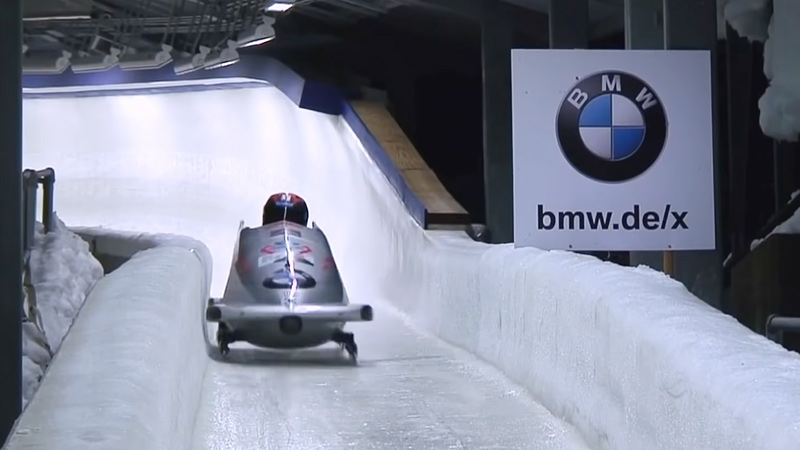
When people watch Olympic bobsled races, most of the attention naturally goes to the driver—the athlete steering the sled at breathtaking speeds down an icy track. But bobsled is not a solo sport.
Every team member plays a critical role, especially the second person in the sled. Often called the brakeman in two-man events or the middle crew member in four-man competitions, this athlete is essential to speed, stability, and overall success.
From the explosive start to the final push across the finish line, the second person’s responsibilities are far more complex than they may appear. Let’s take a detailed look at what this athlete does and why they are indispensable in the sport of bobsledding.
Understanding Bobsled Basics
Bobsled—also known as bobsleigh—is one of the most thrilling winter sports in the world. It has been a major event at the Winter Olympic Games for decades, captivating audiences with its speed and precision.
Teams race down a narrow, twisting ice track in a specially designed sled, reaching speeds of up to 150 km/h (93 mph).
There are two main team formats:
- Two-man bobsled
- Four-man bobsled
Each team member has a defined role, and teamwork is everything. Even the smallest mistake can cost a race.
The Role of the Second Person in Two-Man Bobsled
In two-man bobsled, the second athlete is known as the brakeman. While the name might suggest that their main job is to slow the sled down, their responsibilities begin long before the finish line.
The Explosive Start
The race begins with both athletes pushing the sled down the track before jumping in. The start phase is one of the most critical parts of the entire run.
The second person:
- Grips the side bars of the sled
- Pushes with maximum force and speed
- Synchronizes perfectly with the driver
- Jumps into the sled at precisely the right moment
A powerful start can determine the outcome of the race. Because the sled accelerates from zero, the initial push sets the foundation for top speed. The second person must have exceptional lower-body strength, sprinting ability, and explosive power.
In fact, many brakemen have backgrounds in track and field—particularly sprinting—because acceleration is crucial.
Quick and Clean Entry into the Sled
After the push phase (usually about 5 seconds), the second person must jump into the sled smoothly and quickly.
This entry must be:
- Fast
- Balanced
- Clean
- Perfectly timed
If the second person stumbles, hesitates, or hits the sled awkwardly, it can destabilize the run and reduce speed. At 40 km/h or more during entry, even a small mistake can cost valuable hundredths of a second.
In elite competitions, races are often decided by margins as small as 0.01 seconds.
3. Maintaining Aerodynamics During the Run
Once inside the sled, the second person’s job shifts from explosive power to aerodynamic precision.
Inside the sled, the brakeman must:
- Tuck their head down
- Keep their shoulders narrow
- Maintain a compact body position
- Avoid unnecessary movement
Air resistance is one of the biggest enemies of speed. Even a slight shift in posture can increase drag. The second person must remain perfectly still and aligned behind the driver to ensure optimal airflow.
4. Applying the Brakes After the Finish
Now comes the task that gives the role its name.
After crossing the finish line, the second person pulls a brake lever to slow the sled down. This happens only after the official timing line. Applying the brake too early would result in disqualification.
At top speeds, stopping the sled safely requires careful timing and strength. The brakeman ensures the sled decelerates properly in the designated shutdown area.
The Role of the Second Person in Four-Man Bobsled
In four-man bobsled, the roles expand. The team consists of:
- Driver
- Second person (sometimes called the left pusher)
- Third person (right pusher)
- Brakeman (rear)
Here, the second person is one of the middle pushers. Their responsibilities focus heavily on the start phase.
1. Maximum Power at the Start
In four-man events, the start becomes even more powerful. All four athletes push together, and coordination is crucial.
The second person:
- Pushes on one side of the sled
- Matches stride length and rhythm
- Maintains perfect alignment with teammates
- Generates explosive force
The start time in four-man bobsled is often even more decisive because the sled is heavier. The combined strength of the push crew determines how quickly the sled reaches high speed.
2. Synchronized Loading
As with two-man bobsled, getting into the sled smoothly is critical.
In four-man sleds:
- The second and third athletes load first.
- The brakeman jumps in last.
- The driver enters almost immediately after the initial push.
If one athlete mistimes their entry, it can throw off the balance of the sled. The second person must dive into position without rocking the sled or disrupting the driver’s steering.
3. Stability and Weight Distribution
Inside the sled, the second person helps maintain balance.
Although the driver steers, weight distribution affects how the sled moves through curves. Even small shifts in body position can change how the sled handles tight turns.
The second person must:
- Stay centered
- Avoid leaning unnecessarily
- Keep a stable, compact posture
At high speeds, centrifugal forces in turns can be extreme. The athlete must resist the urge to shift or react.
The Physical Requirements of the Second Person
The second person in a bobsled team must combine multiple athletic qualities:
1. Explosive Strength
The push start demands immense power. Many bobsled athletes can:
- Squat well over twice their body weight
- Sprint 30 meters in elite-level times
- Perform Olympic lifts with heavy loads
Explosive power directly translates to faster starts.
2. Sprinting Speed
The push phase resembles a short sprint. Athletes train specifically for:
- Acceleration mechanics
- Fast reaction time
- Drive phase technique
This is why former track athletes frequently transition into bobsled.
3. Core Stability
During the run, the athlete must hold a tight aerodynamic position. Strong core muscles help maintain stillness and balance under high G-forces.
4. Mental Focus
Even though they are not steering, the second person must stay mentally sharp. They need to:
- React instantly at the start
- Enter the sled without hesitation
- Stay composed at high speed
One lapse in concentration can ruin a race.
The Importance of Team Chemistry
Bobsled is a team sport that requires absolute trust.
The second person must:
- Trust the driver completely
- Match the driver’s timing at the start
- Understand communication cues
- Train in synchronization repeatedly
Many successful teams spend years building chemistry. For example, top Olympic teams competing in the Winter Olympic Games often train together daily for multiple seasons before reaching peak performance.
Without synchronization, even the strongest athletes cannot win.
Strategy and Communication
Although the driver controls steering, the second person contributes to race strategy during preparation.
Before each race:
- Teams review track footage.
- They analyze previous runs.
- They discuss push timing.
- They refine loading sequences.
During the actual run, communication is minimal due to speed and noise. However, pre-run rituals and consistent timing signals are essential.
Common Misconceptions About the Second Person
Misconception 1: They Just Sit There
Many viewers think the second person simply rides along. In reality, their contribution during the first five seconds may determine the final outcome.
Misconception 2: Braking Is the Main Job
While braking is important, it happens only after the race is officially completed. The true performance impact lies in the start and aerodynamic discipline.
Misconception 3: Anyone Strong Can Do It
Strength alone is not enough. The role requires speed, coordination, technique, and mental precision.
Training Routine of a Bobsled Brakeman
A typical training program includes:
- Heavy weightlifting (squats, cleans, deadlifts)
- Sprint drills
- Plyometric exercises
- Start simulations on dry tracks
- Reaction-time training
- Core stabilization work
Teams often train year-round, even when ice tracks are unavailable. Dry-land push tracks replicate the start phase to maintain technique.
How the Second Person Impacts Race Results
In elite competitions, margins are incredibly tight. A slightly faster start can produce:
- Higher entry speed into the first turn
- Better momentum through the course
- Reduced time lost in curves
Since speed compounds over the course of the run, early acceleration from the second person has lasting effects.
In some Olympic finals, medals have been decided by less than one-tenth of a second.
Final Thoughts
The second person in a bobsled is far more than a passenger. Whether serving as the brakeman in two-man events or as a middle pusher in four-man races, this athlete plays a crucial role in determining success.
They provide:
- Explosive power at the start
- Precision timing during entry
- Aerodynamic discipline during the run
- Safe braking at the finish
Without their strength, coordination, and focus, even the most skilled driver cannot win.
Bobsled is a sport built on teamwork, timing, and trust. The second person embodies these qualities perfectly—working in the shadows of the driver, yet contributing just as much to the thrilling, high-speed spectacle that defines Olympic bobsled racing.