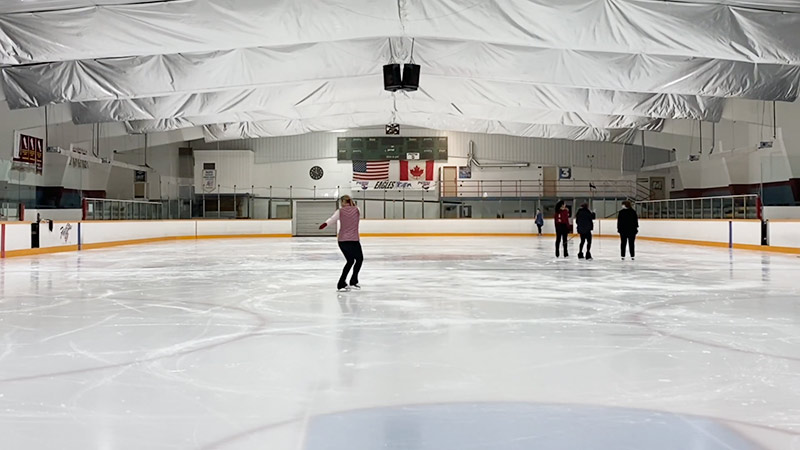
If you’ve spent any time around figure skating rinks—especially in conversations with seasoned skaters or coaches—you may have heard the term “patch” used in a way that sounds both mysterious and old-fashioned.
Newer skaters might associate the word with embroidered badges or costume decorations. But in ice skating, “patch” has a much deeper, more technical meaning rooted in the history of the sport.
So, what does “patch” mean in ice skating? The short answer: it refers to the practice of skating compulsory figures—precise, controlled patterns traced on the ice, traditionally inside a marked circle or “patch” of ice. But there’s much more to it than that.
Let’s glide into the details.
The Origins of Patch Skating
Long before triple jumps and elaborate choreography defined figure skating, the sport was all about control, edge quality, and pattern precision. In fact, figure skating gets its name from the “figures” that skaters traced onto the ice.
These figures were intricate patterns—circles, loops, figure eights—drawn with the blade’s edge. Skaters would practice these shapes repeatedly in a designated area of the rink. That designated area was called a “patch.”
Originally, during freestyle sessions, rinks were divided into small circular sections of ice. Each skater would be assigned a specific circle—his or her patch—to practice compulsory figures. These circles were often marked lightly on the ice, and skaters worked within them to refine technique.
Over time, the term “patch” became shorthand for compulsory figure practice itself. When someone said, “I have patch this morning,” they meant they were attending a session dedicated to skating figures.
What Happened During a Patch Session?
Patch sessions were highly structured and focused. Unlike modern freestyle practice, where skaters might run programs or drill jumps and spins, patch sessions were quiet, methodical, and disciplined.
Here’s what typically happened:
1. Assigned Circles
Each skater received a circle of ice—about six meters in diameter. They were expected to stay within their circle while practicing.
2. Tracing Compulsory Figures
Skaters would carefully trace patterns such as:
- Forward outside figure eights
- Backward inside circles
- Three-turn patterns
- Bracket turns
- Loops and counter turns
The goal wasn’t speed or flair. It was absolute control.
3. Precision and Repetition
Skaters would repeat the same pattern over and over, aiming to:
- Maintain consistent edge depth
- Create perfectly round circles
- Align the tracings precisely over previous marks
- Demonstrate symmetry between left and right sides
Judges in competitions would examine the tracings left in the ice to assess quality. Every wobble, scrape, or uneven edge was visible.
Patch skating demanded patience and concentration. It wasn’t flashy—but it built the technical foundation for everything else.
Why Was Patch So Important?
For much of figure skating history, compulsory figures accounted for a huge percentage of competition scores—sometimes as much as 60%.
That meant a skater’s success didn’t depend mainly on jumps or spins. It depended on:
- Edge control
- Balance
- Body alignment
- Precision
- Consistency
Patch was where those skills were developed.
A skater who mastered patch could:
- Hold deep, clean edges
- Control speed effortlessly
- Transition smoothly between turns
- Maintain strong posture
These qualities translated directly into superior free skating performance.
In fact, many legendary skaters from the mid-20th century were known for their extraordinary patch work. Their edges were powerful and controlled because they had spent thousands of hours tracing figures.
The Discipline Behind Patch Skating
One reason patch skating is often spoken about with respect is the discipline it required.
Imagine practicing the same circle for an hour.
No music.
No jumps.
No applause.
Just you, the ice, and the line your blade leaves behind.
Patch skating demanded mental focus as much as physical skill. Skaters had to:
Stay patient
Analyze their own tracings
Correct subtle weight shifts
Build muscle memory
It was meticulous training. Some skaters loved it. Others found it tedious. But almost all agreed it made them better.
Why Did Patch Disappear From Competition?
In 1990, the International Skating Union (ISU) officially removed compulsory figures from international competitions.
Why?
There were several reasons:
1. Television Appeal
Compulsory figures were not exciting to watch. Spectators saw skaters moving slowly in circles, often without music. It didn’t translate well to television broadcasts.
2. Time Constraints
Figures required a large amount of competition time and ice preparation. As skating grew in popularity, events needed to be streamlined.
3. Audience Expectations
Fans increasingly preferred the athleticism and artistry of free skating programs. Jumps, spins, and choreography captured attention more effectively than technical tracings.
Once figures were removed, the emphasis in training shifted dramatically toward jumps and choreography.
How Did the Removal of Patch Affect Skating?
The elimination of compulsory figures changed figure skating forever.
Increased Focus on Jumps
Without figures contributing to scores, skaters prioritized:
- Triple jumps
- Quadruple jumps
- Complex spin variations
Training time shifted accordingly.
Decreased Edge Quality (Some Say)
Many coaches argue that modern skaters sometimes lack the deep, clean edge control that was common in earlier generations.
Without years of patch practice, some foundational skills may not develop as thoroughly.
Faster Progression for Young Skaters
On the positive side, removing figures allowed young skaters to focus earlier on performance skills and competitive routines.
This made the sport more dynamic and audience-friendly.
Does Patch Skating Still Exist Today?
Although compulsory figures are no longer part of international competition, patch skating hasn’t disappeared entirely.
In Some Clubs
Certain skating clubs still offer patch sessions, especially for skaters who want to improve edge quality.
In Recreational and Artistic Training
Coaches sometimes incorporate figure-based drills into lessons to strengthen:
- Edge control
- Turn precision
- Balance
- Flow
In Niche Competitions
There are small organizations and enthusiasts who continue to preserve and compete in compulsory figures.
While it’s no longer mainstream, patch skating remains respected as a foundational discipline.
The Technical Meaning of “Patch” Today
Today, when someone refers to “patch” in skating, they usually mean one of two things:
A dedicated session for practicing edges and figures
Old-school compulsory figure training
In casual conversation, older skaters might say, “Back when we had patch…” referring nostalgically to the era when figures were central to competition.
You’re unlikely to hear beginner recreational skaters using the term unless they’re working with a coach who emphasizes traditional technique.
Why Patch Still Matters (Even If It’s Rare)
Even though formal patch sessions are less common, the principles behind patch skating remain essential.
Great skating still depends on:
- Strong edges
- Controlled turns
- Clean tracings
- Balanced posture
You can often tell a skater who has strong figure training by the smoothness of their skating. Their crossovers flow effortlessly. Their transitions are controlled. Their edges look powerful and confident.
Many elite coaches still borrow from patch-style training to refine these fundamentals.
Patch vs. Freestyle: What’s the Difference?
To better understand patch, it helps to compare it with modern freestyle skating.
| Patch Skating | Freestyle Skating |
|---|---|
| Focuses on compulsory figures | Focuses on jumps, spins, choreography |
| Performed in assigned circles | Uses entire rink |
| Slow, precise movements | Dynamic and performance-based |
| Judged on tracings in the ice | Judged on execution and presentation |
| Builds foundational technique | Showcases athleticism and artistry |
Both have value—but patch is about control, while freestyle is about performance.
The Legacy of Patch in Modern Champions
If you watch archival footage of skaters from the 1960s, 70s, and 80s, you’ll notice something distinctive:
- Deep, confident edges
- Impeccable balance
- Effortless turns
Many of these athletes spent years in patch sessions before moving on to competitive programs.
Some coaches believe that bringing back structured edge-focused sessions could improve skating quality at all levels—even recreationally.
While patch may seem outdated, its technical foundation remains timeless.
Should Beginners Practice Patch-Style Skills?
Absolutely.
Even if you never compete in figures, practicing edge drills inspired by patch skating can:
- Improve balance
- Strengthen ankle stability
- Increase edge awareness
- Enhance overall skating quality
Many Learn-to-Skate programs include simplified versions of figure patterns for this very reason.
Patch isn’t just history—it’s technique training at its purest form.
Final Thoughts
So, what does “patch” mean in ice skating?
At its core, patch refers to the practice of compulsory figures—precise patterns traced within designated circles of ice. Historically, it was the foundation of figure skating competition and training. Skaters developed edge mastery, control, and discipline during structured patch sessions.
Though compulsory figures were removed from international competition in 1990, the influence of patch skating still echoes throughout the sport. Every clean edge, every controlled turn, and every flowing transition owes something to the tradition of patch.
It may not be glamorous. It may not draw applause. But patch skating built the backbone of figure skating as we know it.
And in many ways, it still does.
FAQs
1. What is a patch session in ice skating?
A patch session is a dedicated ice time where skaters practice compulsory figures or edge-focused drills, often within assigned circles on the ice.
2. Why were compulsory figures removed from competition?
They were removed in 1990 because they were time-consuming, not television-friendly, and less exciting for spectators compared to free skating programs.
3. Do skaters still practice patch today?
While no longer required in major competitions, some coaches and clubs still use patch-style training to improve edge control and technical fundamentals.