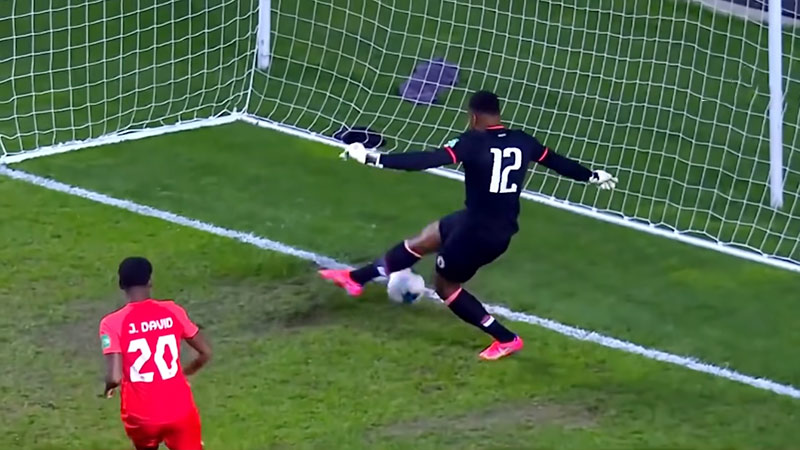
In the global landscape of professional soccer, few acronyms carry as much weight or immediate emotional impact as “OG.”
For the uninitiated, an OG—shorthand for Own Goal—represents the ultimate paradox of the sport: a moment where a player’s primary objective to protect their net is inadvertently subverted, resulting in a point for the opposing side.
While soccer is a game of strategic precision, the own goal introduces a chaotic element of misfortune and human error that can alter the course of a championship or define a player’s career.
This analysis provides an authoritative exploration of the technical definitions, the official rules of attribution, the psychological consequences, and the historical records that define this phenomenon.
Defining the Own Goal: Technical Criteria and Attribution
At its most fundamental level, an own goal occurs when a player accidentally or deliberately puts the ball into their own team’s net. In official match reporting and on television scoresheets, this event is recorded by placing the initials “OG” next to the player’s name.
However, the attribution of an own goal is often a matter of technical scrutiny and can be contentious, particularly during fast-paced defensive scrambles.
The governing bodies of soccer utilize specific criteria to determine whether a goal is credited to an attacker or recorded as an OG:
- The Trajectory Rule: The most critical factor is the original path of the ball before it touched the defender. If an attacking player strikes a shot that is on target—meaning it would have entered the net without any further interference—and it subsequently deflects off a defender, it is generally not credited as an own goal. Instead, the attacker is awarded the goal.
- The “Off-Target” Shift: Conversely, if the original shot was off target and would have missed the net entirely, but a deflection off a defending player redirects the ball over the line, it is officially recorded as an own goal.
- Final Touch Responsibility: Technically, the goal is credited to the player who had the last touch, even if the action was entirely accidental.
The Mechanics of Error: Why Own Goals Occur
Own goals are rarely the result of a single failure; they are typically the culmination of miscommunication, physical misfortune, or environmental variables. Professional analysis categorizes these incidents into three primary types:
1. Physical Deflections and Slapstick Misfortune
Defenders and goalkeepers are the most frequent “victims” of own goals because their roles require them to be in proximity to the net during high-pressure situations.
Corner kicks and frantic defensive clearances are the most common catalysts for these errors.
In some instances, the misfortune reaches “hilarious proportions” for spectators, even if it is tragic for the player.
For example, in 2012, Gareth Bale was credited with an own goal after a clearance hit him directly in the face and rebounded into the net.
Similarly, defender Chris Brass gained notoriety for smashing the ball off his own face and into his goal during a League Two match in 2005.
2. Tactical Miscommunication
The relationship between a defender and their goalkeeper is built on trust and clear verbal cues. When this breaks down, the results are often disastrous.
- The Backpass Error: A classic example involves Lee Dixon and legendary goalkeeper David Seaman in 1991, where a misplaced backpass bypassed Seaman entirely to become one of the quickest own goals in history.
- The Intentional Misread: In a 2018-19 Premier League fixture, Kieran Trippier misread Hugo Lloris’ position, passing the ball into an empty net and significantly damaging his team’s title aspirations.
3. Environmental and Freak Incidents
In rare cases, the elements themselves intervene. In 2015, Kamarl Duncan attempted a routine clearance, only to have the wind carry the ball back over his own head and past his goalkeeper. These “freak incidents” are often unavoidable but remain recorded as own goals nonetheless.
The Psychological Toll: From Professional to “Pariah”
The moment a player realizes they have scored against their own team, they often undergo a visible transformation, described by experts as morphing into “on-field pariahs”.
The immediate guilt is compounded by the judgment of thousands in the stadium and millions watching globally.
Professional players typically respond in one of two ways:
- Resilience: Some “hold their heads up” and soldier on, viewing the error as a test of character.
- Collapse: Others “crumple beneath the shame,” losing the concentration required to finish the match effectively.
The psychological weight of an own goal can extend far beyond the pitch. The term has even entered general linguistic use to describe any action that backfires on the person who initiated it.
In the most extreme and tragic case, Colombian defender Andres Escobar was fatally shot shortly after scoring an own goal in the 1994 World Cup, an event believed by many to be precipitated by the error.
Data and Records: The History of the Own Goal
To understand the scale of this phenomenon, one must look at the historical data across the world’s most prestigious leagues.
Premier League (England)
- Richard Dunne holds the record for the most own goals in Premier League history, with 10 during his career.
- Jamie Carragher and Martin Skrtel are tied for second with 7 each. Notably, Skrtel once scored four own goals in a single season, a record later matched by Lewis Dunk.
Serie A (Italy)
- The record in Italy is held by Riccardo Ferri, who recorded 12 own goals during his tenure with Inter and Sampdoria.
- The legendary Franco Baresi is not far behind, with 9 to his name.
Other Major European Leagues
- La Liga (Spain): Five players share the record with 5 each, including Sergi Barjuan and Fernando Caceres.
- Bundesliga (Germany): The record of 6 is shared by Manfred Kaltz and Nikolce Noveski.
- Ligue 1 (France): Albert Cartier and Jean-Guy Wallemme lead with 7 each.
Champions League and International Play
In the elite tier of European club competition, players like Sergio Ramos and Gerard Pique are among those who share the record for most own goals, though their tallies are relatively low at 2 each.
On the international stage, Mario Mandzukic set a unique record in 2018 by becoming the first player to score an own goal in a World Cup final.
Frequently Asked Questions (FAQ)
Can a goal be credited as an “OG” if the attacker intended to score?
Yes, but only if the original shot was off target. If the shot was already heading into the net, the attacker gets the credit, even if the defender’s touch was significant.
Are own goals ever deliberate?
Deliberate own goals are exceptionally rare and are viewed with extreme suspicion by governing bodies. Such actions are usually scrutinized for links to match-fixing or other illegal activities.
Who is credited with the goal on the official scoresheet?
The point is awarded to the opposing team, but the player who made the final touch is the one officially credited with the “OG”.
What happens if a goalkeeper misses a backpass?
If a player passes the ball back to their goalkeeper and the goalkeeper fails to control it, allowing it to enter the net, the original passer is typically credited with the own goal. This occurred famously with Gary Neville and Paul Robinson in a 2006 Euro qualifier.
Conclusion: The Inevitability of Error
The own goal remains the “scourge of well-meaning defenders”. It serves as a stark reminder that in a game of inches, the difference between a heroic clearance and a career-defining mistake is often a matter of a “wicked deflection” or a split-second loss of concentration.
For organizations and fans alike, understanding the “OG” is essential to appreciating the full complexity of soccer. It is a moment of profound vulnerability that tests the mental fortitude of the world’s best athletes.