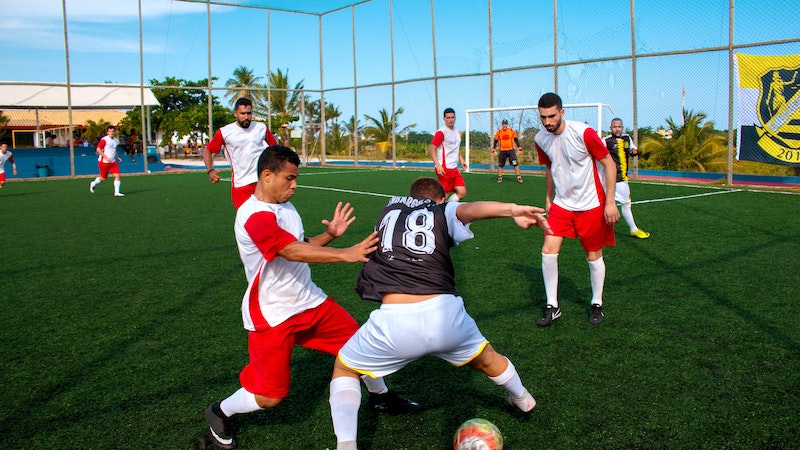
In the sophisticated lexicon of modern soccer, the abbreviation FW serves as the definitive marker for the Forward. This designation represents the attacking vanguard of a team—the players positioned in the highest strata of the field, closest to the opponent’s goal.
While the traditional perception of a forward is often limited to a primary goalscorer, the contemporary tactical landscape of 2026 demands a multi-functional athlete capable of shaping the entire offensive and defensive structure of a match.
The Core Mandate of the Modern FW
A forward’s primary function is the creation and execution of scoring opportunities. This objective is achieved through strategic movement into space behind defensive lines and maintaining proximity to the goal.
However, the impact of an elite forward extends far beyond the scoresheet. Their movement compels defenders to react, often stretching the opposition’s backline and generating pockets of space for midfielders and wide players to exploit.
Modern tactical paradigms categorize the forward’s responsibilities into four critical pillars:
- Threat Generation: Utilizing diagonal runs, cutbacks, and high-volume shot-taking to destabilize the penalty area.
- Attacking Connectivity: Acting as a tactical bridge through hold-up play, one-two combinations, and rhythmic lay-offs to support advancing teammates.
- Defensive Occupation: Engaging center-backs physically and mentally to prevent them from stepping into midfield, thereby maintaining clear passing lanes for the attacking side.
- Defensive Leadership: Functioning as the “first line of defense” by initiating high-intensity pressing sequences when possession is lost.
The Taxonomy of Tactical Archetypes
The term “Forward” is an umbrella designation that encompasses several distinct tactical profiles. Each archetype is designed to solve specific problems presented by an opponent’s defensive block.
1. The Center-Forward (Number 9)
The traditional Number 9 operates at the highest line of the attack. Their role is centered on timing and finishing, requiring an elite capacity for duels and precise positioning between opposing center-backs. They are the focal point for near-post and far-post runs, consistently attacking the “9 zone”.
2. The Target Forward
Defined by physical presence and aerial dominance, the Target Forward excels in high-contact environments.
Their primary utility lies in hold-up play, using their strength and first touch to secure the ball under pressure and integrate trailing teammates into the attack.
3. The Second Striker
Operating in the “hole” or the space immediately behind the primary Number 9, the Second Striker is a facilitator. They focus on awareness and rapid combinations, often arriving late in the box to capitalize on loose balls or secondary chances.
4. The False 9
The False 9 is a tactical disruptor who drops deep into midfield pockets. By abandoning the traditional striker position, they force center-backs to make a decision: follow them into midfield and leave space behind, or stay deep and allow the False 9 to create a numerical overload. This profile requires elite scanning, passing, and turning abilities.
5. The Wide Forward / Winger
Positioned in the wide channels, these players utilize linear speed and dribbling to challenge full-backs. Their objective is to create 1v1 situations, deliver high-value crosses from the byline, or cut inside into the half-spaces to unleash shots.
6. The Inside Forward
Similar to the winger but with a more direct goal-scoring intent, the Inside Forward begins in a wide position before making aggressive diagonal runs into the gaps between defenders.
This archetype, exemplified by players like Mohamed Salah, focuses on angled entries into the box and high-value finishing.
Spatial Geography: Navigating the Final Third
Elite forwards do not view the field as a single attacking area but rather as a series of specialized zones, each requiring different technical applications.
- The Central “9 Zone”: This is the high-stakes area where forwards pin center-backs, hold the defensive line, and attack cutbacks with immediate finishes.
- The Half-Spaces: These are the corridors between the wings and the center. Forwards in these zones receive the ball on the turn, combine with attacking midfielders, and frequently shoot across the face of the goal.
- The Wide Channels: Used to stretch the defensive line horizontally, these zones are essential for generating crossing angles and isolated 1v1 opportunities.
Positioning must also adapt to the team’s overarching philosophy. In possession-heavy systems, forwards frequently “check short” to link play before exploiting the space created when a defender follows them. Conversely, in counter-attacking systems, the forward maintains a high position, ready to attack vertical space the moment possession is regained.
The Terminological Nuance: Striker vs. Forward
While often used interchangeably, there is a subtle distinction in professional terminology. A Striker is a specific subtype of forward—usually the central attacker focused primarily on goal-scoring. Forward is the broader classification.
A coach might deploy three forwards (two wide and one central), but only the central player is traditionally called the striker.
In a 4-4-2 formation, two forwards may share responsibilities, with one acting as a deep-lying link and the other as a “line-leader” or striker.
The nuances of these terms often vary by region, coaching philosophy, and the specific requirements of the formation.
The Defensive Revolution: Leading from the Front
In the modern era, a forward who merely waits for the ball is considered a liability. Pressing has become a non-negotiable aspect of the role. By setting the “first line of defense,” forwards use their positioning to guide the opposition’s build-up into traps.
The impact of this defensive work is measurable: successful pressing leads to high-value turnovers that can be immediately converted into attacking transitions.
Forwards must master angled pressure, forcing defenders toward the touchline or into congested central areas where teammates can win the ball.
Cognitive Intelligence and Communication
Technical skill is insufficient without positional intelligence and elite communication.
Scanning and Tactical Cues
Great forwards play with information. This involves consistent scanning—looking over the shoulder before receiving the ball to identify defender positioning and open space. Forwards also watch for specific environmental cues:
- Passer’s Body Language: If a teammate has their head up, it is the signal to initiate a run.
- Defender Orientation: A defender facing the forward straight-on is vulnerable to quick changes of direction, as they find it harder to turn.
- Ball Movement: The moment the ball is played is the trigger for the final explosive run.
The Language of the Attack
Communication ensures that the passer and the forward are operating on the same frequency.
- Verbal Cues: Using sharp, repeatable calls like “Feet!” to receive the ball or “In behind!” to trigger a vertical pass.
- Trigger Calls: Commands such as “Set!” (to bounce the ball back), “One-two!”, or “Hold!” (to signal that the forward is pinning a defender) provide instant tactical direction.
- Non-Verbal Cues: Hand signals (pointing to space vs. feet), eye contact, and body orientation (opening hips to show a preference for a ball to feet) allow for silent, rapid coordination.
Professional Training Methodology
To reach a professional standard, forward training must move beyond static shooting drills and embrace match-realistic intensity, pressure, and decision-making.
1. Finishing Under Pressure
This drill develops the composure needed to score when a defender is closing in and time is limited.
- Setup: A forward starts 12–18 yards from goal with a defender positioned immediately behind.
- Execution: The forward must scan, receive a pass, and shoot within a strict two-second time limit.
- Focus: Composure, balanced body shape, and choosing a specific corner of the goal—typically the far post—to maximize scoring probability.
2. Dribble-and-Shoot Circuits
This methodology bridges the gap between ball carry and final action.
- Setup: A series of cones requiring tight, close touches followed by an open-field sprint.
- Execution: After navigating the cones, the forward must immediately look up, locate the goalkeeper, and strike the ball with clinical technique.
- Progression: Adding an active defender or a decision-making element—such as choosing between a shot and a pass to a teammate—increases the drill’s cognitive load.
3. Aerial and Crossing Mastery
Targeting crosses requires precise timing rather than just physical height.
- Technique: Forwards must wait for the cross to be delivered before accelerating into the space.
- Body Positioning: Moving “goal-side” of the defender and using arms for balance allows the forward to meet the ball at its highest point.
- Heading: Using the forehead, keeping the neck firm, and aiming the ball down and across the keeper are essential for high-conversion headers.
4. Combination Play in Small-Sided Games
Small-sided games (4v4 or 6v6) are used to simulate the congestion of the final third. To encourage specific forward habits, professional coaches often implement specialized rules:
- The 3-Second Rule: A goal only counts if the shot is taken within three seconds of the forward receiving the ball.
- The Wall Pass Bonus: Extra points are awarded for goals scored following a one-two combination or a third-man run.
- The Press Challenge: If a team regains possession within five seconds of losing it and subsequently scores, the goal value is increased.
The Psychological Dimensions of the FW Position
Playing forward is as much a mental challenge as a physical one. Forwards are frequently judged by singular moments, and the pressure of being the primary decision-maker in a match requires significant resilience.
- Patience: In many matches, a forward may go long periods without touching the ball. Success requires maintaining continuous movement and focus so that when the one clear chance arrives, they are ready to capitalize.
- The “Goldfish” Mentality: Forwards must reset quickly between repetitions and matches. Missed chances must be discarded immediately to ensure the next opportunity is met with total confidence.
- Collective Responsibility: Modern forwards must find satisfaction in “unselfish” actions—pulling defenders away with runs they know they won’t receive the ball for, simply to open space for a teammate.
Strategic Integration FAQ
Q: What is the primary difference between a Number 9 and a False 9?
A: The Number 9 leads the line, staying high to finish and occupy center-backs. The False 9 drops deep into midfield, creating numerical advantages and dragging defenders out of position.
Q: Why is “scanning” so critical for forwards?
A: Scanning allows a forward to visualize the defensive landscape before the ball arrives. This ensures that their first touch is directed away from pressure and their shot decision is made before they even contact the ball.
Q: How do forwards “lead the press”?
A: By using their positioning and “press calls” (e.g., “Jump!”, “Lock left!”), forwards dictate which direction the opposing team can pass, effectively herding the play into areas where their team has a tactical advantage.
Q: Can a winger be considered a forward?
A: Yes. In modern formations like the 4-3-3 or 4-2-3-1, wingers are often classified as wide forwards because their primary duties involve attacking the box, 1v1 dribbling, and scoring goals.
Q: What does “F-W” mean in other contexts?
A: While in soccer “FW” stands for Forward, it is important to note that in other sporting contexts, such as USA Ultimate (frisbee) scoring, “F-W” can indicate a Forfeit and a Win. Users should always verify the specific sporting context to ensure accuracy.
The Path to Elite Mastery
Transitioning from a standard attacker to a world-class forward requires a synthesis of technical finishing, tactical intelligence, and physical dominance.
Whether acting as a traditional poacher like Gerd Müller or a complete contemporary Number 9 like Robert Lewandowski, the modern forward must embrace the “all-around responsibility” of the role.
By mastering the six primary archetypes, understanding the nuances of spatial geography, and committing to high-intensity, game-realistic training, players can move beyond the “goal poacher” limitation.
The modern forward is the catalyst for a team’s success—a player who decides the big moments through relentless movement, elite communication, and the clinical execution of scoring chances.