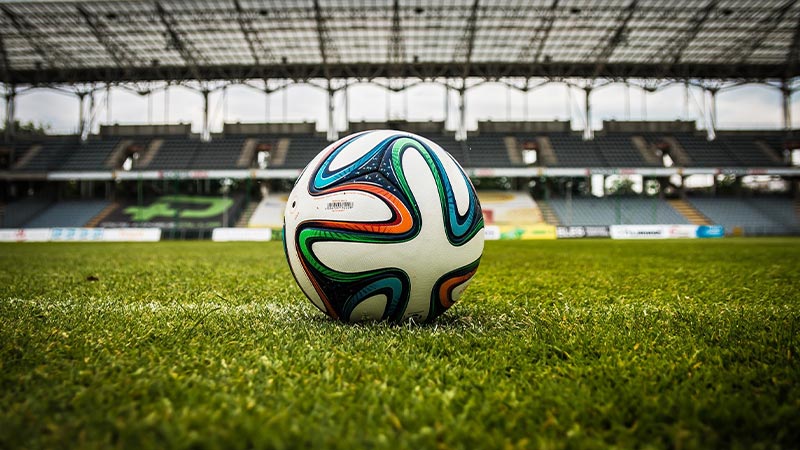
Precision in football is often measured by the curve of a strike or the accuracy of a long pass, but the foundation of this performance lies in the physical specifications of the ball itself.
Whether you are a professional athlete, a dedicated coach, or a sports equipment enthusiast, understanding the weight of a soccer ball is essential for ensuring consistent play.
At the professional level, a standard Size 5 soccer ball must weigh between 410 and 450 grams at the start of a match. This strict regulation ensures that every player on the pitch experiences the same aerodynamics and tactile response.
The Official Standards for Professional Match Balls
The weight of a professional soccer ball is not a matter of manufacturer preference but a strictly regulated requirement mandated by the International Football Association Board (IFAB).
According to the Laws of the Game, a Size 5 ball must fall within the range of 410 to 450 grams (14–16 ounces). This standard applies to all top-tier adult competitions globally, from the English Premier League to the FIFA World Cup.
The Role of IFAB and FIFA
The International Football Association Board (IFAB) sets the baseline, but FIFA provides additional layers of certification for elite play.
When a ball carries the “FIFA Quality Pro” mark, it has undergone even more rigorous testing. For these elite balls, the weight tolerance is narrowed further to between 420 and 445 grams.
This tighter margin is designed to minimize any variance in flight path, providing goalkeepers and strikers with a predictable tool for high-stakes matches.
Comparing Weights Across Different Ball Sizes
Soccer is a sport played by all ages, and using a professional-weight ball for a small child would not only be difficult for skill development but could also lead to injury. Consequently, weights are scaled down based on age group and ball size.
The following table outlines the standard weight specifications for the three most common soccer ball sizes:
| Ball Size | Typical Age Group | Weight (Grams) | Weight (Ounces) |
|---|---|---|---|
| Size 5 | Adults & U-12+ | 410g – 450g | 14oz – 16oz |
| Size 4 | Youth (Ages 8–12) | 350g – 390g | 12oz – 14oz |
| Size 3 | Junior (Ages 8 & under) | 300g – 320g | 11oz – 12oz |
Using the correct size ensures that players can develop proper kicking techniques. A ball that is too heavy for a junior player can discourage long-range passing and shooting, while a ball that is too light for an adult may become uncontrollable in windy conditions.
How Environmental Factors Alter Ball Weight During Play
While a ball is weighed and certified at the start of a match, its physical properties can change significantly over 90 minutes of play. One of the most critical factors is water absorption.
The Impact of Wet Weather
In rainy conditions, older or lower-quality balls can act like a sponge. Even though official standards require match balls to be measured at the “start of the game,” they can become heavier as they absorb moisture from a wet pitch.
Modern professional balls mitigate this through thermal bonding rather than traditional stitching, which creates a seamless surface that prevents water from entering the casing.
Air Pressure and Perceived Weight
The “feel” or weight of a ball is also intrinsically linked to its internal air pressure. FIFA regulations require match balls to be inflated to a pressure between 8.5 and 15.6 psi (0.6–1.1 atmospheres) at sea level.
- Over-inflation: A ball inflated beyond 15.6 psi may feel significantly heavier and “harder” upon impact, increasing the risk of foot or head injuries.
- Under-inflation: A ball below 8.5 psi will feel “mushy” and light, failing to travel the expected distance when struck with force.
The Engineering Behind Modern Soccer Ball Weight
To achieve the perfect balance between the 410g and 450g limit, manufacturers employ advanced material science. Gone are the days of heavy, water-logged leather balls that were common in the mid-20th century.
Synthetic Leather and Polyurethane
Today’s elite balls are primarily made from synthetic materials like Polyurethane (PU) or Polyvinyl Chloride (PVC). PU is preferred for professional play because it offers a better touch and maintains its shape and weight better than PVC.
These synthetic layers are backed by multiple layers of polyester or cotton to provide the necessary strength and weight to meet IFAB requirements.
The Bladder System
The internal bladder, which holds the air, also contributes to the overall weight. Most professional balls use latex bladders because they provide a softer feel and better bounce, though they lose air faster than butyl bladders.
The weight of the bladder must be perfectly balanced with the outer panels to ensure the ball is perfectly spherical and balanced for flight.
Why Weight Consistency Matters for Player Performance
Consistency is the hallmark of professional sports. When a player like Lionel Messi or Kevin De Bruyne steps up to take a free kick, their muscle memory is tuned to a specific weight and resistance.
Aerodynamics and the Magnus Effect
A ball that falls within the 410g–450g range is optimized for the Magnus Effect—the physical phenomenon that allows a player to “bend” the ball through the air.
If a ball were too light, it would be overly affected by air resistance and wind, making it “floaty” and unpredictable (a common criticism of the Jabulani ball used in the 2010 World Cup).
Conversely, if it were too heavy, it would require excessive force to achieve the necessary spin.
Goalkeeping Safety and Anticipation
Goalkeepers rely on the predictable weight of the ball to judge its speed and trajectory. A ball that is under the weight limit might “knuckle” or change direction abruptly in mid-air.
By maintaining strict weight standards, the governing bodies ensure that the contest between the striker and the goalkeeper remains fair and based on skill rather than erratic equipment behavior.
The Evolution of Soccer Ball Weight: A Historical Perspective
The journey to the modern 14-16 ounce standard has been long and fraught with heavy hits. In the early days of the sport, balls were made of natural leather with lace-up openings for the bladder.
The Heavy Leather Era
Older leather balls were notoriously inconsistent. While they might have started at a similar weight to today’s balls, the natural hide was highly porous. During a match played in the mud or rain, these balls could nearly double in weight.
Players from the 1950s and 60s often speak of the “heavy” ball causing neck injuries or even concussions when heading the ball in wet conditions.
The Synthetic Revolution
The introduction of the Adidas Telstar in the 1970s marked a shift toward more standardized manufacturing. The move to synthetic materials was driven largely by the need to maintain a constant weight regardless of weather.
This revolution allowed the game to become faster and more technical, as players no longer had to struggle with a ball that changed its physical properties during the match.
How to Properly Measure Your Own Soccer Ball
If you are a coach or a serious player, you may want to verify that your equipment meets official standards. Checking the weight is a simple process that can improve the quality of your training sessions.
Step-by-Step Weight Verification
- Check the Pressure First: Use a digital pressure gauge to ensure the ball is between 8.5 and 15.6 psi. A ball that is flat will not provide an accurate representation of its match-weight feel.
- Use a Digital Scale: Place the inflated ball on a digital kitchen scale or a specialized postal scale. Ensure the scale is tared (set to zero) before weighing.
- Compare to Standards: For a Size 5 ball, the scale should read between 410g and 450g.
If your ball is significantly outside this range, it may be a “replica” or “training” ball rather than an official match ball.
Training balls are often slightly heavier and more durable to withstand hours of practice on rough surfaces, whereas match balls are designed for peak performance over a shorter lifespan.
Frequently Asked Questions About Soccer Ball Weight
Does the weight of a soccer ball change at high altitudes?
While the actual mass (the amount of matter in the ball) remains the same, the perceived weight and flight characteristics change at high altitudes. In cities like Mexico City or La Paz, the air is thinner, meaning there is less air resistance.
This makes the ball feel lighter and travel faster through the air, which is why FIFA has specific regulations regarding the use of balls in high-altitude stadiums.
Are futsal balls heavier than standard soccer balls?
Yes, futsal balls are generally smaller (Size 4) but heavier in relation to their size, often weighing between 400g and 440g. They also have much lower bounce characteristics.
This “weighted” feel is intentional, as futsal is played on hard surfaces where a standard, bouncy soccer ball would be difficult to control.
Is there a difference in weight between men’s and women’s professional soccer balls?
No. Both the men’s and women’s professional games use the standard Size 5 ball weighing between 410g and 450g.
While there have been occasional discussions in the sports science community about whether a slightly smaller or lighter ball would benefit the women’s game, the current international standard remains identical for both.
Summary of Professional Standards
The meticulous regulation of soccer ball weight is a testament to the sport’s commitment to fairness and technical excellence.
By adhering to the 410g–450g standard for Size 5 balls, the IFAB and FIFA ensure that whether a match is played in a local park or a stadium with 80,000 fans, the “tool of the trade” remains consistent.
For coaches and players, respecting these weight classes—Size 3 for juniors, Size 4 for youth, and Size 5 for adults—is the first step in fostering a safe and skill-focused environment.
As material science continues to evolve, we can expect soccer balls to become even more resistant to environmental changes, but the core weight specifications that have defined the beautiful game for decades are likely here to stay.
Understanding these metrics isn’t just for the record books; it’s for anyone who wants to master the art of the game.