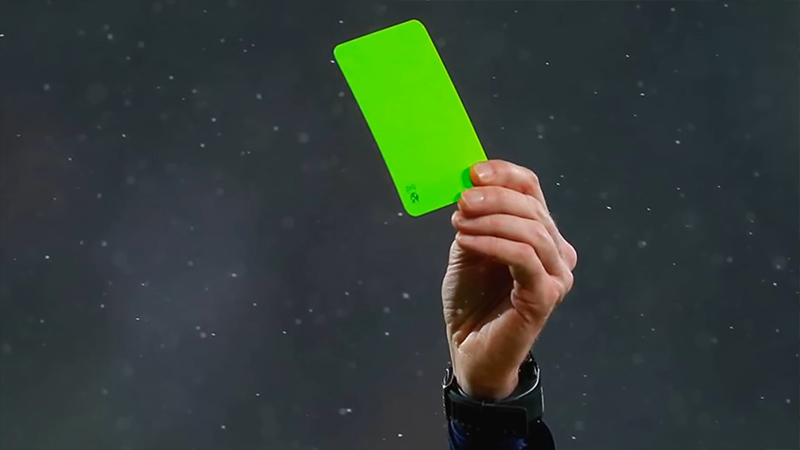
In the high-stakes world of international football, the primary colors of discipline have long been yellow and red. These iconic markers of caution and expulsion have governed the flow of the game for decades.
However, as the sport matures and technology becomes deeply integrated into the matchday experience, a third color has emerged: green.
While not yet a universal fixture in the Laws of the Game governed by IFAB, the green card represents a fascinating intersection of sportsmanship, technical innovation, and tactical evolution.
To understand what a green card means in soccer, one must look beyond a single definition. Its application varies significantly across different leagues, age groups, and tournament structures.
From rewarding the highest standards of integrity to facilitating cutting-edge video reviews, the green card is a multifaceted tool designed to modernize the beautiful game.
The Philosophical Foundation: Rewarding Fair Play
For over a century, the referee’s pocket has been associated with punishment. A card usually meant a mistake had been made—a reckless tackle, a tactical foul, or dissent.
The introduction of the green card challenged this paradigm by introducing positive reinforcement into the referee’s toolkit.
The Italian Origin and the Rise of Integrity
The professional lineage of the green card can be traced back to Italy. In 2016, Serie B—the second tier of Italian professional football—pioneered the use of the green card to promote a “right approach to the game”.
The objective was simple yet profound: send a positive message about football to the world. Instead of penalizing bad behavior, officials used the card to highlight exemplary acts of sportsmanship that might otherwise go unnoticed.
By acknowledging players who showed exceptional integrity, the league sought to shift the cultural narrative of the sport.
When a player admitted to a foul that the referee missed, or voluntarily returned the ball to an opponent after an injury stoppage, the green card served as a formal “thank you” from the officiating crew.
Expansion into University and Amateur Athletics
The success of the Italian experiment caught the attention of international governing bodies. In July 2017, during the 12th European Universities Football Championship in Porto, Portugal, the European University Sports Association (EUSA) officially integrated the green card into its events.
The impact was immediate and visible at the highest levels of university competition. During the female final match between the University of Valencia and the University of Montpellier, Dutch referee Peter de Waard made history by brandishing the green card to award fair play gestures.
This was mirrored in the male final between Kuban State University and the University of Lille, where Swiss referee Luca Piccolo utilized the card to recognize the noble conduct of the athletes.
For organizations like EUSA, which is a partner of the European Fair Play Movement (EPM), the green card is more than a novelty; it is a manifestation of core values.
These values are deeply embedded in the association’s mission to emphasize sportsmanship and a positive approach to sport from the very beginning of an athlete’s career.
Technical Innovation: The FIFA Coach’s Challenge
While the green card began as a symbol of ethics, its most recent and perhaps most impactful application is purely technical.
In recent years, FIFA has utilized the green card as a physical marker for a revolutionary system known as Football Video Support (FVS).
Understanding Football Video Support (FVS)
Unlike the Video Assistant Referee (VAR) system used in the Premier League or Champions League—which relies on a dedicated team of video officials—FVS is designed to be more accessible and coach-driven.
Tested in tournaments like the FIFA U-20 World Cup, this system gives the power of review directly to the benches.
In this context, the green card is the signal for a “Coach’s Challenge”. When a head coach believes a major error has occurred regarding a penalty, a red card, or a goal, they can trigger a formal review.
The referee then displays the green card to indicate that a challenge has been accepted and a video review is underway.
This application transforms the card from a reward for the past into a tool for the present, ensuring that the most critical decisions on the pitch are verified by technology.
The Strategic Shift
The introduction of the coach’s challenge adds a new layer of strategy to the game. Much like in the NFL or professional tennis, coaches must now decide when to “spend” their challenge.
If the green card is shown and the review upholds the original decision, the team may lose the right to challenge further. This creates a high-pressure environment where technical knowledge and tactical awareness are paramount.
The “Sin-Bin”: Temporary Suspensions and Game Management
In the broader landscape of recreational and niche soccer leagues, the green card has adopted a third, more administrative role. In these settings, it functions as a middle ground between a yellow and a red card—often referred to as a “cooling-off” period.
Managing Player Conduct
In certain amateur environments, the green card is used to manage dissent or minor altercations that don’t quite warrant a full dismissal but require more than a simple warning.
When a referee shows a green card in these leagues, the player is temporarily sent off the pitch for a set duration, similar to a “power play” in ice hockey.
Maintaining Competitive Balance
Crucially, some league rules allow a team to replace the sidelined player with a substitute. This ensures the team stays at full strength while the offending player serves their suspension.
This “sin-bin” approach is particularly effective in youth development, where the goal is to correct behavior without ruining the competitive balance of the match.
The Global Impact of Positive Role Models
The push for the green card is part of a larger movement to celebrate “noble gestures” in sport.
Beyond the physical card itself, organizations like EUSA have established broader recognition programs, such as the Enno Harms Fair Play Award, to showcase integrity in European university sports.
The consensus among many sports administrators is clear: the game needs good role models and positive behavior.
By documenting and rewarding these moments, the green card helps create a library of exemplary conduct that young players can aspire to emulate. It reinforces the idea that winning at any cost is less valuable than winning with honor.
Comparison Table: The Three Faces of the Green Card
| Category | Primary Meaning | Key Example/League |
|---|---|---|
| Sportsmanship | Acknowledging exemplary fair play gestures. | Italy’s Serie B, EUSA Championships |
| Technical Review | Signaling a coach’s challenge for video support (FVS). | FIFA U-20 World Cup trials |
| Administrative | Temporary suspension or “sin-bin” for cooling off. | Niche recreational and youth leagues |
Frequently Asked Questions
Is the green card used in the Premier League or MLS?
Currently, the green card is not part of the standard IFAB Laws of the Game used in the Premier League, MLS, or other top-tier professional leagues.
It remains a tool for specific tournaments and leagues that are testing new ways to improve sportsmanship or technology.
Can a player get a green card and a yellow card in the same match?
Yes. Because the green card is typically non-punitive (or related to a technical challenge), it does not “stack” with yellow cards in the way two yellows lead to a red.
However, in leagues where it is used for temporary suspensions, a referee might still use yellow and red cards for standard fouls.
What happens if a coach loses their challenge?
In FIFA’s tested FVS system, if a coach uses their green card challenge and the original decision is upheld, they generally lose their ability to challenge for the remainder of the half or the match, depending on the specific tournament regulations.
Who was the first person to receive a green card?
While many players in Italy’s Serie B received them starting in 2016, some of the most documented uses in international tournament finals occurred in 2017. Officials Peter de Waard and Luca Piccolo were pioneers in bringing the card to the European university stage.
The Future of Soccer Governance
As we look toward the future of soccer, the green card stands as a symbol of a sport in transition. It represents a move away from purely reactive officiating toward a more proactive and collaborative environment.
Whether it is used to say “well done” to a player who shows integrity or to allow a coach to ensure the correct call is made, the green card enhances the transparency and spirit of the game.
The gradual introduction of “Fair Play Cards” is expected to expand into other sports in the coming years. This cross-disciplinary adoption highlights a growing recognition that the values of sport—respect, integrity, and fairness—are universal.
For the modern fan, understanding the green card is essential to understanding where the sport is headed: a future where technology supports the truth, and the best of human character is given its own moment in the sun.
Key Takeaways for Teams and Coaches
- Embrace the Spirit: In leagues utilizing the green card for fair play, encourage players to prioritize integrity. It builds a positive reputation with officials and the broader football community.
- Understand the Rules: Before entering any tournament, confirm the specific meaning of the green card. Is it a reward, a challenge signal, or a suspension?
- Master the Challenge: For coaches in FIFA-trialed events, the green card is a strategic asset. Use it for game-altering moments—penalties, red cards, and goals—where the evidence for a reversal is clear.
- Promote Role Models: Use the concept of the green card to teach young athletes that how they play is just as important as the final score.
The soccer green card may not be as common as its yellow and red counterparts yet, but its presence is a reminder that football is constantly evolving to be a fairer, more precise, and more honorable sport.
Whether on the pitches of Porto or the stadiums of a FIFA youth World Cup, the green card is a signal that the game is moving in the right direction.